If your air conditioner feels a little weaker lately, you’re not alone. Many homeowners notice higher energy consumption and uneven cooling long before a real breakdown happens. The good news is that performing basic DIY AC maintenance between professional visits can significantly improve airflow, boost indoor air quality, and keep your cooling system running smoothly.
Here are some quick and easy maintenance tips you can use to keep your system running smoothly:
1. Safety First: The 5-Minute Pre-Check
Before you touch any component of your AC system, like the outdoor unit or the indoor air handler, safety must be your top priority.
- Shut Off the Power: Set your thermostat to "Off" and wait a few minutes. If you plan on cleaning the AC unit, you must shut off the power at both the outdoor disconnect box and the main electrical breaker.
- Respect Electrical Components: Avoid touching any internal electrical components, like the capacitor or wiring. These store high voltages and should only be handled by a licensed HVAC technician.
- Watch for Wear: Use a flashlight to scan for frayed wires or signs of a refrigerant leak, such as oil residue around the fittings. If you spot these, stop immediately and call for professional service.
2. Quick Airflow Tasks
Proper airflow is the most critical factor in your system’s efficiency. When airflow is restricted, the blower has to work twice as hard, leading to a frozen evaporator coil and increased energy bills. To make sure your airflow is unobstructed, focus on:
- The Air Filter: This is the single most important DIY task. Replace your air filter every 30 to 90 days. A clean filter prevents dust buildup on the evaporator coil and keeps the air in your home clean.
- Check the Vents: Ensure all supply vents and return grilles are unobstructed. If furniture or rugs are blocking these, it creates a restriction that strains the HVAC unit.
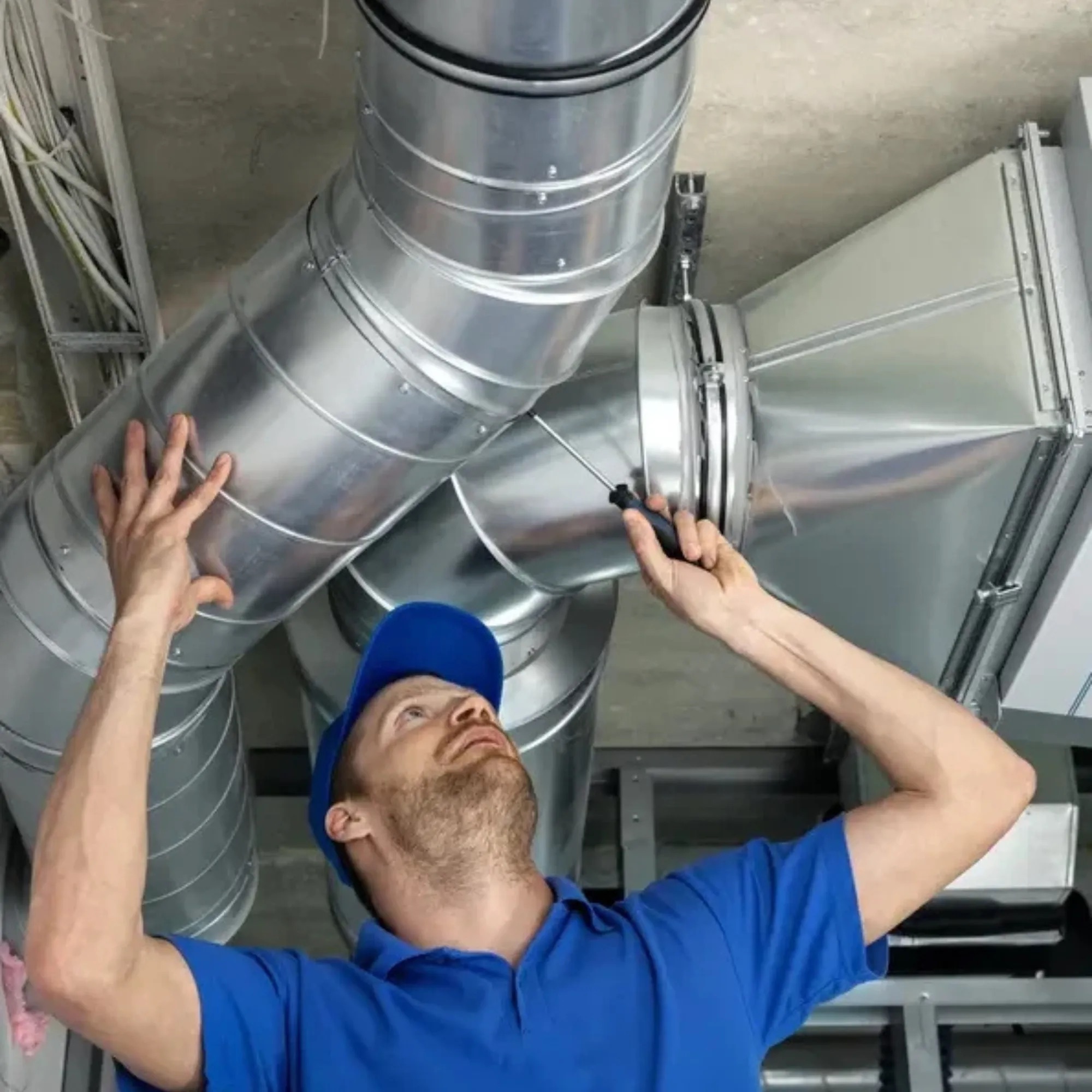
- Inspect Accessible Ductwork: Look for obvious gaps or disconnected sections in your ductwork. While duct tape is a common "quick fix," it isn't a long-term solution. If you find leaks, use HVAC-rated foil tape or call a pro to ensure your air conditioning system remains sealed.
3. Clean the Outdoor Unit
Your outdoor unit (a.k.a. the condenser unit) needs to "breathe" to shed the heat it pulls from your home. If the condenser coil is caked in dirt, your compressor will eventually overheat and fail. To ensure that your unit has space to breathe, do the following:
- Clear the Perimeter: Remove leaves, weeds, and debris from around the unit. Trim any plants back at least 2 feet to allow for proper airflow.
- Coil Cleaner: Only use a specialized coil cleaner if the label explicitly states it is safe for your specific HVAC system. You can usually find these at any hardware store. Evenly cover the coil with the cleaner. Always follow the manufacturer’s instructions carefully to avoid damaging the unit.
- Gently Rinse the Coil: To access the condenser coil, remove the outer cover. Using a standard garden hose, gently rinse the condenser coil. Avoid using a pressure washer, as the high-powered stream can flatten the delicate metal fins.
4. Clear the Condensate Drain
As your central AC or heat pump cools your home, it removes moisture from the air. This moisture exits through a condensate drain. It is important that the drain line is clean to prevent any mold growth or water damage.
- Prevent Water Damage: Find the drain line (usually a white PVC pipe) and check for algae or sludge buildup. A clogged drain line can cause water to back up, leading to significant water damage or an automatic system shutdown.
- Flush the Line: Periodically flushing the line with warm water or a small amount of distilled vinegar can keep the path clear and the system running without interruption.
5. Know When to Call an HVAC Technician
DIY HVAC maintenance is excellent for day-to-day care, but certain maintenance tasks require professional expertise. You should stop and call a professional for an AC tune-up or repair if you encounter:
- Refrigerant Issues: Low refrigerant levels or refrigerant leaks require specialized equipment to diagnose and fix.
- Electrical Failures: If your breaker trips repeatedly or you hear loud buzzing from the compressor, it’s a sign of a mechanical or electrical failure.
- Inconsistent Cooling: If your smart thermostat is set correctly but the house remains warm, the issue could be internal to the central AC unit or deep within the ductwork.
Professional Support When You Need It
While these maintenance tasks will help keep your AC system running smoothly, nothing beats the peace of mind that comes with a professional tune-up. The pros at Dr. Cool provide licensed, comprehensive care for all types of air conditioning systems, including central ac and heat pump units. From identifying a hidden refrigerant leak to testing the capacitor and blower motor, our team ensures your home stays comfortable year-round. Whether you need a simple AC tune-up or a full system replacement, Dr. Cool delivers honest pricing and expert service to keep your HVAC unit in peak condition.
Ready to ensure your system is ready for the Vegas heat? Call Dr. Cool at (702) 608-6939 or schedule a service call online today.
Connect With Us
Our Contact Information
Reach Us by Phone or Email
If you prefer to speak directly with one of our technicians, don’t hesitate to contact us by phone or email. We’re available to assist you during business hours
Phone: (702) 873-1800
Email: info@drcoolservices.com
Business Hours:
Mon – Fri: 7:00 am – 9:00 pm
Sat – Sun: 8:00 am – 5:00 pm