When it comes to managing the mechanical systems in your home, terminology can get confusing quickly. Many homeowners use the terms “water heater” and “boiler” interchangeably because both heat water. However, in the plumbing and HVAC world, these two appliances serve different purposes.
Understanding the key differences between a water heater vs. boiler setup will help you make the right choice when it is time to invest in a new water heater or a new boiler. Here is a complete breakdown of how each system operates, its variations, and its pros and cons.
What is a Water Heater?
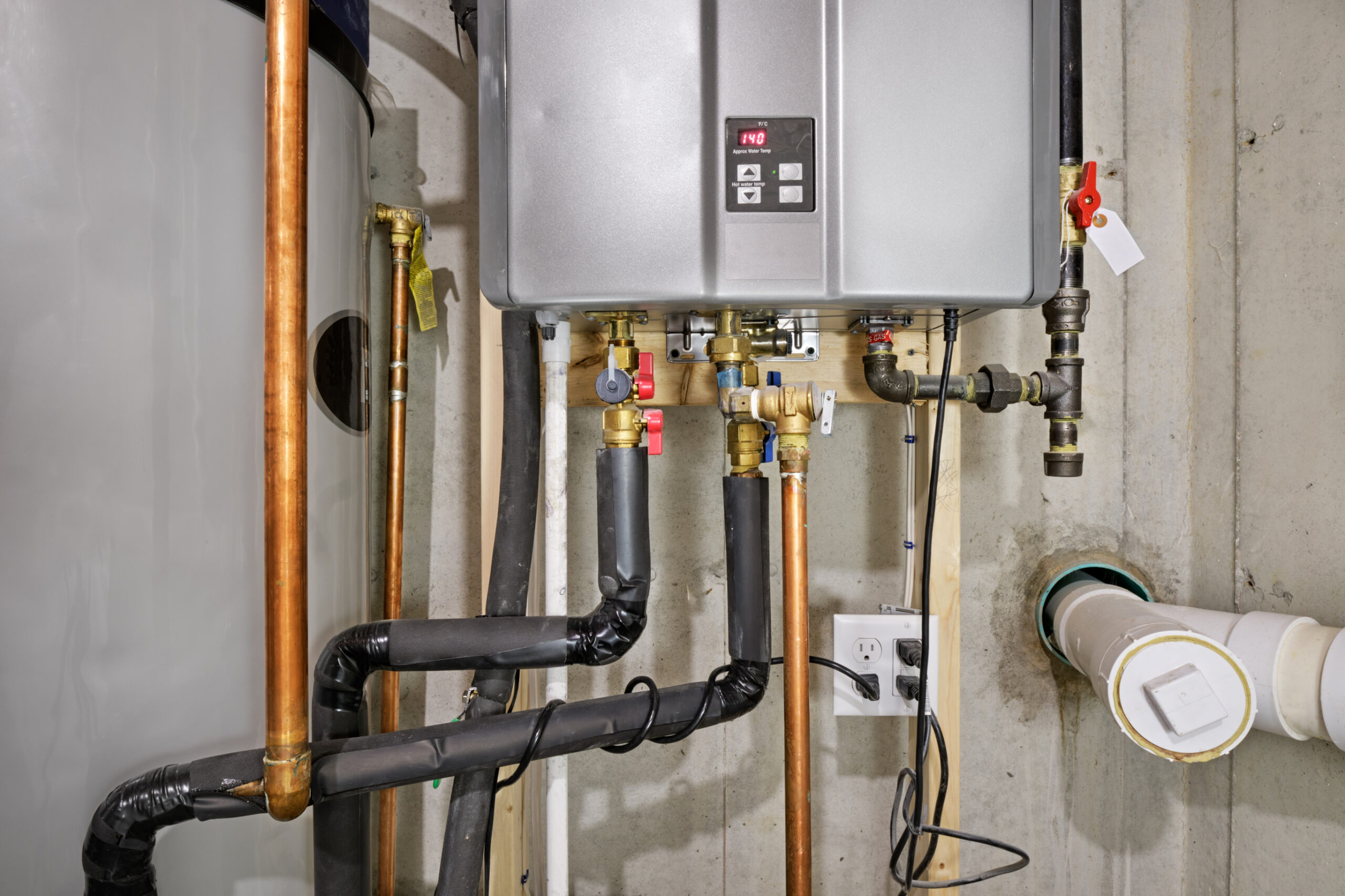
A water heater is a plumbing appliance designed to heat water for household use. When you take a shower, clean dishes, or do laundry, all of the water is heated by a water heater. There are a few different types of hot water heaters: some heat water and store water in a tank for later use, while others heat water instantly for use.
How it Works
A water heater takes in cold water from your municipal supply, warms it up using an internal heating element or burner, and distributes it directly to your faucets.
Types of Water Heaters
- Tank Water Heaters: The standard water heater setup uses an insulated storage tank to continuously heat water and store it for when you need hot water.
- Tankless Water Heaters: Also known as on-demand water heaters, these units lack the hot water tank. Instead, they flash-heat water on demand using high-powered heat exchangers as water moves through the unit.
- Heat Pump Water Heaters: Also known as hybrid electric water heaters, these highly energy-efficient models pull ambient air to heat the water supply.
- Electric Water Heaters: These units rely purely on internal electrical resistance coils to change water temperature.
Pros of Water Heaters
- Lower upfront purchase and installation costs compared to boilers.
- Simpler integration with a standard plumbing system.
- Wide availability of high-efficiency models that significantly cut monthly energy bills.
Cons of Water Heaters
- Standard tank water heaters can run out of water when you use a lot of hot water throughout your home.
- They have a shorter average lifespan of 8 to 12 years compared to heavy heating machinery.
- They cannot provide any structural warmth for your home.
What is a Water Boiler?
A boiler is a specialized heating system designed to provide space heating for your entire property. While a water heater is meant to heat water for your sinks and showers, a boiler system is built to keep your actual living spaces warm. This dual-purpose system provides hot water for everyday needs like bathing and dishwashing, and delivers heat for your home, distributing it through radiators or underfloor heating.
How it Works
Instead of sending water to your faucets, boilers heat water or generate steam that circulates through a closed network of pipes. This heat is sent to radiators, baseboard heaters, or tubing embedded in the floor to provide continuous heating.
Types of Boilers
- System and Regular Boilers: Traditional designs that focus solely on managing the comfort of your home interior.
- Steam Boiler: An older style that boils water into steam to push through heavy iron radiators.
- Condensing Boilers: Modern, high-efficiency units that capture escaping water vapor to maximize fuel use.
- Combination Boiler: Also known as combi boilers, these units handle both space heating and hot water in a single compact chassis, eliminating the need for a separate water heater tank. These can run on natural gas, electricity, or propane.
Pros of Boilers
- Provides incredibly even, quiet, and comfortable radiant heating without blowing dust through vents.
- Eliminates the noise traditionally associated with HVAC appliances, such as blowers and fans.
- Superior lifespan often lasting 20 to 30 years with proper maintenance.
- Combi boilers are exceptionally energy-efficient and save significant space by eliminating the need for both appliances.
Cons of Boilers
- Drastically higher upfront equipment costs when compared to water heaters.
- Boilers require regular servicing to make sure they are safe and efficient. Older models that use gas or oil will need even more service to ensure they are safe.
- Virtually unnecessary for home heating in warmer local climates like Las Vegas, where heat pumps and traditional furnaces are used.
Key Differences
| Feature | Water Heater | Boiler System |
|---|---|---|
| Primary Function | Domestic hot water (showers, sinks, etc.) | Whole-house space heating and hot water (with combination system) |
| Average Lifespan | 8 to 15 Years | 20 to 30 Years |
| Common Fuel Sources | Electricity, Natural Gas, Propane | Natural Gas, Propane, Oil |
| Installation Costs | Lower installation costs due to simpler setup. | Expensive installation costs due to the system's complexity. |
Why Consumers Choose Each System
The choice between a water heater and a boiler usually comes down to your location and your home's existing infrastructure.
Why You Would Choose a Water Heater
If you live in a mild or hot climate, like Las Vegas, a water heater is all you need. Your home’s heating is likely handled separately by a heat pump or traditional furnace. Choosing a standard water heater or upgrading to a tankless water heater keeps your upfront installation costs low while meeting all your hot water demands.
Why You Would Choose a Boiler
If you live in a frigid climate, a boiler is an exceptional investment for getting through cold winters. Homeowners with existing radiators or custom under-floor radiant heating networks will choose a new boiler to maintain their home comfort. If space is tight, picking a combination boiler lets you heat your living space while also providing all the hot water you need.
Let Dr. Cool be Your Partner for Home Comfort
At Dr. Cool, we are here to address all of your plumbing needs. Whether you need a licensed plumber to repair your existing water heater or if you are looking to upgrade to a new energy-efficient tankless water heater, our team is here to make the process as easy as possible. We take all the hassle out of plumbing services with honest, transparent, upfront pricing and a 100% satisfaction guarantee on all our work, so you can enjoy hot water, stress-free.
Need help deciding on the right water heating upgrade for your property? Call Dr. Cool at (702) 608-6939 or schedule your professional plumbing consultation online today.
Connect With Us
Our Contact Information
Reach Us by Phone or Email
If you prefer to speak directly with one of our technicians, don’t hesitate to contact us by phone or email. We’re available to assist you during business hours
Phone: (702) 873-1800
Email: info@drcoolservices.com
Business Hours:
Mon – Fri: 7:00 am – 9:00 pm
Sat – Sun: 8:00 am – 5:00 pm
