
Turning on a faucet and seeing brown water instead of clear water can be alarming. While discolored water isn’t always a sign of a major plumbing emergency, it should never be ignored.
Understanding the possible causes can help homeowners determine whether the issue is temporary or if it’s time to call a plumber.
Key Takeaways
- Brown water is often caused by sediment, rust, corrosion, or disturbances in the water system.
- The source may be inside your home’s plumbing system or within the municipal water supply.
- Persistent discolored water should be evaluated by a professional plumber.
- Water testing and water treatment solutions may be recommended depending on the source of the problem.
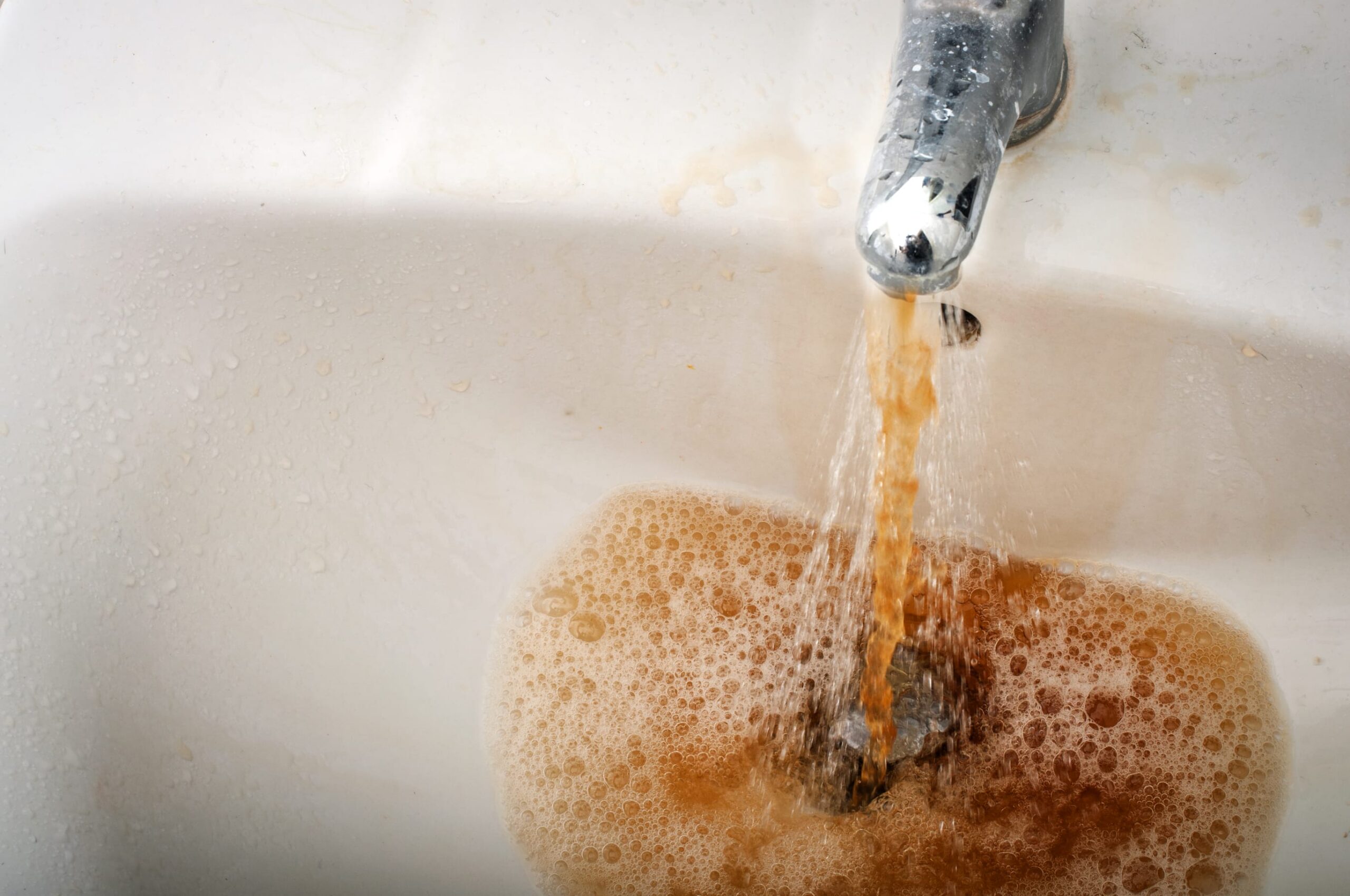
Why Is Water Coming Out Brown?
Brown water occurs when particles, sediment, or other materials become suspended in your water supply. The discoloration can range from light yellow or orange to dark brown depending on the source.
In many cases, the issue is temporary and resolves after the water run clears the affected lines. However, recurring brown water may indicate a more serious plumbing or water quality concern.
Common Causes of Brown Water
Corrosion Inside Water Lines
One of the most common causes of brown water is corrosion within aging water lines. Over time, metal pipes can rust and develop buildup inside the plumbing system. When water flow changes suddenly, these deposits can break loose and enter your tap water.
Signs that corrosion may be the problem include:
- Brown water from multiple faucets
- Recurring discoloration
- Reduced water pressure
- Rust-colored stains in sinks and tubs
If pipe corrosion is severe, portions of the plumbing system may eventually require replacement.
Municipal Water System Disturbances
Sometimes the source of brown water is outside your home. Municipal water systems occasionally perform maintenance on water mains, hydrants, and water service infrastructure. During these activities, sediment can become disturbed and temporarily enter the water supply.
Common causes include:
- Water main repairs
- Hydrant flushing
- Construction projects
- Sudden changes in water flow
Fortunately, these events are often temporary and resolve once the system stabilizes.
Sediment in the Water Heater
If brown water only appears when using hot water, the problem may be inside your water heater or hot water tank.
Over time, sediment can settle at the bottom of the tank. Hard water conditions often accelerate this buildup. When sediment becomes disturbed, it can mix with the hot water and cause discoloration.
Additional signs of water heater sediment include:
- Rumbling noises
- Reduced hot water supply
- Higher energy bills
- Fluctuating water temperatures
Regular water heater maintenance and flushing can help reduce sediment accumulation and extend the life of your water heater.
Groundwater and Surface Water Influences
Water sources can also affect water quality. Municipal water providers draw freshwater from various sources, including groundwater, surface water, reservoirs, rivers, and underground aquifers. Changes in weather conditions, runoff, or natural organic materials can sometimes influence water appearance.
Although treatment facilities work to maintain clean water standards, naturally occurring substances can occasionally contribute to temporary discoloration.
Hard Water and Mineral Buildup
Hard water contains elevated levels of dissolved minerals. Over time, these minerals can create buildup inside pipes, fixtures, and appliances.
In some cases, mineral deposits may loosen and contribute to discolored water. Installing a water softener may help reduce future buildup and improve overall water quality.
Is Brown Water Safe to Drink?
Brown water is not always dangerous, but it should be treated cautiously until the source is identified. While discoloration may simply result from sediment or corrosion, it can also indicate the presence of contaminants or other water quality concerns.
If the water appears heavily discolored, avoid using it for:
- Drinking water
- Cooking
- Making ice
- Preparing infant formula
Public health agencies generally recommend waiting until the water returns to normal or obtaining additional information from your city water provider.
If discoloration persists, professional water testing may be necessary.
How to Troubleshoot Brown Water
Before calling a plumber, try to narrow down the source of the issue.
Check Multiple Faucets
Turn on both cold water and hot water faucets throughout the home.
Ask yourself:
- Is the discoloration present everywhere?
- Is it only affecting one faucet?
- Does it only occur with hot water?
These observations can help determine whether the issue originates in your plumbing system, water heater, or municipal water supply.
Contact Your Water Provider
If neighbors are experiencing the same issue, recent maintenance on a water main or hydrants may be responsible.
Your municipal water provider can often confirm whether repairs or flushing activities are occurring nearby.
Allow the Water to Run
In some situations, letting the cold water run for several minutes may help clear sediment from affected water lines.
If the water gradually returns to clear water, the problem may have been temporary.
However, recurring discoloration should still be investigated.
When to Call a Professional Plumber
If brown water continues after flushing faucets or appears regularly, it's time to contact a professional plumber.
A plumber can inspect your plumbing system and identify issues such as:
- Corrosion inside water lines
- Water heater sediment buildup
- Damaged plumbing components
- Water pressure or water filtration concerns
- Long-term water quality issues
With years of experience diagnosing residential plumbing problems, a licensed professional can recommend the most effective solution.
Solutions for Persistent Brown Water
Depending on the cause, solutions may include:
- Replacing corroded water lines
- Flushing or servicing a water heater
- Installing a water filter
- Adding a water softener
- Water treatment system upgrades
- Plumbing repairs or fixture replacement
Addressing the underlying cause is the best way to restore reliable access to clean water.
Trust Dr. Cool for Water Quality Solutions
Brown water can be frustrating, but it doesn't have to remain a mystery. Whether the issue stems from corrosion, water filtration, sediment buildup, a water heater problem, or concerns with your water supply, Dr. Cool's experienced plumbing team can help identify the source and recommend the right solution.
If you're dealing with discolored water or other water quality concerns, call Dr. Cool at (702) 608-6939 or schedule your professional drain cleaning service online today.
Connect With Us
Our Contact Information
Reach Us by Phone or Email
If you prefer to speak directly with one of our technicians, don’t hesitate to contact us by phone or email. We’re available to assist you during business hours
Phone: (702) 873-1800
Email: info@drcoolservices.com
Business Hours:
Mon – Fri: 7:00 am – 9:00 pm
Sat – Sun: 8:00 am – 5:00 pm