A muggy home, musty odors, window condensation, or recurring mold can all point to excess indoor moisture. But you may wonder: Do I need a whole house dehumidifier, especially in a generally dry climate like Las Vegas?
The answer depends on your home’s measured humidity, airflow, HVAC performance, and whether moisture is affecting one room or the entire house. A whole house dehumidifier can provide consistent humidity control, but it should address a confirmed moisture problem, not cover up plumbing leaks, poor ventilation, or air leaks.
Key Takeaways
- Measure indoor humidity before installing a dehumidifier.
- Portable units work well for isolated rooms, while whole-house systems provide broader coverage.
- Persistent moisture may indicate an HVAC, ventilation, plumbing, or building-envelope problem.
What Is a Whole House Dehumidifier?
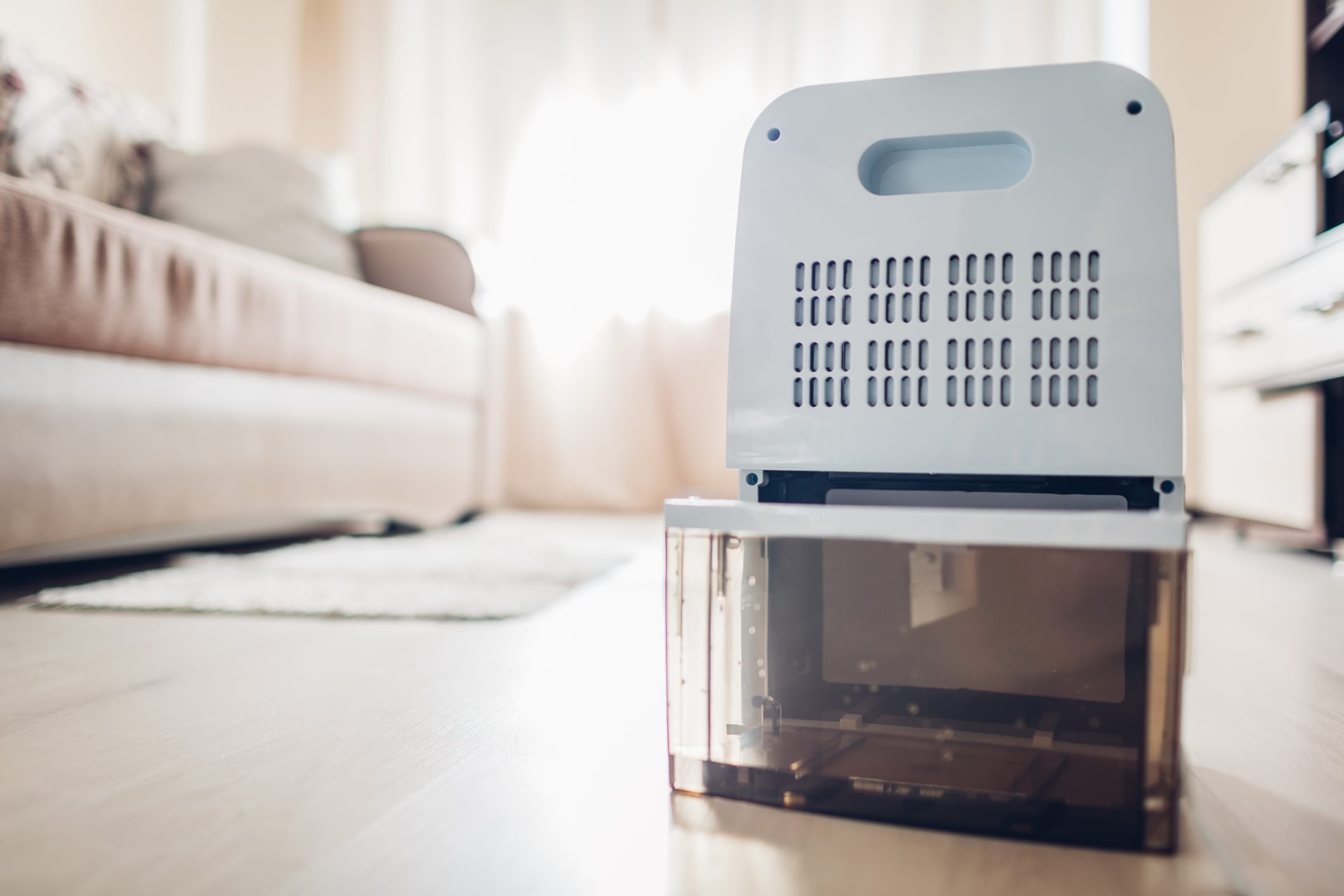
A whole-house dehumidifier removes moisture from the air throughout multiple rooms. Most ducted units connect to the home’s existing ductwork and operate alongside or independently from the central air conditioning system.
The system draws in humid air, removes moisture, and circulates drier air back into the home. Collected water typically passes through an autodrain and drains into the home’s plumbing system, eliminating the water reservoir that must be emptied with many portable dehumidifiers.
The unit may be installed near the air handler, in an attic, or in a mechanical closet, depending on the home’s design.
Do I Need a Whole House Dehumidifier?
Start by measuring your indoor humidity levels with a hygrometer. The United States Environmental Protection Agency (EPA) generally recommends maintaining indoor relative humidity between 30% and 50% and keeping it below 60% to discourage moisture-related problems.
You may benefit from a whole-house system if humidity regularly remains above that range and you notice problems throughout the home, such as:
- A damp or clammy feeling
- Musty odors
- Condensation on windows or vents
- Mold or mildew growth
- Persistent humidity after the AC runs
- Rooms that feel uncomfortable despite normal temperatures
- Moisture-related damage to walls, floors, or furnishings
- Frequent use of several portable dehumidifiers
Humidity readings can temporarily rise after showering or cooking. That does not necessarily mean you need a whole-house system. The stronger sign is consistently elevated humidity across several rooms.
Why Is My Home So Humid?
Before installing new equipment, identify why excess moisture is entering or remaining in the home. Possible causes include:
- Plumbing or roof leaks
- Poor bathroom or kitchen ventilation
- Unsealed air leaks
- Damp crawlspaces
- Leaky ductwork
- An oversized air conditioner
- Short AC run times
- A poorly balanced HVAC system
- Outdoor air entering through gaps
- Everyday moisture from cooking, bathing, or laundry
Annual AC maintenance can help identify airflow problems, clogged drain lines, dirty coils, duct issues, and other conditions that affect humidity control. Ensuring you have the right size AC unit and dehumidifier is key to reducing humidity.
Portable vs. Whole-House Dehumidifiers
The right choice depends on how much of your home is affected.
Portable Dehumidifiers
A portable dehumidifier is usually the more cost-effective option when excess moisture is limited to one room, such as a bathroom, laundry area, or converted garage. Portable units offer:
- Lower initial costs
- Simple setup
- Flexible placement
- Targeted moisture control
However, their coverage is limited. They may also create noticeable noise, require regular reservoir emptying, and introduce heat into the room while operating.
Whole-House Dehumidifiers
Whole-house dehumidifiers are designed to serve one or more rooms through the home’s air-distribution system. Whole-home models are generally permanent systems that use ductwork to provide broader coverage. Potential benefits include:
- Consistent whole-home humidity control
- Quiet operation
- Automatic drainage
- No portable unit taking up floor space
- Better integration with the HVAC system
- Centralized controls
- Less daily attention
The primary drawbacks are higher initial costs, professional installation, and ongoing maintenance.
Will a Whole-House Dehumidifier Lower Energy Bills?
It can improve comfort and efficiency in the right home, but it still uses electricity. Drier air may feel more comfortable at a slightly higher thermostat setting, potentially reducing the cooling load on your HVAC system. It can also keep the AC from being used solely to control humidity.
Look for ENERGY STAR-certified dehumidifiers when comparing equipment. ENERGY STAR-certified models use more efficient coils, compressors, and fans than comparable conventional models. The same goes with energy-efficient HVAC units.
The best comfort and efficiency per dollar comes from properly sizing the system and correcting underlying issues first. Installing a ducted whole-home dehumidifier will not be the most cost-effective option if the real problem is a leaking pipe or broken exhaust fan.
What Does Installation Involve?
Professional installation starts with evaluating indoor humidity, home size, ductwork, HVAC capacity, drainage access, and available space. The technician will determine:
- The appropriate moisture-removal capacity
- Whether the system should use dedicated or existing ductwork
- Where the unit and controls should be located
- How condensate will drain
- Whether duct or air-sealing repairs are needed
- How the system will interact with the HVAC equipment
Models such as the Aprilaire E80 may appear during your research, but brand alone should not determine the decision. Proper sizing, installation quality, service access, efficiency, and refrigerant global warming potential are also worth considering.
Whole-House Dehumidifier Maintenance
A whole-house system becomes a semi-permanent part of your home and requires routine care. Maintenance may include:
- Replacing or cleaning its filter
- Inspecting the autodrain
- Cleaning the condensate line
- Checking the coils
- Confirming proper airflow
- Inspecting duct connections
- Testing the humidity controls
Scheduling this work with seasonal HVAC maintenance makes it easier to keep both systems operating correctly.
Ask Dr. Cool About Your Home’s Humidity
In a dry desert climate, excessive indoor moisture may be a sign of a ventilation, plumbing, drainage, or HVAC problem that should be corrected first.
Dr. Cool can measure your indoor humidity, provide AC services, heating services, and ductwork, and recommend a personalized solution based on your home's unique needs. Whether you need a portable unit, ventilation improvements, or professional installation of a whole-house system, we'll help you choose an option that makes sense for your home.
Ready to take care of your home's humidity? Call Dr. Cool at (702) 608-6913 or schedule your appointment online today.
Connect With Us
Our Contact Information
Reach Us by Phone or Email
If you prefer to speak directly with one of our technicians, don’t hesitate to contact us by phone or email. We’re available to assist you during business hours
Phone: (702) 873-1800
Email: info@drcoolservices.com
Business Hours:
Mon – Fri: 7:00 am – 9:00 pm
Sat – Sun: 8:00 am – 5:00 pm
