
Southern Nevada tap water reaches your house already treated and tested, yet some homeowners still reach for bottled water. The taste can seem flat or heavy with minerals. Glasses come out of the dishwasher spotted. Kettles develop a white crust within weeks.
A reverse osmosis system solves the drinking water part of that problem by pushing water through a semi-permeable membrane at one faucet, usually the kitchen sink, but it does not replace a water softener or whole-home filter. That distinction trips up many homeowners, and it’s the main thing to understand before you spend money.
Henderson homes draw from the same Colorado River and Lake Mead supply as the rest of the Las Vegas Valley, so high mineral content affects everyone from Green Valley to Anthem. Whether reverse osmosis in Henderson, NV makes sense for your household depends on what you want treated, where you want it treated, and what your water actually looks like at the tap. By the end of this, you’ll know which system addresses your specific complaint and what to ask before anyone installs anything.
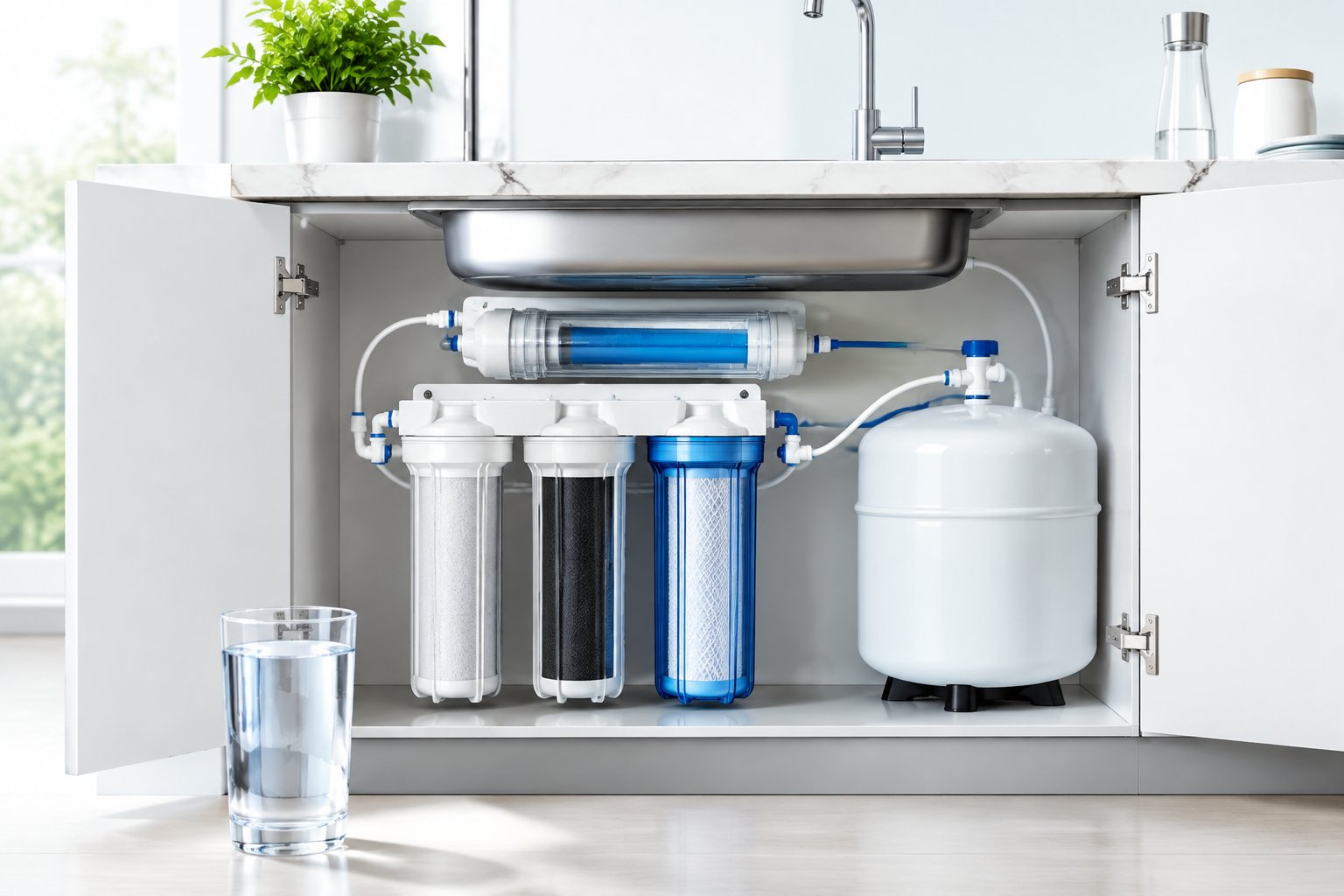
What Reverse Osmosis Does for Drinking Water
Reverse osmosis purifies water by forcing it through a membrane fine enough to block most dissolved solids. It produces cleaner drinking water at one fixture. The process happens in stages, measures results through total dissolved solids, and has limits worth understanding before you buy.
How a Reverse Osmosis System Filters Water
Water entering a reverse osmosis system passes through a sediment filter first. That filter catches grit, rust flakes, and particles that could clog the membrane. Next, a carbon stage reduces chlorine, protecting the membrane and improving the taste.
Household pressure pushes the water against the semi-permeable RO membrane. Clean water passes through and collects in a small storage tank. Rejected water carries concentrated minerals and contaminants down the drain.
That drain stream is real. The EPA's WaterSense program for reverse osmosis systems notes that a typical point-of-use RO system sends five gallons or more down the drain for every gallon of treated water, while WaterSense labeled models must stay at 2.3 gallons or less.
What Dissolved Solids and TDS Mean
Total dissolved solids, or TDS, measures everything dissolved in your water: calcium, magnesium, sodium, sulfates, and other minerals. It’s reported in parts per million.
High TDS helps explain the taste of Las Vegas Valley water and the scale that forms on fixtures. A reverse osmosis system reduces TDS substantially, which is why RO water tastes noticeably different from untreated water at the same kitchen faucet.
WaterSense labeled systems have independent certification for TDS reduction and a membrane life of at least one year.
What RO Can and Cannot Reduce
Reverse osmosis systems can reduce lead, arsenic, nitrates, other heavy metals, chlorine byproducts, and many dissolved contaminants at the treated fixture. NSF/ANSI 58 certification covers the specific substances a manufacturer claims a system reduces, so the list varies by model.
RO doesn’t treat your whole house. It serves one faucet, meaning your showers, laundry, and water heater still receive untreated water. It also doesn’t soften water anywhere except at that single tap.
No one should promise that a drinking water system prevents illness or removes every possible contaminant. Ask for the certification sheet and check what the specific unit has been tested to reduce.
Reverse Osmosis vs. Water Softeners and Whole-Home Filters
These three treatment options handle different problems. Buying one and expecting another’s benefits is a common homeowner mistake. A softener targets hard water throughout the house, a whole-home filter improves water at every fixture, and reverse osmosis produces high-purity drinking water in one spot.
Why a Water Softener Does Not Replace an RO System
A water softener addresses mineral buildup, not taste or contaminant removal. Cation exchange softeners work by removing calcium and magnesium ions from hard water and exchanging them for sodium or potassium ions. The system then flushes itself during regeneration.
That exchange protects your water heater, dishwasher, and fixtures from scale buildup. It doesn’t remove lead, arsenic, or nitrates, and the added sodium is one reason some households still want RO at the kitchen sink.
If crusty faucets and dull laundry bother you, a softener is the answer. If the water tastes unpleasant in a glass, it isn’t.
When Whole-Home Water Filtration Makes Sense
Whole-home water filtration systems treat water as it enters the house, so every tap, shower, and appliance receives filtered water. These systems commonly target chlorine, sediment, and rust picked up along the route from Lake Mead through the distribution system.
Point-of-entry filtration makes sense when the problem appears everywhere: chlorine smell in the shower, sediment in the aerators, or discoloration after a main break. It also uses little or no water during treatment, which matters in a desert.
Whole-home filters generally don’t reach the contaminant reduction levels that an RO membrane achieves for drinking water.
Why Some Homes Use More Than One Water Treatment System
Some homes run a softener, a whole-home filter, and an under-sink RO unit together because each handles a different job. The softener protects appliances, the whole-home filter cleans water at every fixture, and the RO system polishes drinking and cooking water.
Running a softener before an RO system also extends membrane life because softened water carries less scale-forming hardness into the membrane.
You don’t need all three. Start with the problem that bothers you most and go from there. A quick look at the benefits of home water filtration systems can help you decide which issue deserves attention first.
Choosing the Right System for Your Henderson Home
The right choice depends on where the water problem appears and what testing reveals about your supply. Installation location, actual water measurements, and a few direct questions for any installer should lead you to a confident decision.
Where Reverse Osmosis Systems Are Commonly Installed
The standard location is under the kitchen sink, with a dedicated small faucet mounted on the counter or sink deck. The unit, storage tank, and drain connection all fit inside the cabinet below.
Refrigerator ice makers and water dispensers are common second connection points. A line runs from the RO system to the refrigerator, allowing ice and cold water to come from the treated supply.
Some homeowners in Green Valley, Anthem, and Lake Las Vegas install a unit at a wet bar or a secondary kitchen. Cabinet space, drain access, and water pressure determine what works at each location.
How Water Testing Can Guide Your Decision
Water testing shows you what needs treatment before you pay to treat it. A basic test measures hardness and TDS, helping point you toward a softener, an RO system, or both.
More detailed testing looks for specific contaminants. If nothing exceeds concern levels and taste is your only issue, a simpler filtration setup might do the job for less money and less water waste.
Nevada's drinking water supply is regulated and monitored by the Nevada Division of Environmental Protection, and public water systems publish annual quality reports. Those reports describe water leaving the treatment plant, so household testing can still show what happens by the time water reaches your tap.
Questions to Ask Before Choosing a System
Get these answers in writing before anyone starts drilling a hole in your countertop:
- What is this system certified to reduce, and under which NSF/ANSI standard?
- How many gallons of reject water does it send down the drain per gallon of treated water? Is it WaterSense labeled?
- How many filter stages does it have, and how often does each need replacing?
- What does a set of replacement filters and a membrane cost?
- Does installation include the drain connection, a dedicated faucet, and a refrigerator line if I want one?
- Is the installer licensed and insured for plumbing work in Nevada?
- What warranty covers the equipment, and what covers the labor?
Any installer who can’t answer the certification and filter cost questions on the spot is guessing.
Installation, Upkeep, and Cost Factors to Understand
Professional installation, regular filter changes, and a few equipment variables determine what a reverse osmosis system really costs over its lifetime. The purchase price is only part of the picture.
What Professional Installation Typically Involves
An installer shuts off the cold water supply under the sink and taps into it with a feed valve. The RO unit mounts to the cabinet wall or sits on the base, with the storage tank beside it.
The installer adds a drain saddle or connection to the sink drain line for the reject stream. They drill a hole in the countertop or sink deck for the dedicated faucet, unless an existing opening works.
Next, the installer flushes the system, checks pressure, and confirms that no fitting leaks. Licensed and insured plumbers handle the drain and supply connections, which are common leak points in a poor DIY job. Dr. Cool handles reverse osmosis and water filtration installation along with plumbing connections, brine tank setup, and bypass valves.
Filter and Membrane Maintenance Needs
Pre-filters carry the heaviest load. You’ll replace the sediment and carbon filters according to the manufacturer’s schedule, commonly every six to twelve months depending on water conditions and household use.
The RO membrane lasts longer. WaterSense labeled systems must demonstrate a membrane life of at least one year, and many last considerably longer in practice.
Skipping filter changes can damage the membrane, which is the expensive part. Set a calendar reminder or ask whether your installer offers a reminder service.
What Affects Reverse Osmosis System Cost
Several factors affect the price:
- Number of stages. Three-stage units cost less than four or five-stage systems with remineralization or extra carbon polishing.
- Certification level. Systems tested for a longer list of contaminants under NSF/ANSI 58 cost more than basic TDS-reduction units.
- Efficiency. WaterSense labeled models waste less water, which lowers your ongoing water bill.
- Installation complexity. Tight cabinets, a countertop faucet hole, a refrigerator line run, or a required drain modification add labor.
- Ongoing filters. Replacement filters and membranes create a recurring annual cost worth pricing before you buy.
Dr. Cool provides upfront pricing and explains recommended work before it starts, so ask for the installed total and annual filter cost together.
Finding a Drinking-Water Solution That Fits Your Home
Reverse osmosis makes sense when you want better-tasting, lower-TDS drinking water at the kitchen sink. It reduces lead, arsenic, nitrates, and other dissolved contaminants at that one fixture, and it handles that job better than a whole-home filter. It won’t soften shower water or protect your water heater from scale.
Match the system to the complaint. Spotted dishes and crusty fixtures point to a softener. Chlorine smell throughout the house points to whole-home filtration. Water that tastes off in a glass points to reverse osmosis. A water test settles the question faster than a sales pitch, and some homes use two systems for two different reasons.
When you’re ready to talk through your options, call (702) 873-1800 to schedule a visit and get upfront pricing on a water filtration or reverse osmosis installation for your home. You can also book online, and asking about same-day availability takes only a minute.
Connect With Us
Our Contact Information
Reach Us by Phone or Email
If you prefer to speak directly with one of our technicians, don’t hesitate to contact us by phone or email. We’re available to assist you during business hours
Phone: (702) 873-1800
Email: info@drcoolservices.com
Business Hours:
Mon – Fri: 7:00 am – 9:00 pm
Sat – Sun: 8:00 am – 5:00 pm
