
Some rooms in a Henderson home just refuse to cooperate. The converted garage sits ten degrees warmer than the living room. The casita stays stuffy no matter where you set the thermostat. The bonus room over the garage bakes all afternoon while the rest of the house feels fine.
A ductless mini-split solves that kind of problem by giving one space its own heating and cooling, with no new ductwork running through your walls or attic. That’s the main reason homeowners research mini split installation in Henderson, NV, and it’s a good one. A single indoor unit paired with an outdoor condenser can hold a steady temperature in one room without affecting the rest of your central system.
The decision still comes down to details. Load calculations, indoor unit placement, electrical capacity, drain routing, and permits all shape the installation and its cost. Get those details right and the system can run quietly for years. Guess at them and you could end up with short cycling, a humid room, or a unit that never quite keeps up on a July afternoon. If you want an honest opinion on whether ductless climate control suits your space, a licensed technician can assess the room with you and explain the options before you commit.
When Is a Ductless Mini-Split a Good Fit?
Ductless mini-split systems work best when you need to condition a specific space that your central HVAC system wasn’t designed to reach. Spare rooms, additions, and detached structures are strong candidates. Whole-home comfort problems often point to a different solution.
Cooling or Heating a Room Addition, Garage, or Casita
New square footage rarely comes with enough duct capacity. Your existing furnace and air handler were sized for the original floor plan, so connecting an addition to them can leave every room slightly underserved.
A mini-split gives the new space its own air conditioning and heating source. Garages, casitas, workshops, and enclosed patios also tend to have different insulation levels and sun exposure than the main house. Independent control makes sense in those spaces.
Solving a Persistent Hot or Cold Room
One stubborn room is a common reason homeowners consider ductless. If a bedroom at the end of a long duct run always feels warm, adding a mini-split head lets you set that room to the temperature you want without freezing the rest of the house.
Have a technician check that the duct itself isn’t the problem first. A crushed, disconnected, or leaking duct can look like a sizing issue, and repairing it may be easier than adding equipment.
Adding Comfort Without Extending Ductwork
Running new ductwork means opening walls or ceilings, finding a path through the framing, and restoring the finishes afterward. Many Henderson homes simply don’t have a clean route from the air handler to a distant room.
Ductless equipment needs only a small wall penetration, roughly three inches, for the refrigerant lines, drain, and wiring. That keeps the work contained and avoids remodeling around a duct chase.
When Central HVAC May Be the Better Choice
Central HVAC is usually the stronger option when you need to condition most of the house or when your existing system is near the end of its life. Replacing aging equipment can cost less than installing five or six indoor heads across the same floor plan.
Ducted systems also handle whole-home filtration and air distribution more evenly. If you’re weighing both options, compare a full air conditioning installation with a multi-zone ductless design for a fair side-by-side view.
How Ductless Systems Heat and Cool a Home
A ductless mini-split moves heat between the inside and outside using refrigerant instead of blowing conditioned air through ducts. Two components do the work: an indoor unit in the room and an outdoor condenser connected by a small bundle of lines.
What the Indoor Unit Does
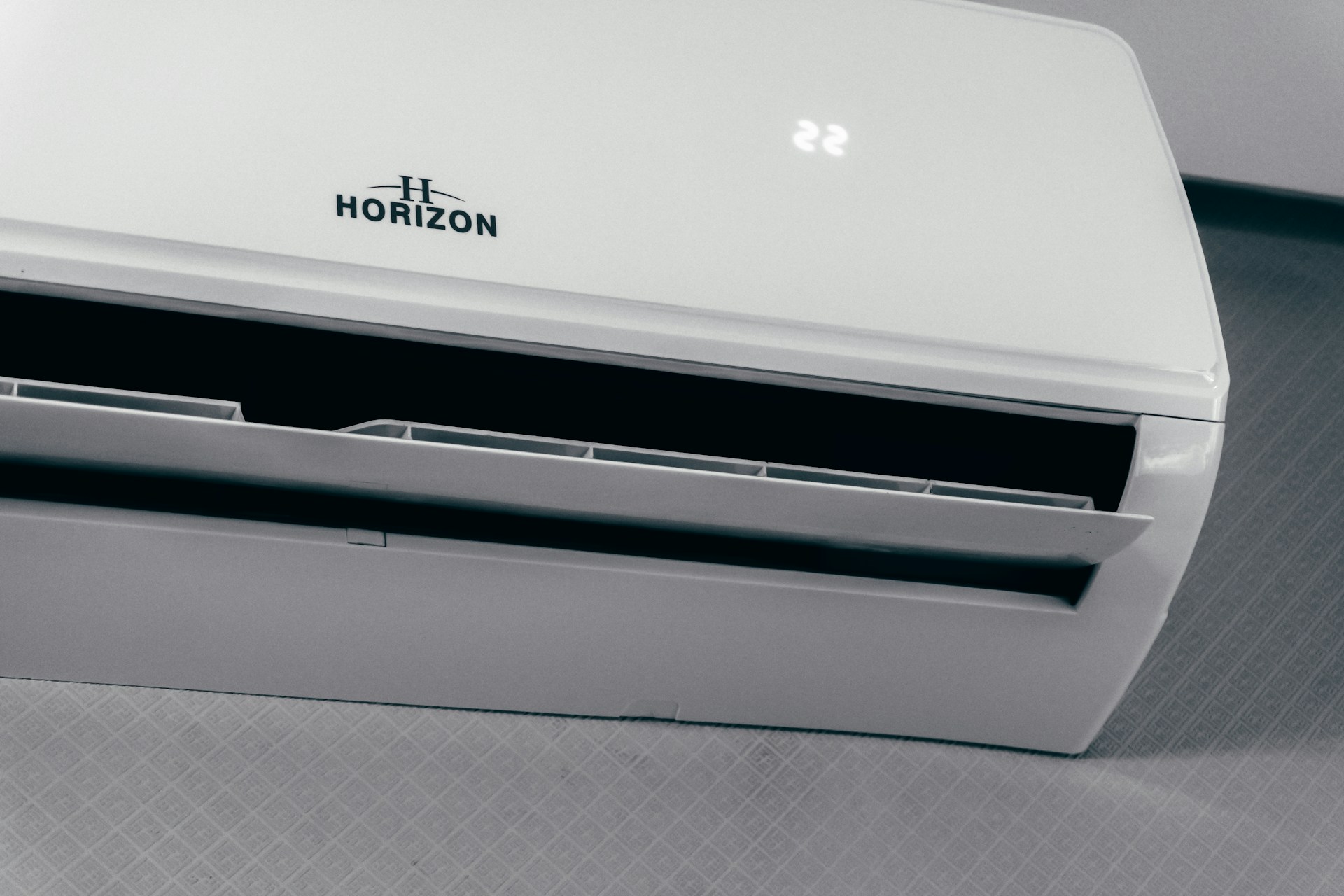
The indoor unit, sometimes called a head, contains a coil, blower, and filter. It pulls room air across the coil. During cooling, the coil absorbs heat from the room. During heating, it releases heat into the room. The blower then sends the air back through adjustable louvers.
Most models mount high on a wall. Ceiling cassette and floor-mounted options work well when a high wall location isn’t available.
How the Outdoor Condenser and Refrigerant Lines Work
The outdoor condenser contains the compressor and a larger coil. In summer, it moves heat out of the house. In winter, it pulls heat from the outdoor air. That’s how a heat pump can work in both directions.
A line set connects the two units. It includes two insulated copper refrigerant lines, a condensate drain, and a control wire. The bundle passes through one small hole and runs along the exterior wall, often inside a protective cover.
Single-Zone vs. Multi-Zone Systems
A single-zone system pairs one outdoor unit with one indoor head. That’s the typical setup for a garage conversion or one problem bedroom.
Multi-zone systems connect several indoor heads to one outdoor condenser. Each head has its own remote and temperature setting, though all of them share one compressor. The outdoor unit therefore needs enough capacity for the combined load. If you want a closer look at how the components work together, this explainer on what a mini split system is covers the basics.
What Zoned Temperature Control Can and Cannot Do
Each zone controls its own temperature independently. That’s the main advantage over a single central thermostat. Set the office to 74 and the guest room to 78, and each can maintain its own setting.
Zoning doesn’t create separation where none exists. An open floor plan with one head will still have warm corners, and a head in the hallway won’t cool bedrooms behind closed doors. Zone boundaries follow walls and doors, not wishes. The residential zoning systems manual published by the Air Conditioning Contractors of America explains multi-split zoning in detail.
What Should Be Planned Before Installation?
A ductless mini-split installation is mostly a planning job. Load calculation, head placement, electrical capacity, drain routing, and condenser location all need attention before anyone drills a hole. Each choice affects how the system performs.
Sizing the System for the Space and Sun Exposure
Capacity should come from a room-by-room load calculation, not a square-footage rule of thumb. Insulation, ceiling height, window area, window direction, and the number of people using the room all affect the result.
Oversized equipment cools the air quickly, shuts off, and leaves humidity behind. Undersized equipment runs constantly and still falls short on the hottest afternoons. Guidance from the American Society of Heating, Refrigerating, and Air-Conditioning Engineers on choosing the right system for your home makes the same point about proper sizing.
Choosing an Indoor-Unit Location
The head needs clear airflow across the room, enough space above and around it, and a wall that can support its weight. Aim it so conditioned air reaches the occupied part of the room, not a closet or bookcase.
Avoid placing it directly over a bed or desk, where constant airflow can feel uncomfortable. Filter access matters too, since you’ll need to clean those filters regularly.
Planning Electrical Power and Condensate Drainage
Most systems need a dedicated circuit and a disconnect near the outdoor unit. Check panel capacity in advance. If the panel is full, you may need a subpanel or service upgrade.
Condensate needs a gravity drain path to the outside. When gravity won’t work, the installer may need to add a condensate pump. A poorly pitched drain line can later cause water stains beneath the head.
Selecting an Accessible Outdoor-Unit Location
The condenser needs clearance on all sides for airflow and service access. It also needs a level pad or wall bracket and a location that landscaping won’t bury. Keep it away from bedroom windows if noise concerns you.
Shorter line-set runs between the head and condenser make the installation simpler. Setback requirements and property lines matter too.
Considering Filtration and Indoor Air Quality
Mini-split heads use washable filters that catch dust and lint. The Environmental Protection Agency notes that research on whether ductless mini-split heat pumps filter fine particles from indoor air remains limited, so treat the built-in filter as basic coil protection.
If air quality is a goal, plan for it separately. You might use a portable HEPA unit in the room or add whole-home filtration to the ducted system.
What Affects the Cost of a Mini-Split Installation?
Cost depends on equipment capacity, the number of indoor zones, and the electrical and access work the property needs. A single head in a garage with an accessible panel sits at the lower end. A four-zone system in a two-story home with a full electrical panel costs much more.
Equipment Capacity and Number of Indoor Zones
Each additional indoor head adds equipment, line-set material, mounting labor, and commissioning time. Moving from a single-zone to a three-zone system also requires a larger outdoor condenser.
Higher-efficiency models with variable-speed compressors cost more upfront. Whether the extra cost pays off depends on how many hours per year the system runs, so discuss the likely savings before moving to a higher tier.
Electrical Work, Line-Set Length, and Installation Access
Electrical work creates many cost surprises. A dedicated circuit is straightforward when the panel has room. Adding a subpanel or upgrading the service is a separate job with its own price.
Long line-set runs require more copper, more insulation, and sometimes additional refrigerant. Second-story heads, tight attics, block walls, and condensers located far from the room all add labor.
Permits and Site-Specific Scope
Mechanical and electrical permits apply to ductless installations, and your local building authority sets the requirements. For Henderson homes, the City of Henderson’s Building and Fire Safety department handles permit processing, not Clark County. Your contractor should pull the permits and schedule the inspection as part of the job.
Site conditions also affect the scope. These may include condensate pumps, new pads, line-set covers, drywall patching, and disposal of an old window unit.
How to Compare Estimates Without Guesswork
Ask every bidder for the same details: equipment brand and model number, rated capacity for each zone, confirmation of a load calculation, included electrical work, permit handling, and startup testing.
Dr. Cool advertises free estimates for new installations, and a written scope makes price differences easier to understand. If one quote comes in much lower than the others, compare the line items to see whether anything is missing.
How to Choose Equipment and an HVAC Installer
Installation quality affects ductless performance more than brand choice. Refrigerant charge, line-set brazing, vacuum depth, and correct sizing determine whether the system holds temperature. Vet the installer as carefully as you review the equipment list.
Questions to Ask About Sizing and System Design
Ask whether the contractor performs a room-by-room load calculation and whether they’ll show you the results. Ask why they chose that capacity and how the system should perform on a 110-degree afternoon.
For multi-zone proposals, ask how the contractor handled the combined load and how each zone works when only one head is running.
What a Clear Installation Estimate Should Explain
A useful estimate names the equipment, lists capacity for each zone, and explains the electrical scope, line-set routing, condensate plan, permits, and cleanup. Warranty terms should appear in writing for both the equipment and the labor.
Ask what happens if the panel turns out to be full. That possibility should be priced before work starts, not after.
Why Licensed Installation and Startup Testing Matter
Nevada licensing and insurance protect you if something goes wrong. Dr. Cool publishes contractor license numbers 0092650 and 0092651 on its site, and asking any bidder for a license number takes only a minute.
Startup testing shows whether the installation was done properly. The technician should pressure-test and evacuate the lines, verify the refrigerant charge, check airflow, confirm condensate flow, and document the readings. Ask to see those numbers.
Comparing Equipment Options From Mitsubishi Electric, Daikin, and Fujitsu
Mitsubishi Electric, Daikin, and Fujitsu all make well-regarded ductless systems with variable-speed compressors, multi-zone options, and wall, ceiling, and floor-mounted head styles. Differences appear in capacity steps, low-ambient heating performance, control accessories, and warranty length.
Local parts availability and your installer’s experience with a particular platform can affect service more than small differences on a spec sheet. Ask which product lines the contractor stocks parts for across the Las Vegas Valley, and confirm that the work includes a satisfaction guarantee.
A Well-Planned System Delivers Room-by-Room Comfort
A ductless mini-split earns its place when one space needs separate heating and cooling, and extending ductwork would mean opening up walls. Room additions, garage conversions, casitas, and that one bedroom that never quite keeps up are where zoned climate control makes the biggest difference.
The planning work decides the outcome. A proper load calculation, a smart head location, a dedicated circuit, a clear condensate path, and an accessible condenser location separate a system that holds 74 degrees through August from one that struggles. Permits and documented startup readings belong in the scope, too.
If you’re weighing a ductless mini-split installation for a Henderson home and want a straightforward answer on sizing, placement, and price, call (702) 873-1800 or book online at drcoolservices.com. A licensed technician can look over the space, explain the options, and provide upfront pricing before anything gets ordered.
Connect With Us
Our Contact Information
Reach Us by Phone or Email
If you prefer to speak directly with one of our technicians, don’t hesitate to contact us by phone or email. We’re available to assist you during business hours
Phone: (702) 873-1800
Email: info@drcoolservices.com
Business Hours:
Mon – Fri: 7:00 am – 9:00 pm
Sat – Sun: 8:00 am – 5:00 pm