Hot water is easy to take for granted until the shower turns cold or you spot a small leak. Regular water heater maintenance helps homeowners keep a steady flow of hot water, maintain energy efficiency, and extend the water heater’s lifespan. Regular maintenance also reduces the risk of unexpected issues caused by hard water, sediment buildup, and corrosion. Below are a few DIY water heater maintenance tips for homeowners that work with most types of systems (gas, electric, and tankless), plus clear safety notes to protect you and your warranties.
Tools Required for Maintenance
Before we get started, we are going to want to make sure we have the right tools:
- Garden hose
- Bucket
- Pliers
- Gloves
- Towel
- Adjustable wrench
- Flashlight
- Multimeter (optional)
Identify Your Water Heater and Shut it Off Safely
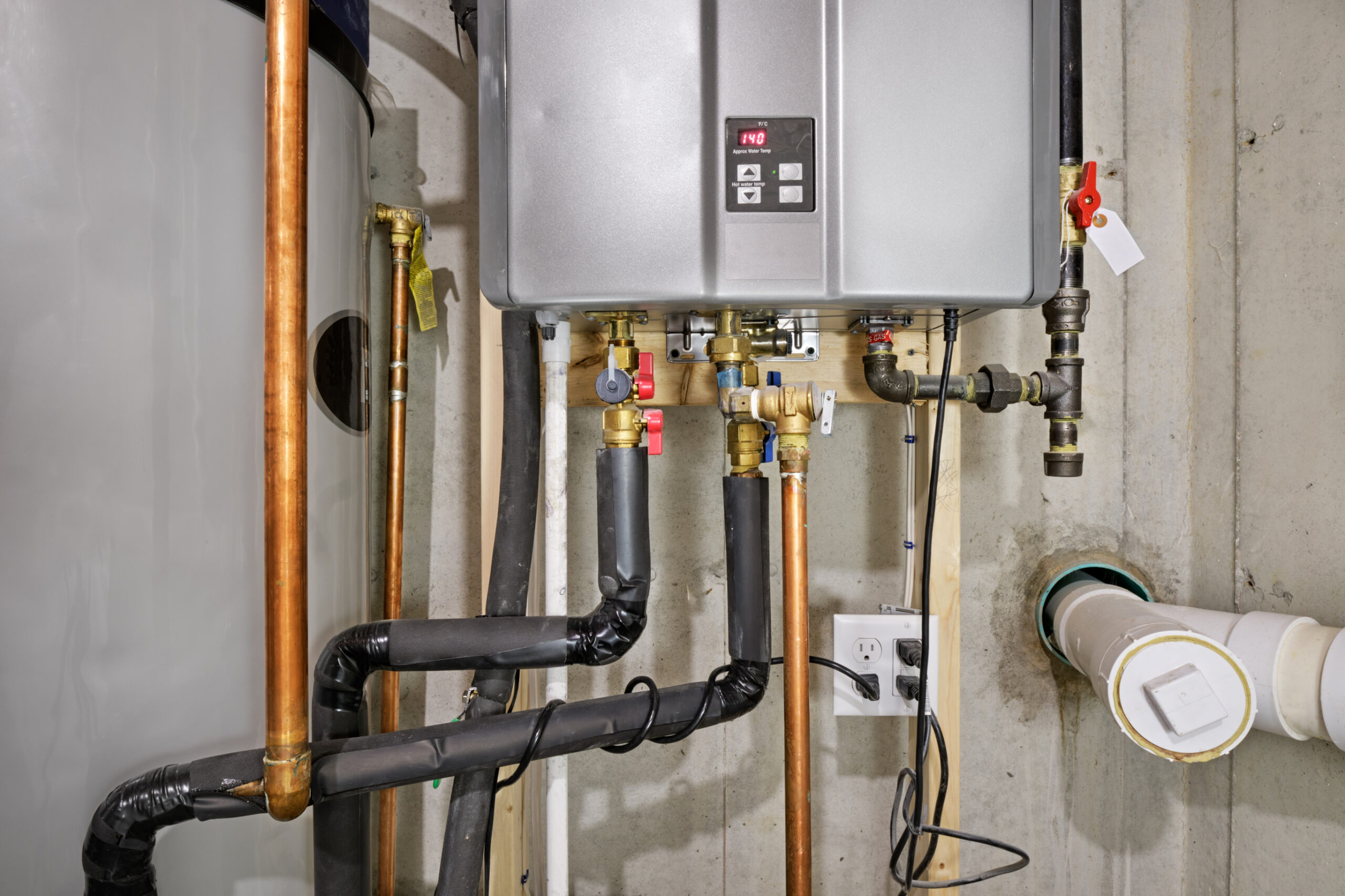
Before you get to work, you need to know what you’re working with. A traditional tank water heater is that tall cylinder usually hiding in your garage or a closet, while a tankless water heater is a compact unit mounted right on the wall.
Once you’ve spotted your system, safety is the name of the game. Start by turning down the thermostat's temperature setting. If you’re running a gas water heater, turn the gas control knob to "OFF" and take a quick peek at the label for any specific pilot light instructions. If you have an electric water heater, head to your circuit breaker and flip the switch to "OFF."
Finally, close the cold-water supply valve to prevent new water from entering, and give the unit plenty of time to cool down. This step is important because we don’t want a scalding surprise. As an extra safety check, locate the pressure relief valve (that’s the T&P valve near the top) and make sure its discharge pipe is clear and pointing toward a safe drain area.
It is important that if you smell gas, stop, leave the area, and call a licensed plumber.
The Simple Water Heater Maintenance Checklist
These maintenance tasks focus on the most common water heater needs: reducing heat loss from sediment buildup, checking safety parts, and catching small leaks early. Work slowly, and stop if a fitting won't budge or water pressure seems abnormal.
Flush the Water Heater Tank
A partial flush is enough to fight sediment buildup and heat loss for many homes, especially those with hard water.
- Connect a garden hose to the drain valve, run it to a safe water drain.
- Open a hot water faucet to let air in.
- Open the drain valve and let water flow until it looks clearer.
- Close the valve.
- Open the cold-water supply and let the tank refill.
If the water doesn't start flowing, try opening and closing the valve a few times to break up the rock, but never force it! Sediment can clog near the bottom of the tank, so if the drain valve is stuck, don't force it.
Test the T&P valve (pressure relief valve)
We will next test the pressure relief valve and check for minor issues before they become costly headaches. Lift the T&P valve lever for a second, then release it. You should see water briefly flow through the discharge pipe before it stops. If it keeps dripping or refuses to budge, don’t play a guessing game—it’s time to call in the pros.
Also scan for rust, wet spots, and corrosion around water lines, fittings, and the base. If you have an expansion tank, check for leaks and make sure it's secure.
Check Your Thermostat Setting
Setting your system to 120 degrees Fahrenheit is usually the sweet spot: hot enough for a great shower but cool enough to prevent scalding and keep your energy bills from rising. Higher water temperature can heat water faster, but it also increases burn risk and standby heat loss.
On gas water heaters, adjust the thermostat dial. On electric water heaters, only open panels if you're confident, because exposed wiring is dangerous and a heating element may be nearby.
When a DIY Check is Not Enough
While going through this checklist, you might run into issues you're not equipped to handle. Call a licensed plumber for help if you notice any of the following: rusty water, popping noises, heavy sediment, frequent temperature swings, low hot water, changes in water pressure, pilot light problems, or breaker trips.
Extensive corrosion around fittings, tankless error codes, or repeated resets also require a visit from a plumber. Issues with the anode rod (sacrificial anode) often require professional assistance for replacement or inspection.
It is important to note that when calling in the professionals, preventative maintenance and pricing vary by the type of water heater you have and the condition of your system.
Conclusion
A little water heater maintenance goes a long way. With routine maintenance, you can expect fewer leaks, fewer cold surprises, and better energy efficiency over time. Do the simple checks, watch for corrosion, and keep the thermostat at a safe level. When something doesn't look normal, stop and call a pro just to be safe.
When it's time for professional help, Dr. Cool is your one-stop shop for all your water heater needs. We provide water heater maintenance, installation, and service for gas, electric, tank, and tankless systems across the Las Vegas Valley. Licensed pros show up ready, treat your home with care, and keep the process stress-free. Call us at (702) 608-6939 or schedule an appointment online to request pricing and ask for a water heater maintenance checkup.
Connect With Us
Our Contact Information
Reach Us by Phone or Email
If you prefer to speak directly with one of our technicians, don’t hesitate to contact us by phone or email. We’re available to assist you during business hours
Phone: (702) 873-1800
Email: info@drcoolservices.com
Business Hours:
Mon – Fri: 7:00 am – 9:00 pm
Sat – Sun: 8:00 am – 5:00 pm