
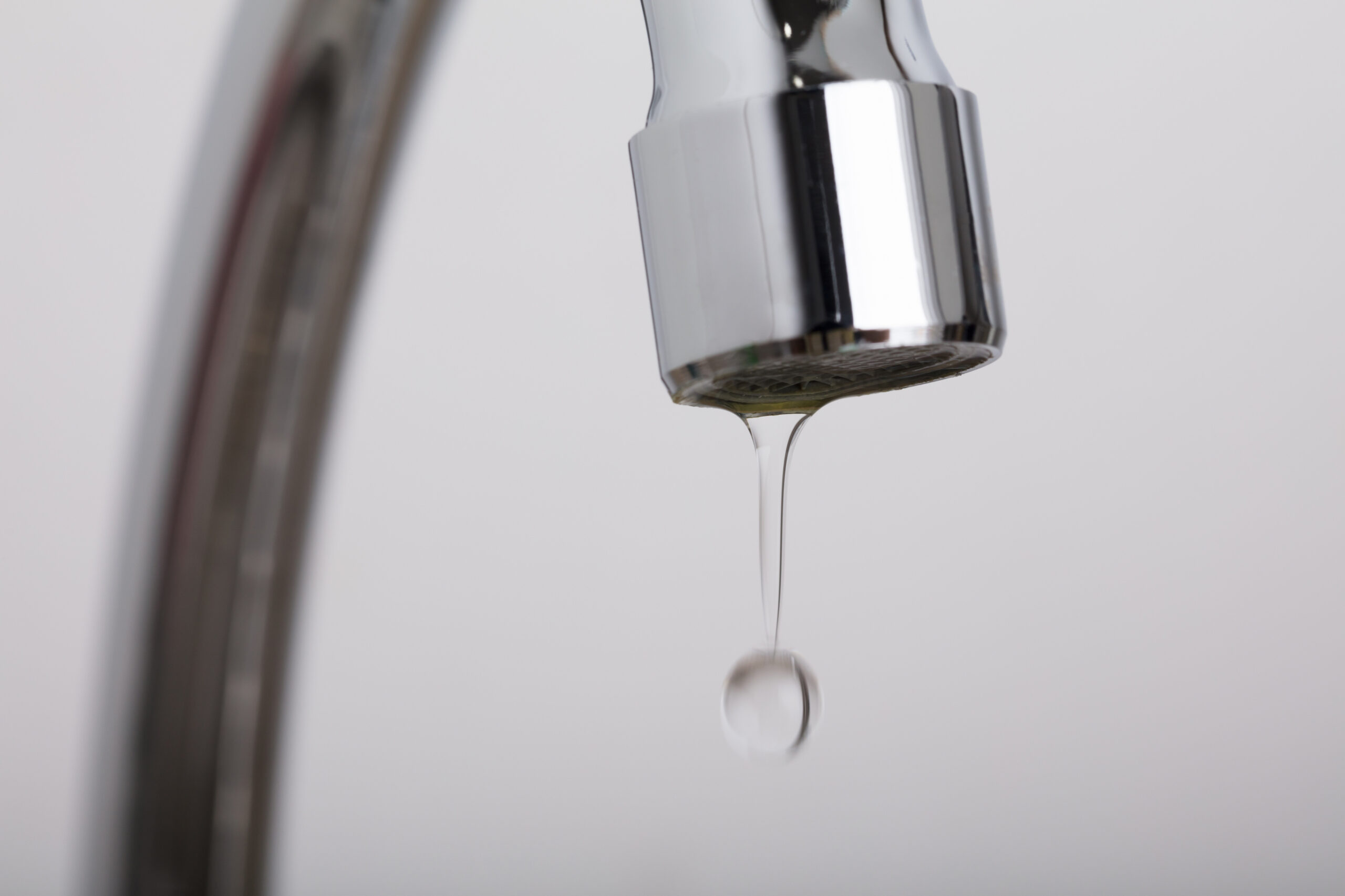
That steady, rhythmic “drip… drip… drip” from a sink faucet isn’t just a midnight annoyance; it’s a waste of water and a drain on your wallet. Whether it’s in your kitchen or bathroom, a leaky faucet can waste hundreds of gallons a month and leave stubborn mineral buildup around your fixtures.
The good news? Most faucet leaks are caused by a short list of usual suspects like worn washers, tired o-rings, or a failing faucet cartridge. The pros at Dr. Cool have put together this guide to help you troubleshoot the drip, perform a few DIY fixes, and decide when it’s time to call in a professional plumber.
Start with a 5-Minute Safety Check
Before you grab an allen wrench or screwdriver, take one essential safety step: find the shut-off valves under the sink.
- Shut Off the Water: Turn the valves clockwise to stop the water supply.
- Test the Seal: Open the faucet to relieve pressure. If water keeps flowing, your shut-off valves might be failing. Stop there and call a plumber to avoid a potential flood.
- Plug the Drain: Place a towel or a stopper in the sink so small replacement parts or a tiny set screw don't disappear down the pipe.
Pinpoint the Source of the Leak
A leak’s location is a roadmap to the problem. Start by drying everything with a paper towel, then run the water flow for a few seconds to see exactly where the dripping begins.
- Dripping from the Spout: If the faucet drips even when the faucet handle is off, an internal seal isn't closing. On older compression faucets, it’s likely a washer or a pitted valve seat. On a modern single-handle faucet, there can still be a seat issue, but it’s almost always a faulty faucet cartridge.
- Leaking Around the Handle or Base: If water pools at the base of the faucet or seeps out from under the handle, you're likely dealing with failed O-rings, rubber rings, or a loose packing nut.
- Drips Under the Sink: Check the supply lines and the water line connections. If the cabinet floor is damp, you might have corrosion on the valve stem or a loose connection at the shut-off valves.
If the leaks are somewhere else in your system, our team can help you pinpoint the source with our professional leak detection services.
Common Causes of Faucet Leaks
Most leaky faucet issues trace back to these common causes:
- Worn Washers & O-Rings: These rubber parts take the brunt of the water pressure. Over time, they become brittle or flattened and lose their seal.
- Corroded Valve Seats: The connection between the faucet and the spout can get pitted or worn down by mineral buildup, preventing a tight seal.
- A Failing Cartridge: For brands like Moen, the faucet cartridge is a self-contained unit. When it fails, replacing it with a new cartridge is usually the easy fix.
- Clogged Aerator: Sometimes "leaks" are just water spraying sideways because the aerator is packed with sediment and grit.
DIY Fixes for Homeowners
Many of the repairs for these issues are straightforward. Before you remove anything, take a picture of your faucet so you know where to put everything after the repair. Head to the hardware store with your old parts to ensure a perfect match. Once you have the proper parts, turn off the water supply, grab an allen wrench, screwdriver, pliers, and a towel, and let’s get to work!
- Remove the Handle: You’ll likely need to loosen a set screw (often hidden under a small cap).
- Access the Internals: Use pliers or a wrench to remove the valve stem or pull out the faucet cartridge.
- Replace the Worn Part: Swap out the old o-rings, worn washers, or the entire faucet cartridge.
- Clean the Aerator: Unscrew the aerator, rinse the debris, and reinstall it snugly.
- Test Your Work: Turn the water supply back on slowly and check for leaks at both low and full flow.
When to Stop DIY and Call a Professional Plumber
Sometimes a simple fix reveals a deeper issue. It is time to call a professional plumber if:
- The valves won't shut off: If you can't control the water line, a major mess might be on the horizon. Call a licensed plumber immediately.
- You see widespread corrosion: If the metal inside the faucet is crumbling or "pitted," a new faucet installation is likely the better investment than a quick repair that won’t last.
- The leak persists: If you've replaced the faucet cartridge but the dripping still won't stop, you might have excessive water pressure.
- Hidden Damage: A musty smell or a swollen cabinet often means a leak inside the wall or a damaged water supply line that needs immediate attention.
Let Dr. Cool Handle the Drip
A faucet leak is usually a clue, not a mystery. While a DIY fix can save the day, some jobs require the specialized tools and experience of a licensed pro. Dr. Cool’s Plumbing team is here to provide stress-free solutions for every faucet in your home.
Whether you need a quick repair, a new faucet installation, or help with your water supply lines, we treat your home with respect and ensure the job is done right the first time. While we’re helping with the plumbing, don't forget we’re also experts in keeping your air conditioning and heating system running perfectly.
Tired of the dripping? Call Dr. Cool at (702) 608-6939 or schedule your plumbing service online today.
Connect With Us
Our Contact Information
Reach Us by Phone or Email
If you prefer to speak directly with one of our technicians, don’t hesitate to contact us by phone or email. We’re available to assist you during business hours
Phone: (702) 873-1800
Email: info@drcoolservices.com
Business Hours:
Mon – Fri: 7:00 am – 9:00 pm
Sat – Sun: 8:00 am – 5:00 pm