
There’s a dark stain on the stucco under the spigot by the side yard, and the gravel beneath it hasn’t been fully dry for weeks. An outdoor faucet leaking a drop at a time is easy to ignore, because it sits outside where nobody has to look at it. But it runs day and night, and small drips like this one are part of why household leaks across the country waste nearly 1 trillion gallons of water a year, according to the EPA’s WaterSense program.
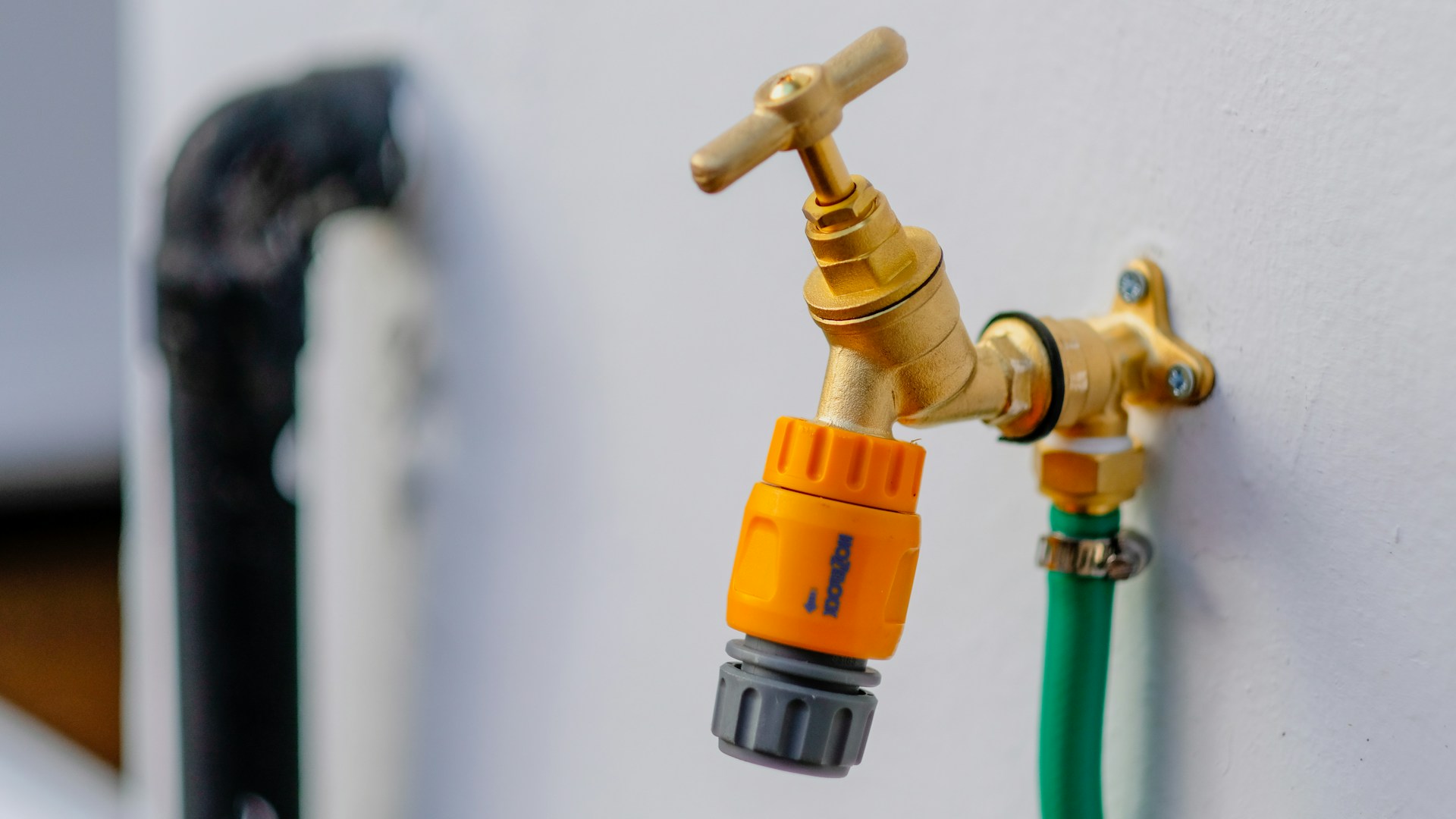
Outdoor faucets, also called hose bibs or spigots, have a hard life in the Las Vegas Valley. They bake in direct summer sun, they handle very hard water, and most winters bring at least a few nights cold enough to freeze an exposed pipe. The good part is that they are simple valves, and finding where the water escapes usually tells you exactly which part has worn out.
Run the four tests below in order. Each one isolates a different part of the faucet.
Test One: Handle Closed, No Hose
Take the hose off, close the handle firmly by hand and watch the spout for a minute.
A steady drip from the spout means water is getting past the valve when it should be sealed. On a standard compression spigot, that is almost always the rubber washer on the end of the stem. Summer heat hardens rubber, and once it hardens it no longer squashes tight against the brass seat inside the valve.
Hard water adds a second problem. The same minerals that leave white crust on your showerhead build up on the faucet seat. A new washer pressed against a rough, scaled seat will drip again soon. A plumber can dress or replace the seat, or replace the faucet if the seat is worn beyond that.
Don't solve a drip by cranking the handle harder. That crushes the washer, strips the stem threads and turns a small repair into a replacement.
Test Two: Handle Open, No Hose
Open the handle about halfway and look at the stem, right where it enters the faucet body under the handle.
Water seeping around the stem points to the packing, a ring of compressed material or a rubber O-ring that seals the stem as it turns. There is usually a packing nut just under the handle. Turning it about an eighth of a turn clockwise with a wrench often stops the seep. If it keeps leaking after a snug turn, the packing or O-ring needs replacing, which means shutting off water to the faucet first (the FAQ below covers how to do that when there's no dedicated valve).
Test Three: Hose On, Water Running
Reattach the hose with the nozzle closed and turn the water on.
A spray from the hose threads is the easiest leak to fix. The rubber washer inside the hose coupling has flattened or cracked. Replace it and tighten the connection by hand.
Water dribbling from a small cap on top of the spout is coming from the vacuum breaker. This device stops dirty water from being siphoned back into your drinking water if pressure drops, for example from a hose lying in a puddle or in a bucket of fertilizer mix. A short dribble when you turn the faucet off is normal while the breaker resets. A steady stream while the water is running means the diaphragm inside has failed. The breaker cap can often be replaced on its own, though on some faucets it is built in and the faucet has to be replaced with it.
Don't remove a leaking vacuum breaker and leave the spout bare. It is there to protect the water you drink.
Test Four: Check Inside and Behind the Wall
Some leaks never show at the spout at all. Walk inside and look at the wall directly behind the hose bib. Check for:
- bubbling paint, soft drywall or a musty smell
- water stains on the garage wall or ceiling below an upstairs spigot
- a puddle that appears every time you use the hose
- white, chalky staining spreading on the outside stucco
That pattern usually means the pipe feeding the faucet has cracked inside the wall. The most common culprit is a frost-free hose bib that froze with a hose still attached. These faucets close the valve deep inside the wall where it stays warm, then let the water in the long stem drain out of the spout. A connected hose traps that water. On a freezing night it expands and splits the pipe, and you don't find out until spring, when you turn the faucet on and water pours into the wall.
A leak behind stucco or drywall needs to be found before it can be fixed. Our water leak detection service traces where the water is actually escaping, so the repair opens only as much wall as necessary.
When Hose Bib Replacement Beats Repair
Washers, packing and hose gaskets are small parts, and replacing them is often enough. Hose bib replacement makes more sense when:
- the faucet body is cracked, or the threads at the spout are stripped
- the seat is too pitted or scaled to seal, even with a new washer
- the stem turns without opening or closing the water
- the pipe behind the faucet split in a freeze
- the faucet has no vacuum breaker, or a damaged one that isn't replaceable
Replacement is also a chance to upgrade. A frost-free hose bib with a built-in vacuum breaker suits exposed exterior walls, especially on north-facing sides that see the least winter sun. Whether a faucet threads on or is soldered to the supply pipe decides how involved the swap is, and that is a quick thing for a plumber to check.
Keeping Exterior Spigots Out of Trouble
Most outdoor faucet repairs can be avoided with a few habits that take seconds:
Disconnect hoses in late fall. Leaving a hose attached all winter is the single most common reason a frost-free faucet fails. Coil the hose and store it out of the sun, which also helps it last longer.
Cover exposed faucets on freezing nights. An insulated faucet cover is enough for the short cold snaps typical of a Las Vegas winter. Pipes on exterior walls and in unheated garages are the most exposed.
Close the faucet gently. Stop turning as soon as the water stops. Hand-tight is enough for a healthy washer.
Watch for crust. White mineral buildup around the spout or stem is an early sign that hard water is working on the seals. If your home has a lot of scale on fixtures, our guide to testing your water hardness is a good next step, and our post on preventing pipe leaks covers the rest of the house.
Stopping the Drip for Good
Most outdoor faucet leaks come down to a washer, a packing nut or a vacuum breaker, and the four tests above will usually tell you which. When the leak is coming from the faucet body or from inside the wall, Dr. Cool can repair or replace the hose bib and track down any hidden water. Book plumbing repair online or call (702) 873-1800. A split pipe pouring water into a wall at night can't wait, and that is what our 24/7 emergency service is for.
Connect With Us
Our Contact Information
Reach Us by Phone or Email
If you prefer to speak directly with one of our technicians, don’t hesitate to contact us by phone or email. We’re available to assist you during business hours
Phone: (702) 873-1800
Email: info@drcoolservices.com
Business Hours:
Mon – Fri: 7:00 am – 9:00 pm
Sat – Sun: 8:00 am – 5:00 pm