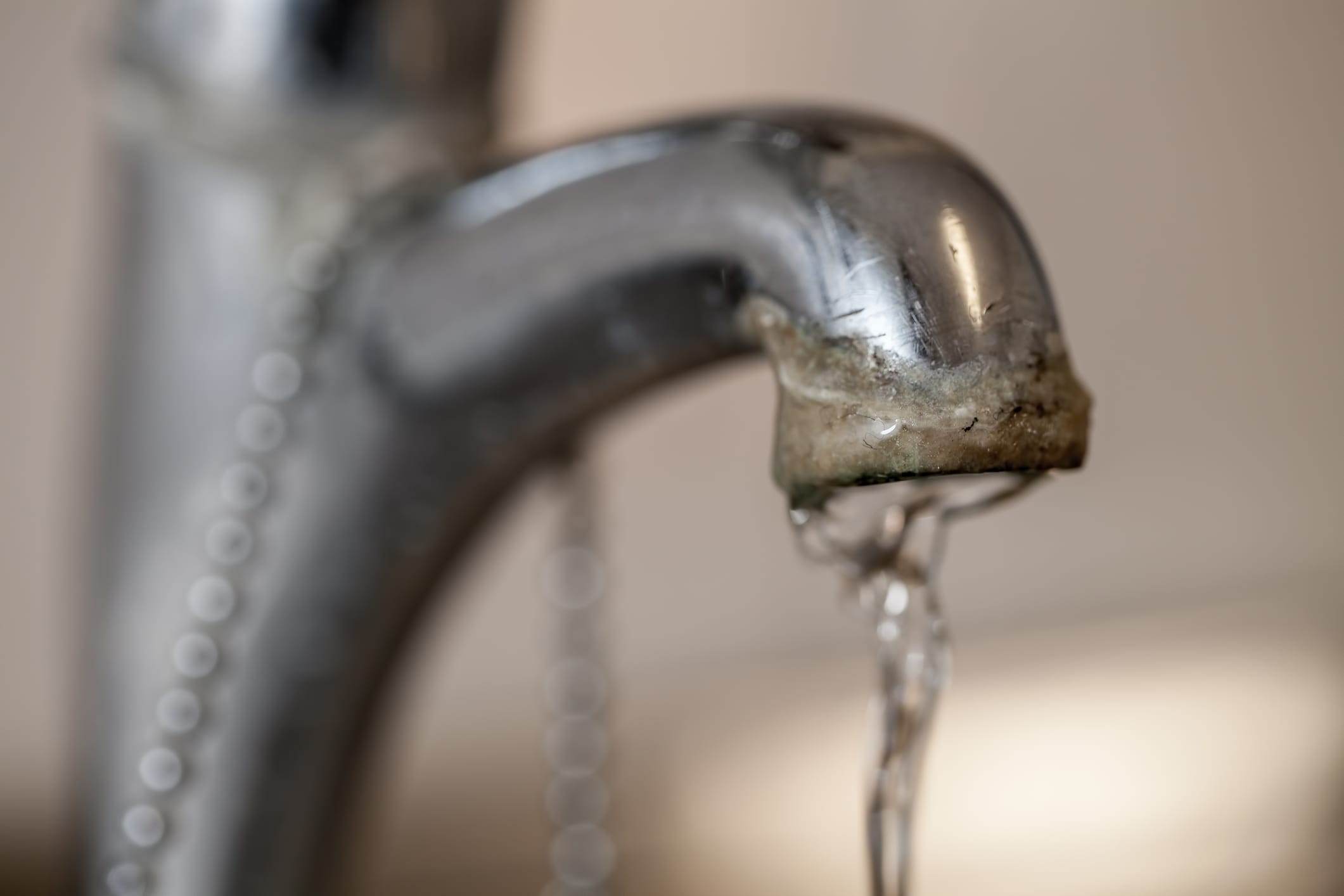
If you’ve noticed white spots on dishes, soap that won’t lather, or crusty buildup around your faucets, your home may have hard water. In fact, homeowners in Las Vegas deal with some of the hardest water in the country thanks to the area’s mineral-rich water supply.
Learning how to test water hardness can help you determine whether hard water is affecting your plumbing, appliances, and water quality, and whether it’s time to consider treatment options.
Key Takeaways
- Las Vegas water is considered very hard, making mineral buildup a common issue for homeowners.
- There are several ways to test water hardness at home, including test strips, a soap test, and checking your municipal water report.
- Professional lab testing provides the most accurate assessment of your home’s water hardness and overall quality.
- A water softener is one of the most effective ways to reduce hard water problems.
What Is Water Hardness?
Water hardness measures the amount of dissolved minerals—primarily calcium and magnesium—in your water. It is commonly measured in:
- Parts per million (ppm) or mg/L (milligrams per liter)
- Grains per gallon (gpg)
As a general rule, soft water ranges from 0-60 ppm, or 0-3.5 gpg, while very hard water reaches 180+ ppm, or 10.5+ gpg. Anything in between typically signifies slightly hard water, which is usually not a concern.
However, many areas of Southern Nevada exceed 180 ppm, with some neighborhoods approaching the upper end of common residential testing ranges, making Las Vegas water among the hardest in the country.
Why Test Water Hardness?
Knowing your home's hardness level can help explain problems such as:
- Limescale on faucets and showerheads
- Soap that won't lather
- Reduced water heater efficiency
- Mineral buildup that can clog pipes
- Dry skin and dull hair
Testing also helps determine whether a water softener, a water filtration system, or other treatment solution would benefit your home.
Top Ways to Test Water Hardness
Water Hardness Test Strips
One of the easiest ways to test water hardness is with water hardness test strips or a hard water test kit. Simply dip the strip into tap water for the recommended amount of time, then compare the results to the included color chart.
Most kits measure hardness on a scale ranging from 0–425 ppm, allowing homeowners to quickly estimate whether their water is soft, slightly hard, or very hard.
Test strips are inexpensive, easy to use, and available at many hardware stores or online.
Drop-Count Titration Kits
Drop-count test kits offer greater accuracy than standard test strips. These kits use a chemical solution that's added to a water sample one drop at a time until the water changes color. The number of drops used determines the hardness level, typically measured in grains per gallon or parts per million.
If you want a more precise measurement without sending your water to a laboratory, this is a good option.
Soap Test
A simple soap test can give you a rough indication of whether you have hard water. To try a soap test, fill a clear bottle with water, add a few drops of pure liquid soap, and shake it.
If the water produces plenty of suds, your water is likely relatively soft. If you see little lather and cloudy water instead, dissolved minerals such as calcium and magnesium may be interfering with the soap.
Municipal Water Report
If your home is connected to city water, your local water provider publishes a yearly water quality report, usually accessible online. These reports often include information about water hardness, alkalinity, fluoride, and other water characteristics.
Keep in mind that municipal reports measure water entering your neighborhood, not necessarily the water coming from your home's plumbing. Older pipes or plumbing conditions may still affect your water.
Professional Laboratory Testing
For the most accurate results, professional laboratory testing is the best option.
A certified lab can measure:
- Water hardness
- Total dissolved solids (TDS)
- Iron
- Lead
- Carbonate levels
- Other contaminants
This type of testing is especially helpful for homes with well water, recurring plumbing problems, or unusual water quality concerns. You can find state-certified labs that test water hardness on the Nevada Division of Environmental Protection website.
Why Hard Water Is So Common in Las Vegas
Las Vegas receives much of its water from the Colorado River and Lake Mead. As water travels through mineral-rich rock formations, it naturally absorbs calcium, magnesium, and other dissolved minerals before reaching homes throughout Southern Nevada.
The region's dry climate also contributes to visible mineral buildup. As water evaporates, it leaves behind deposits that collect on fixtures, inside water heaters, and throughout plumbing systems.
That's why so many Las Vegas homeowners notice hard water sooner than homeowners in other parts of the country.
When To Seek Professional Help for Water Testing
While at-home tests are helpful, professional testing may be worthwhile if you experience:
- Persistent scale buildup
- Frequent plumbing repairs
- Low water pressure
- Water quality concerns
A plumbing professional can evaluate your results and recommend the best treatment solution for your home.
Hard Water Solutions
For many Las Vegas homeowners, a water softener offers the greatest long-term protection against mineral buildup and helps extend the life of plumbing fixtures and appliances.
Depending on your home's needs, other options may include:
- Whole-home filtration systems
- Water conditioners
- Drinking water filtration for improved taste and water quality
Trust Dr. Cool to Test Your Water
Hard water is a fact of life in Las Vegas, but it doesn't have to damage your plumbing. From professional water testing to whole-house water filtration and water softener installations, our experienced plumbers are here to help protect your home's plumbing system. Call Dr. Cool at (702) 608-6939 or schedule your professional plumbing service online today.
Connect With Us
Our Contact Information
Reach Us by Phone or Email
If you prefer to speak directly with one of our technicians, don’t hesitate to contact us by phone or email. We’re available to assist you during business hours
Phone: (702) 873-1800
Email: info@drcoolservices.com
Business Hours:
Mon – Fri: 7:00 am – 9:00 pm
Sat – Sun: 8:00 am – 5:00 pm