While we might have smarter homes, we still have the same old problem of conditioned air escaping into the crawl space or attic. If you feel like your air conditioner is working overtime, but your living room is still a sauna, you are likely dealing with leaky ductwork. Most homeowners lose about 20% to 30% of their air through duct leaks, which is like throwing cash out the window.
Finding a leak in your air duct system does not always require a professional at first. Here is your DIY guide to troubleshooting your duct system and reclaiming your energy efficiency.
Common Signs Your Ducts are Leaking
Before you go climbing into unconditioned spaces, check for these red flags in your daily life. If these sound familiar, your HVAC system is likely struggling.
- Higher Energy Bills: If your utility bills are spiking but the weather has not changed, your cooling system is losing air before it reaches you.
- Dust and Contaminants: Leaky air ducts pull in dust and contaminants from the attic or walls and blast them into your rooms.
- Uneven Cooling: One room feels like a freezer while another is stagnant because the cool air is escaping through duct joints.
Step 1: Perform a Visual Inspection
The first thing any HVAC expert will tell you is to follow the path. Grab a flashlight and head to the areas where your air ducts are visible, such as the basement or crawl space.
Look for sections of ductwork that have pulled apart. If you see dark streaks of dust near duct joints, that is a surefire sign of air duct leaks because the air handler is sucking in dirty air through those gaps.
Step 2: The Hand and Smoke Test
If a visual inspection does not reveal the problem areas, it is time to get a bit more active with your search.
- Turn on the Blower: Set your thermostat to fan-only or cooling mode so the blower pushes air through the duct system.
- The Hand Test: Walk along the accessible portions of your air ducts and run your hand over the seams. You will feel a distinct blast of air if there is a hole.
- The Smoke Test: For smaller air leaks, light a stick of incense or a smoke test pen. Move it slowly along the ductwork. If the smoke wavers or gets sucked into the duct, you have found a leak. This is especially common near the return air intake, where the pressure is different.
Be sure to use great caution when performing the smoke test in attics or crawl spaces. Ensure no flammable insulation or materials are near the flame before lighting incense
Step 3: Professional Diagnostics
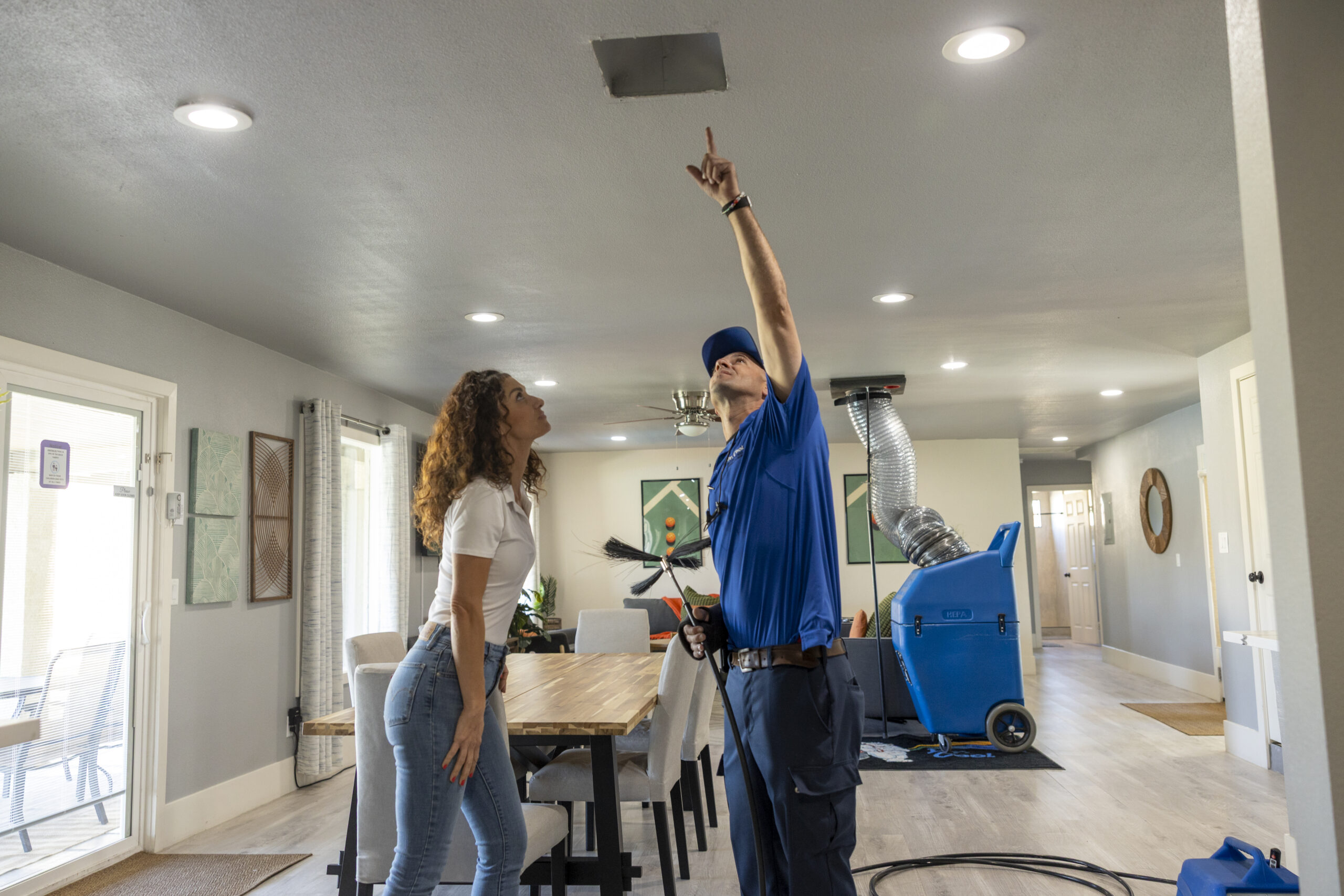
Sometimes leaky air ducts are hidden inside walls or ceilings where you cannot reach them. This is when you call in the HVAC pros for advanced testing.
- Pressure Test: A technician uses a specialized duct leakage test to measure exactly how much air is escaping.
- Blower Door Test: This involves depressurizing the house to find every tiny gap in your HVAC system and envelope.
- Aeroseal Technology: This process involves injecting a specialized sealant into the ductwork that finds and plugs holes from the inside out, often saving you more on energy consumption than manual patching ever could.
Note: Aeroseal works best on small to medium gaps. Fully disconnected duct sections need physical reconnection before Aeroseal treatment.
Sealing the Problem Areas
Once you find the leaks, seal them properly to restore your indoor air quality. Forget the duct tape; you want mastic or foil-backed tape. Mastic is a gooey sealant that you brush onto the joints, and once it dries, it creates a permanent, flexible seal that can last for years. For gaps larger than a quarter inch, apply fiberglass mesh tape before the mastic for a stronger, more durable seal.
Sealing your air ducts is one of the most cost-effective ways to lower energy bills and reduce strain on your air conditioning unit. Plus, it keeps your ductwork in working order, protects your warranty, and extends the lifespan of your entire system.
Let Dr. Cool Find and Fix Your Leaks
If you have tried the DIY methods and your energy bills are still too high, let us take a look at your ducts. We specialize in everything from duct cleaning to advanced duct sealing with Aeroseal. We handle the technical details so you can enjoy a cooler home without the stress.
Sick of cooling your attic or crawlspace instead of your living room? Call Dr. Cool at (702) 608-6939 or schedule your professional ductwork inspection online today.
Connect With Us
Our Contact Information
Reach Us by Phone or Email
If you prefer to speak directly with one of our technicians, don’t hesitate to contact us by phone or email. We’re available to assist you during business hours
Phone: (702) 873-1800
Email: info@drcoolservices.com
Business Hours:
Mon – Fri: 7:00 am – 9:00 pm
Sat – Sun: 8:00 am – 5:00 pm