In the world of home maintenance, your air conditioning system has a lifeblood called refrigerant. Whether your air conditioner uses R-22 (freon), R-410A, or the newer R-454B refrigerants, these chemicals remove heat from your home.
At Dr. Cool, we want to be your go-to partner for home comfort. While checking your refrigerant charge is technically a job for a licensed HVAC technician due to safety and EPA regulations, knowing the signs of a low refrigerant situation is a vital skill for every homeowner. This guide will show you how to spot the trouble and what the professional troubleshooting process looks like.
Understanding the Different Refrigerant Types:
Before you can check your refrigerant levels, you need to know which refrigerant your system uses. Below are the different types of refrigerants commonly used in Las Vegas air conditioners.
- R-22 (Freon): Fully phased out, no longer manufactured. The systems that use R-22 are typically 15+ years old, and recharging them requires reclaimed R-22.
- R-410A: The most common refrigerant in Las Vegas homes. This refrigerant is currently being phased out of new equipment under the new EPA low-GWP regulations.
- R-454B (Puron Advance) and R-32: The new refrigerants replacing R-410A in new equipment.
The professionals at Dr. Cool can help you weigh repair vs. replacement based on your system's age and refrigerant type if you do find a refrigerant leak or low refrigerant levels.
Signs Your AC Refrigerant Level is Low
Before you grab a manifold gauge set like the pros, look for these red flags. Your AC system is a closed loop, so you should never actually lose refrigerant unless there is a refrigerant leak.
- Warm Air Blowing: If your vents are blowing lukewarm air despite the thermostat set to 70 degrees, the system is likely struggling to absorb heat.
- Ice on the Lines: If you see frost or ice on the evaporator coil or the copper refrigerant lines outside, your refrigerant system is out of balance.
- Note: Ice can also form due to restricted airflow caused by a dirty filter; check your filter first before assuming this is a refrigerant issue.
- Higher Energy Bills: A system with low refrigerant levels has to run much longer to cool the house, which causes your monthly energy bills to skyrocket.
- Hissing or Bubbling Noises: These sounds usually indicate a physical refrigerant leak in the lines, service valves, fittings, or the compressor.
- The AC Never Stops: If your AC unit runs 24/7 without reaching the target temperature, it indicates poor system efficiency and possibly low refrigerant levels.
How to Check Refrigerant Level: The Homeowner’s Test
Since opening a refrigerant system requires specialized certification and tools, your "how-to" as a homeowner focuses on non-invasive diagnostics. Here is the step-by-step for an at-home check.
1. The Temperature Split Test
One of the easiest ways to check for proper refrigerant levels is to measure the temperature difference. Use a digital thermometer to check the air temperature at a supply vent and then at the return vent. For optimal performance, you should see a "split" of 15 to 20 degrees. If the difference is less than 15 degrees, you likely have a refrigerant charge issue or a dirty evaporator coil.
It is important to mention that the split test is most reliable when outdoor temperatures are between 70ºF and 95ºF. On days with extreme heat, above 100ºF, the split may read differently even if your system is working properly.
2. Inspect the Refrigerant Lines
Walk out to your outdoor unit and look at the two copper lines. The larger, insulated line should feel like a cold soda can and show some condensation. If it is dry or feels room temperature, you likely have low refrigerant. The smaller line will feel warm to hot depending on the outdoor temperature; this is normal on a hot Las Vegas day. If it feels extremely hot and the system is struggling to cool, and if other symptoms are present, call a technician.
3. Check for Visual Leaks
Refrigerant travels with a specific oil. If you see oily stains on the AC unit, the service valves, or along the copper lines, you have found a refrigerant leak. Simply adding more gas won't fix this; the hole must be repaired before you recharge the system.
The Technical Side: What the Pros Use
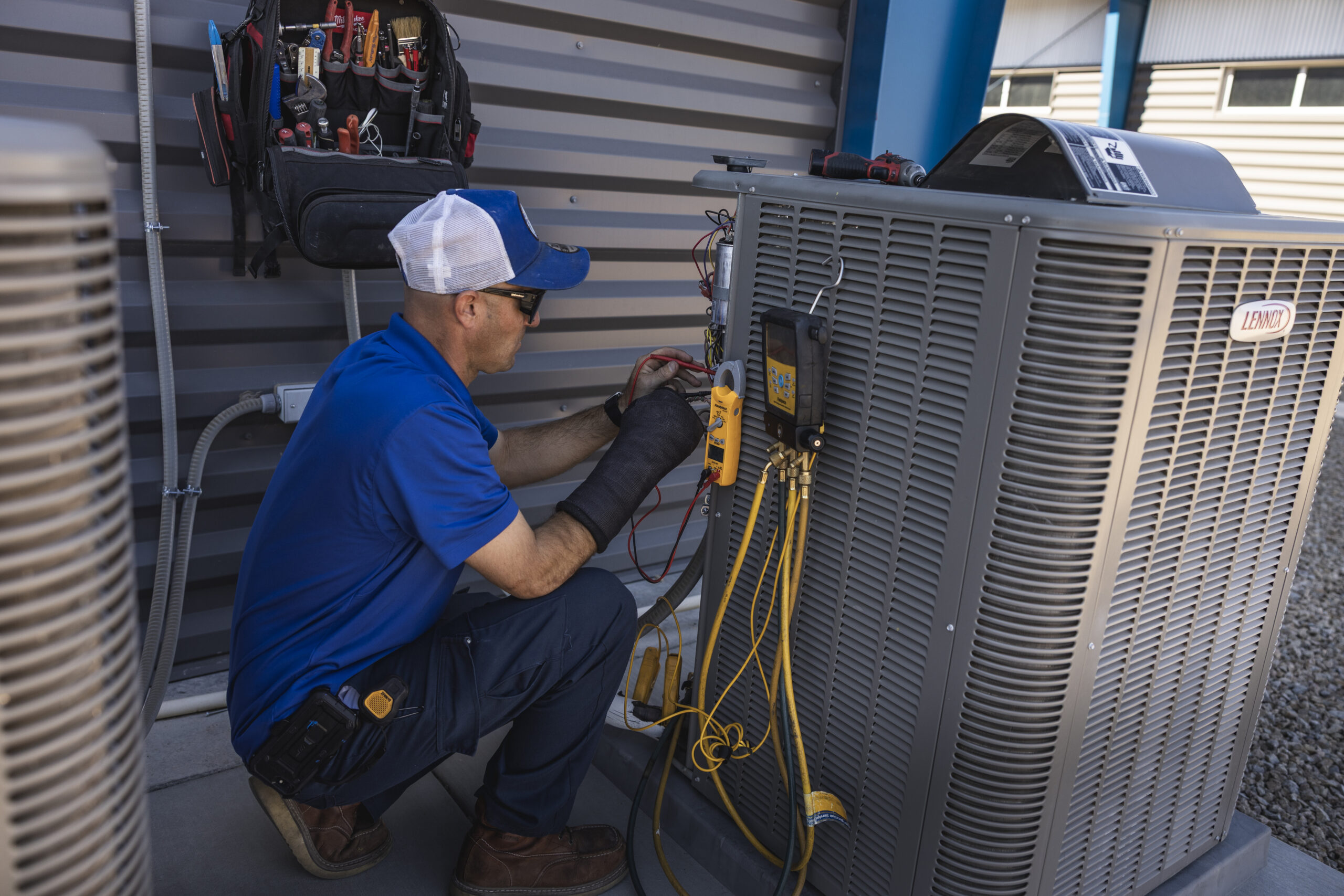
When an HVAC technician arrives, they use a manifold gauge set to get exact pressure readings. This is the only way to confirm whether there is too much or too little refrigerant. Here is what to expect from a professional refrigerant reading:
- Hooking Up the Gauges: The tech connects the manifold gauge set to the high-pressure and low-pressure service valves.
- Calculating Superheat: This is the process of measuring the refrigerant pressure and temperature at the evaporator coil. It ensures the compressor isn't being flooded with liquid.
- Calculating Subcooling: For newer HVAC systems with a TXV valve, techs use subcooling to determine the exact refrigerant level.
- Using a Leak Detector: If the AC refrigerant level is low, a technician will use an electronic leak detector to find the exact source of the breach.
The Danger of DIY Refrigerant Handling
It is important to remember that freon and other refrigerants are high-pressure chemicals that can cause severe frostbite or respiratory issues. Additionally, federal law requires a Section 608 certification to purchase or handle these substances. Attempting to add refrigerant yourself without the proper pressure gauges and know-how can lead to a slugged compressor. A slugged compressor occurs when liquid refrigerant enters a compressor designed to compress gas — the resulting damage is typically irreparable.
Let Dr. Cool Be Go-To AC Partner
If you suspect your home AC has low refrigerant levels, don't take a gamble with a DIY kit. Our licensed team can perform a full diagnostic, find the refrigerant leak, and get your system back to peak performance with total care.
Whether you need a simple recharge, a complex repair, regular maintenance, or a new system installed to keep your airflow and energy efficiency high, we are here to help. We explain your pressure readings clearly and keep the process stress-free with up-front pricing and 100% satisfaction guarantee, so you can get back to your day.
Is your AC blowing warm air? Call Dr. Cool at (702) 608-6939 or schedule your professional HVAC service online today.
Connect With Us
Our Contact Information
Reach Us by Phone or Email
If you prefer to speak directly with one of our technicians, don’t hesitate to contact us by phone or email. We’re available to assist you during business hours
Phone: (702) 873-1800
Email: info@drcoolservices.com
Business Hours:
Mon – Fri: 7:00 am – 9:00 pm
Sat – Sun: 8:00 am – 5:00 pm
