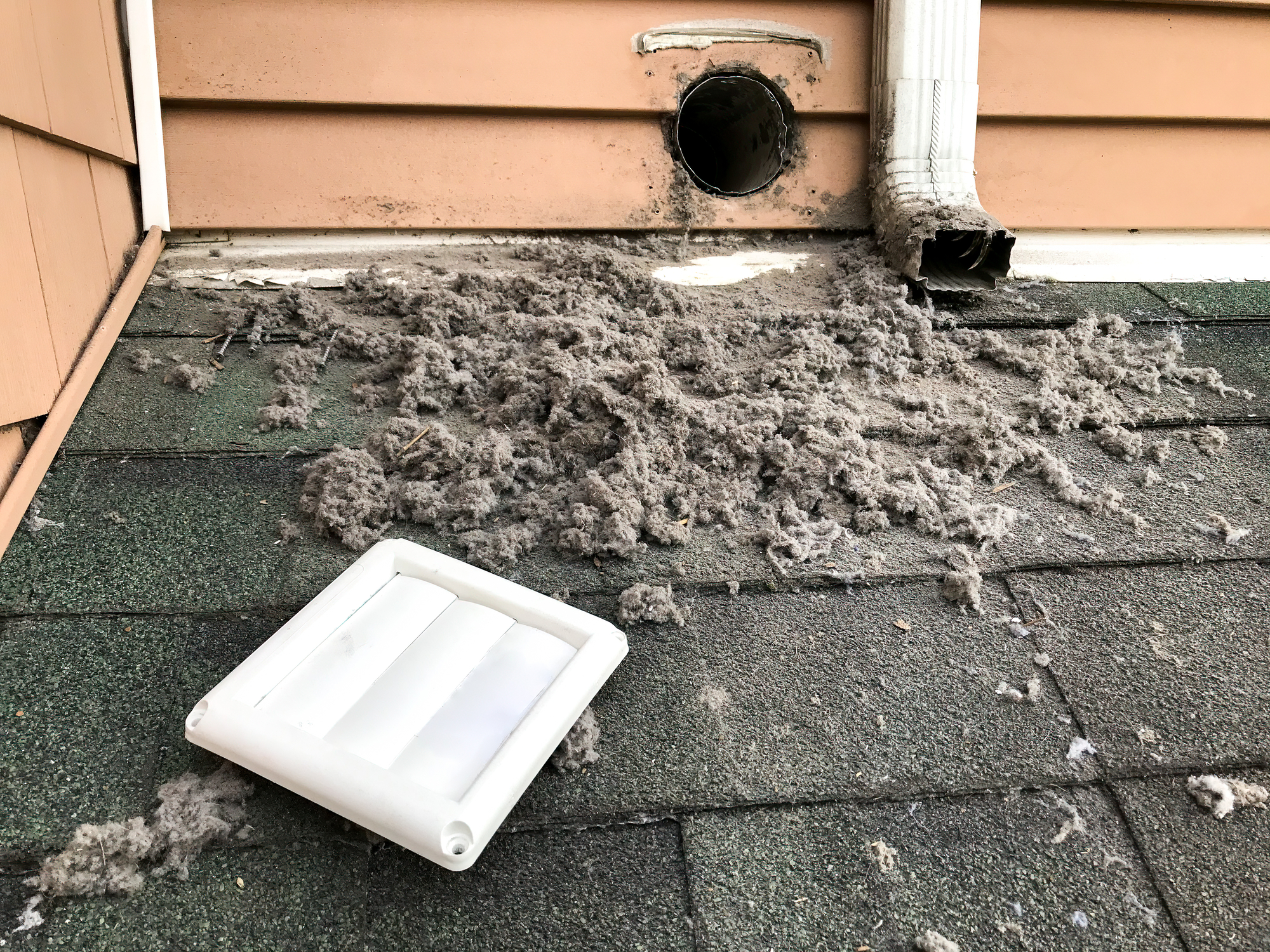
Cleaning the lint trap after every load is a good habit, but it doesn’t remove the lint that collects farther inside your dryer exhaust system. Over time, that buildup can restrict airflow, make clothes take longer to dry, and create a potential fire hazard. Learning how to clean your dryer vent can help your dryer operate more efficiently while reducing unnecessary wear and safety risks.
Key Takeaways
- Clean the lint trap after every load and inspect the dryer vent regularly.
- Longer drying times, excess heat, and unusual odors can indicate a vent blockage.
- Professional cleaning may be necessary for long, difficult-to-access, or heavily clogged dryer vents.
Why Is Dryer Vent Cleaning Important?
When your dryer runs, warm, moist air travels through the dryer vent duct and exits your home through an exterior vent. Dryer lint can escape the lint trap and gradually collect along the vent hose, ductwork, and exterior vent cover.
As that buildup increases, airflow becomes restricted. Your dryer may have to operate longer to remove moisture from clothing, increasing energy consumption and putting additional strain on the appliance.
A clear vent also allows heat and moisture to escape properly instead of accumulating around the dryer or laundry area.
Signs Your Dryer Vent Needs Cleaning
You don't necessarily need to see lint pouring out of the vent to have a problem. Changes in dryer performance can provide earlier warning signs.
Watch for:
- Clothes taking longer than usual to dry
- Multiple cycles needed for one load
- Clothing feeling unusually hot
- The dryer becoming excessively hot
- A burning or musty smell
- Weak airflow at the exterior vent
- Visible dryer lint around the vent cover
- The dryer shutting off unexpectedly
- Excess moisture in the laundry area
Foul odors deserve particular attention. A burning smell may indicate lint overheating inside the appliance or exhaust system. Stop using the dryer until the source is identified.
Moisture around walls or ceilings near a concealed vent can also indicate that the exhaust isn't venting properly. Over time, trapped moisture may contribute to unsightly stains, mold, or even water damage.
How to Clean Your Dryer Vent
Follow these steps to clean your dryer vent:
1. Turn Off and Unplug the Dryer
Always disconnect the dryer from power before cleaning it.
For an electric dryer, unplug the power cord. If you have a gas dryer and need to move or disconnect anything involving the gas supply, contact a qualified professional rather than attempting the work yourself.
2. Pull the Dryer Away From the Wall
Carefully move the dryer forward so you can access the vent hose behind it. Inspect the hose for visible damage, kinks, or excessive buildup.
3. Disconnect the Vent Hose
Loosen the clamp or connector securing the vent hose to the dryer. Once disconnected, look inside both the hose and dryer exhaust opening. Remove loose lint by hand when it is easily accessible.
This is also a good opportunity to inspect the connection for signs of damage or a significant vent blockage.
4. Vacuum Around the Dryer Exhaust
Use a vacuum attachment to remove loose dryer lint from the exhaust opening and surrounding area. Avoid forcing the vacuum hose deeply into areas where it could damage internal dryer components.
Clean behind and underneath the appliance as well. Lint and dust can accumulate in these areas even when the dryer vent itself is functioning correctly.
5. Clean the Dryer Vent Duct
Insert a dryer vent brush into the duct and gently rotate it to loosen lint and debris.
Work gradually rather than forcing the brush through resistance. Depending on the vent configuration, you may need to clean from both the dryer side and the exterior opening.
For long ducts, vents with several turns, or substantial buildup, DIY clog removal may not reach the entire system. Those situations are better handled by a professional with equipment designed to clean the full length of the duct.
6. Clean the Exterior Vent Cover
Locate the dryer vent cover outside your home.
Remove visible lint and debris, then make sure the vent flap can open freely. Landscaping, dirt, pests, and other materials can sometimes obstruct the opening.
Never install a screen over a dryer exhaust outlet unless specifically permitted by applicable codes and manufacturer instructions. Fine screens can capture lint and create another restriction.
7. Reconnect Everything
Once the vent is clear, securely reconnect the vent hose and carefully return the dryer to its original position.
Make sure the hose isn't crushed or kinked behind the appliance.
Restore power and run the dryer briefly. Check the exterior vent to confirm that warm air is flowing freely.
How Often Should You Clean a Dryer Vent?
A good general rule is to inspect and clean the dryer vent at least once per year. Some households may need more frequent dryer maintenance.
Consider more frequent cleaning if:
- You do laundry frequently.
- You have a large household.
- The dryer vent duct is particularly long.
- The vent contains several bends.
- You regularly dry towels, blankets, or other lint-producing fabrics.
- You have pets.
- Drying times begin increasing.
Remember that cleaning the lint trap after every load does not replace vent cleaning. The lint screen catches much of the material produced during drying, but some fine particles can still enter the exhaust system.
Can a Dirty Dryer Vent Affect Indoor Air Quality?
A properly installed dryer vent should carry hot, humid air and lint outside the home.
A disconnected, leaking, or obstructed duct can allow some of that material to enter indoor spaces. That may contribute to dust, moisture, and other air quality issues.
If you're experiencing poor air quality throughout your home, the dryer may not be the only source. HVAC cleaning, air duct cleaning, filtration improvements, or air scrubbing may be worth considering to improve air quality.
How to Prevent Dryer Vent Buildup
A few simple habits can reduce lint accumulation between cleanings:
- Clean the lint trap after every load.
- Inspect the vent hose periodically.
- Keep the exterior vent cover unobstructed.
- Avoid overloading the dryer.
- Replace damaged or crushed vent ducting.
- Pay attention to changing drying times.
- Schedule professional cleaning when necessary.
The goal isn't just a cleaner vent. Good airflow helps your dryer remove moisture efficiently, potentially shortening drying cycles and reducing unnecessary strain on the appliance.
When Should You Call a Professional?
Call for professional help if you suspect a blockage but can't access the entire duct, your vent travels a long distance through the home, or cleaning doesn't improve dryer performance.
You should also stop using the dryer and seek assistance if you smell burning, notice extreme heat, or suspect damage to the vent.
Professional dryer vent cleaning provides more thorough clog removal for systems that can't be safely or effectively cleaned with a basic brush and vacuum.
Keep Your Home's Airflow Clean With Dr. Cool
Knowing how to clean your dryer vent is an important part of routine home maintenance, but your dryer isn't the only system that depends on clean airflow.
Dr. Cool provides HVAC and duct services for Las Vegas-area homeowners. If you're dealing with dust, airflow problems, or indoor air quality concerns throughout your home, our team can inspect your HVAC system and recommend the right cleaning or indoor air quality solution.
Call Dr. Cool at (702) 608-6939 or schedule your professional HVAC service online today.
Connect With Us
Our Contact Information
Reach Us by Phone or Email
If you prefer to speak directly with one of our technicians, don’t hesitate to contact us by phone or email. We’re available to assist you during business hours
Phone: (702) 873-1800
Email: info@drcoolservices.com
Business Hours:
Mon – Fri: 7:00 am – 9:00 pm
Sat – Sun: 8:00 am – 5:00 pm