A clogged garbage disposal can bring your kitchen to a standstill. Whether you’re dealing with standing water in the sink, a humming disposal, or food waste that won’t drain, the good news is that many garbage disposal clogs can be cleared without replacing the unit.
Knowing how to unclog a garbage disposal safely can help you restore proper drainage and avoid unnecessary plumbing repairs. Here’s what every homeowner should know before reaching for the reset button—or calling a plumber.
Key Takeaways
- Most garbage disposal clogs are caused by food debris, grease, or items that shouldn't go down the drain.
- Always disconnect power before attempting to unclog or un-jam your garbage disposal.
- Simple tools like a plunger, Allen wrench, or baking soda can often resolve minor clogs.
- If the disposal remains jammed or repeatedly clogs, it's time to call a professional plumber.
What Causes Garbage Disposal Clogs?
Garbage disposals are designed to grind small amounts of food waste, but they're not built to handle everything.
Common causes of garbage disposal clogs include:
- Coffee grounds
- Rice
- Potato peels
- Banana peels
- Eggshells
- Fruit pits
- Grease and oil
- Large amounts of food debris
These materials can accumulate inside the disposal, clog the drainpipe, or become lodged around the disposal blades, preventing the unit from working properly. It’s essential to properly clean your drains and monitor for any garbage disposal clogs.
How to Unclog a Garbage Disposal
Note: Before you begin, NEVER place your hand inside the garbage disposal, even if you believe the power is off. This can result in serious injuries.
Follow these steps to unclog your garbage disposal:
Step 1: Turn Off the Power
Safety comes first.
Turn off the garbage disposal and unplug it if possible. If the disposal is hardwired, switch off the circuit breaker that supplies power to the unit.
This prevents the disposal from accidentally turning on while you're working.
Step 2: Inspect the Disposal
Use a flashlight to look inside the disposal chamber.
If you see food debris or a foreign object, use tongs or pliers to carefully remove it. Never use your fingers to reach inside.
Common items that accidentally fall into disposals include utensils, bottle caps, and small kitchen tools.
Step 3: Use the Reset Button
Many disposals have a built-in reset button located on the bottom of the unit.
If the disposal has overheated or shut off automatically, pressing the reset button may restore operation after the obstruction has been removed.
Step 4: Un-Jam the Disposal
If the motor hums but the disposal won't spin, the flywheel may be jammed.
Most garbage disposals have an opening on the bottom that accepts an Allen wrench or hex key.
Insert the wrench and rotate it back and forth several times to manually free the jammed mechanism.
This is one of the safest and most effective methods for how to un-jam your garbage disposal.
Step 5: Flush the Drain
Once the disposal turns freely, run cold water while operating the unit.
The flowing water helps wash loosened food waste through the drainpipe and reduces the chance of another clog forming.
Avoid using hot water while grinding food because it can melt grease, allowing it to coat pipes before solidifying farther down the drain.
When to Check the P-Trap
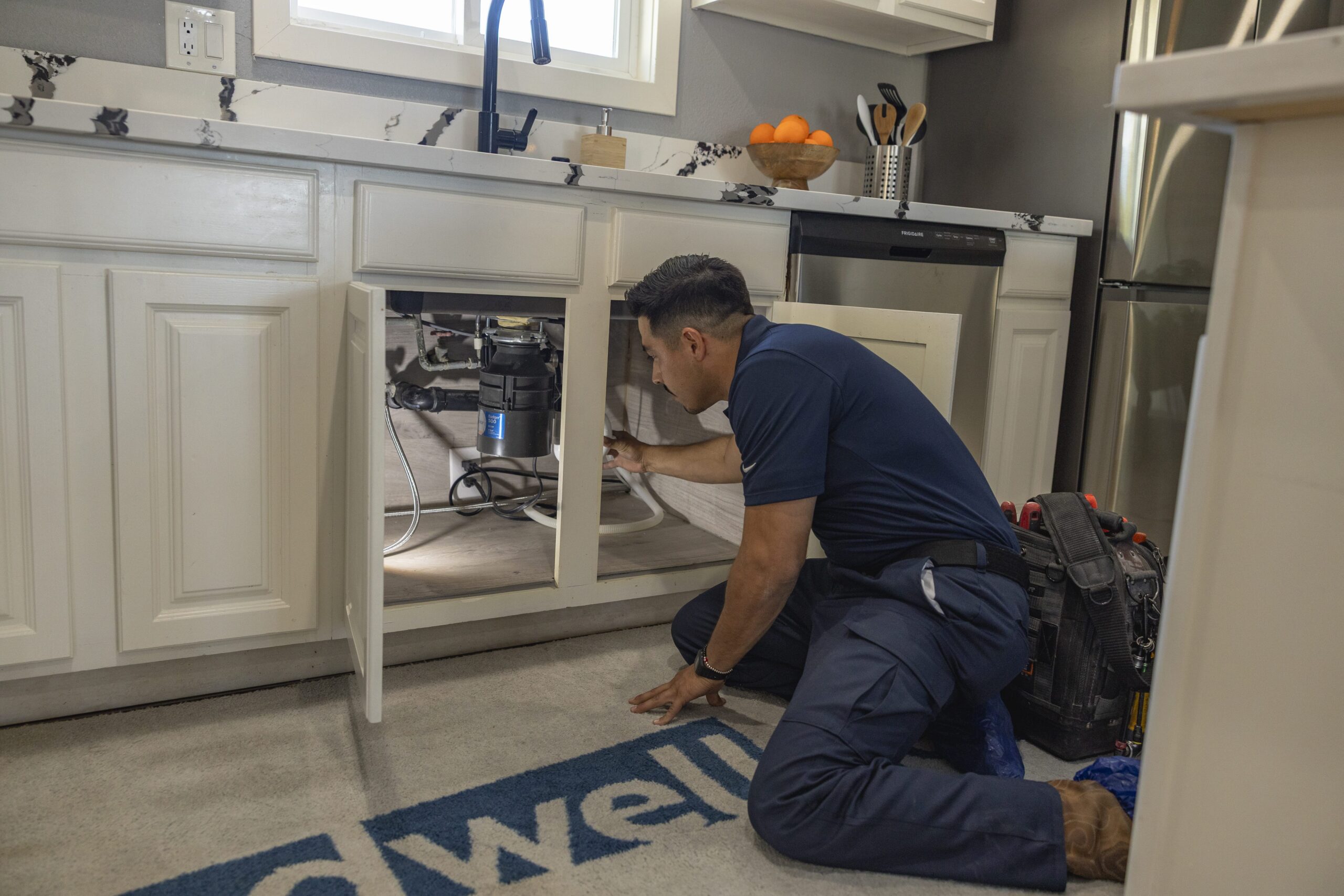
If water still won't drain after clearing the disposal, the clog may be located in the P-trap beneath the sink.
Place a bucket underneath the pipe before disconnecting it, as water and food debris may spill out.
After removing the blockage, reconnect the P-trap securely and test the sink.
If you're uncomfortable disassembling plumbing components, a professional plumber can safely inspect and clear the drain. How often you should clean your drains depends on the drain, how often you use it, and whether or not they are displaying signs of clogging.
Tips to Prevent Future Garbage Disposal Clogs
A few simple habits can help keep your disposal working properly.
- Run cold water before, during, and after using the disposal.
- Feed food waste gradually instead of all at once.
- Regularly monitor your sink for standing water to avoid sink clogging.
- Avoid putting coffee grounds, rice, potato peels, banana peels, eggshells, and fruit pits into the disposal.
- Clean the disposal regularly using a garbage disposal cleaner designed for the unit.
- Grind small ice cubes occasionally to help remove light residue from the grinding chamber.
These practices can help extend the life of your disposal and reduce the risk of future clogs.
When to Call a Professional
Some garbage disposal problems require more than DIY troubleshooting.
Contact a plumber if:
- The disposal repeatedly clogs.
- The reset button won't restore operation.
- Water leaks beneath the sink.
- The disposal makes loud grinding noises.
- The motor won't run after resetting.
- The sink continues to back up after plunging.
A professional can identify whether the problem is inside the disposal, the drainpipe, or another part of your plumbing system.
Trust Dr. Cool for Garbage Disposal Repairs
If you can't unclog your garbage disposal or you're dealing with recurring drain problems, Dr. Cool is here to help. Our experienced plumbing team can diagnose the cause of the clog, clear stubborn blockages, and restore your kitchen plumbing quickly and safely.
Whether you need garbage disposal repair, drain cleaning, or plumbing service, call Dr. Cool at (702) 608-6913 or schedule your professional HVAC appointment online today.
Connect With Us
Our Contact Information
Reach Us by Phone or Email
If you prefer to speak directly with one of our technicians, don’t hesitate to contact us by phone or email. We’re available to assist you during business hours
Phone: (702) 873-1800
Email: info@drcoolservices.com
Business Hours:
Mon – Fri: 7:00 am – 9:00 pm
Sat – Sun: 8:00 am – 5:00 pm
