One of the worst feelings is when you step inside to escape the wind and pollen, only to find your itchy eyes and allergy symptoms follow you through the door. The truth is that the indoor environment often harbors more airborne allergens than the outside world. Between dust mites, pet dander, and mold spores, your living space can quickly become a hotspot for allergic reactions if you’re not vigilant.
The good news is that you do not need a massive remodel to find relief. By using a few smart habits and the right HVAC allergy solutions, you can turn your home into a true sanctuary where you can breathe easy. The pros at Dr. Cool have put together this guide to help you master your home environment and improve your indoor air-quality.
Entryway Cleaning Habits
Think of your front door as the first line of defense. Whatever allergens you are able to clean up there stays out of your carpet and ductwork.
- The Shoe Rule: Encourage a shoes-off policy to prevent tracking in outdoor pollutants throughout your house.
- Washable Mats: Use heavy-duty mats at every entrance and wash them weekly so allergens can’t linger.
- Damp Dusting: Instead of a feather duster that sends airborne particles back into your living environment, use a damp microfiber cloth to actually trap contaminants. Be sure to dust and clean windowsils, door frames, and other surfaces that interact with outdoor air.
- HEPA Vacuums: If you have rugs or carpet, a vacuum with HEPA filters is a must to prevent dust and pet dander from being blown back into the air. These filters pick up 99.97% of dust, pollen, mold, bacteria, and other airborne particles, making sure they don’t find their way into your air ducts and immune system.
HVAC System Maintenance
A well-maintained HVAC system is the most powerful tool you have for improving your home’s air quality. It is not just about temperature; it is about air filtration.
Upgrade Your HVAC Filters
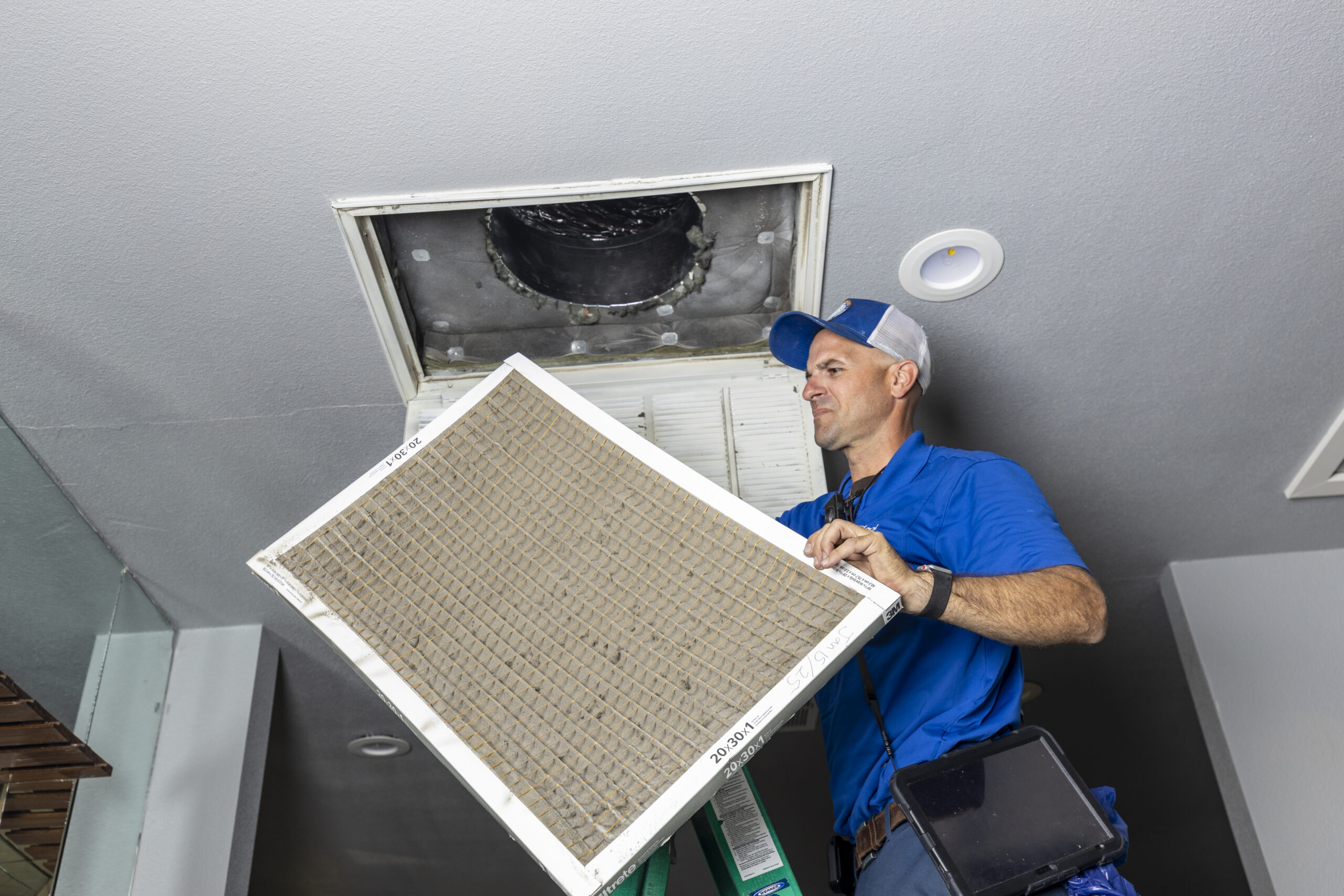
Your HVAC filters are the gatekeepers. Most of the standard filters are designed to protect the equipment from large dust, not to protect your immune system from tiny particles.
- Check the MERV Rating: This rating indicates how effective the filter is at capturing small particles measured in microns. For allergy relief, a higher MERV rating is usually better, but be sure to check that it is compatible with your system's airflow requirements. For most Las Vegas homes, a MERV 11–13 filter offers the best balance of filtration and airflow.
- Replace Regularly: Clogged filters lead to poor air quality and an overall decline in energy-efficiency. During heavy air conditioning or heating seasons, check your air filters once a month and replace dirty ones as soon as they look gray.
Seal and Maintain Your Ductwork
Leaky ductwork acts like a vacuum, pulling in attic dust, insulation fibers, and mildew from hidden spaces. Regular maintenance ensures your ductwork is free of leaks, improving efficiency and reducing the risk of pulling contaminants and moisture into your system. If you do stumble upon a leak, skip the DIY stress and connect with us to seal your ductwork so your system can keep running at peak performance.
Control Your Indoor Humidity Levels
Indoor humidity plays a major role in which indoor allergens thrive in your home. The Sweet Spot to shoot for is humidity levels between 30% and 50%, and higher or lower you open yourself up for some potential issues.
- High Humidity: When humidity is high, you create a breeding ground for dust mites and mold spores. If your home consistenly feels muggy, a whole-home dehumidifier can help with humidity control.
- Low Humidity: If the air is too dry, your respiratory system can quickly become irritated, making allergy symptoms feel worse. In this case, adding a whole-home humidifier to your HVAC system is the move.
Advanced HVAC Allergy Solutions
Sometimes a better filter isn't enough for severe allergies. That is where adding systems, or having a professional look at yuor system comes in.
- Whole-Home Air Purifiers: Unlike portable air purifiers that only clean one room, these are installed directly into your HVAC system to treat all the air in your home. These often use high-efficiency particulate air technology to capture 99.97% of contaminants.
- UV Light Systems: A UV light installed near the evaporator coils helps stop bacteria and mold growth on the coils, keeping your system cleaner and reducing biological contaminants in your air.
- Duct Cleaning: If you notice a musty smell or see visible buildup near your vents, a professional duct cleaning can remove years of settled allergens.
Signs It Is Time to Call The Pros
You can handle the cleaning around the house and routine filter swaps, but some HVAC solutions require a pro. Reach out for HVAC services if you notice:
- Allergy flare-ups every time the system runs.
- Persistent mildew or musty odors coming from the vents.
- Unusual dust buildup even after a deep clean.
- Weak airflow or a heat pump that struggles to keep up.
Let Dr. Cool Help You Breathe Easier
Your home should be the one place where you can finally stop coughing and sneezing. At Dr. Cool, we specialize in total indoor air quality solutions that are your easy button for allergy relief year-round. Our licensed team can help you find the perfect balance of air filtration, uv light purification, and humidity control to fit your budget and your home.
While we are experts at improving your home environment with cleaner air, we are also here for all your plumbing and air conditioning needs. Whether you need a simple AC tune-up or a specialized indoor air quality audit, we treat your home like our own and get the job done right the first time.
Ready for a fresher, cleaner home? Call Dr. Cool at (702) 608-6939 or schedule your indoor air quality consultation online today.
Connect With Us
Our Contact Information
Reach Us by Phone or Email
If you prefer to speak directly with one of our technicians, don’t hesitate to contact us by phone or email. We’re available to assist you during business hours
Phone: (702) 873-1800
Email: info@drcoolservices.com
Business Hours:
Mon – Fri: 7:00 am – 9:00 pm
Sat – Sun: 8:00 am – 5:00 pm
