
In a front yard covered in desert rock, water has nowhere to hide for long. A patch of gravel that stays dark while the rest dries out by mid-morning, a clump of weeds thriving in one spot nobody waters, a small sinkhole near the driveway: these are the ways a main water line leak tends to introduce itself in the Las Vegas Valley.
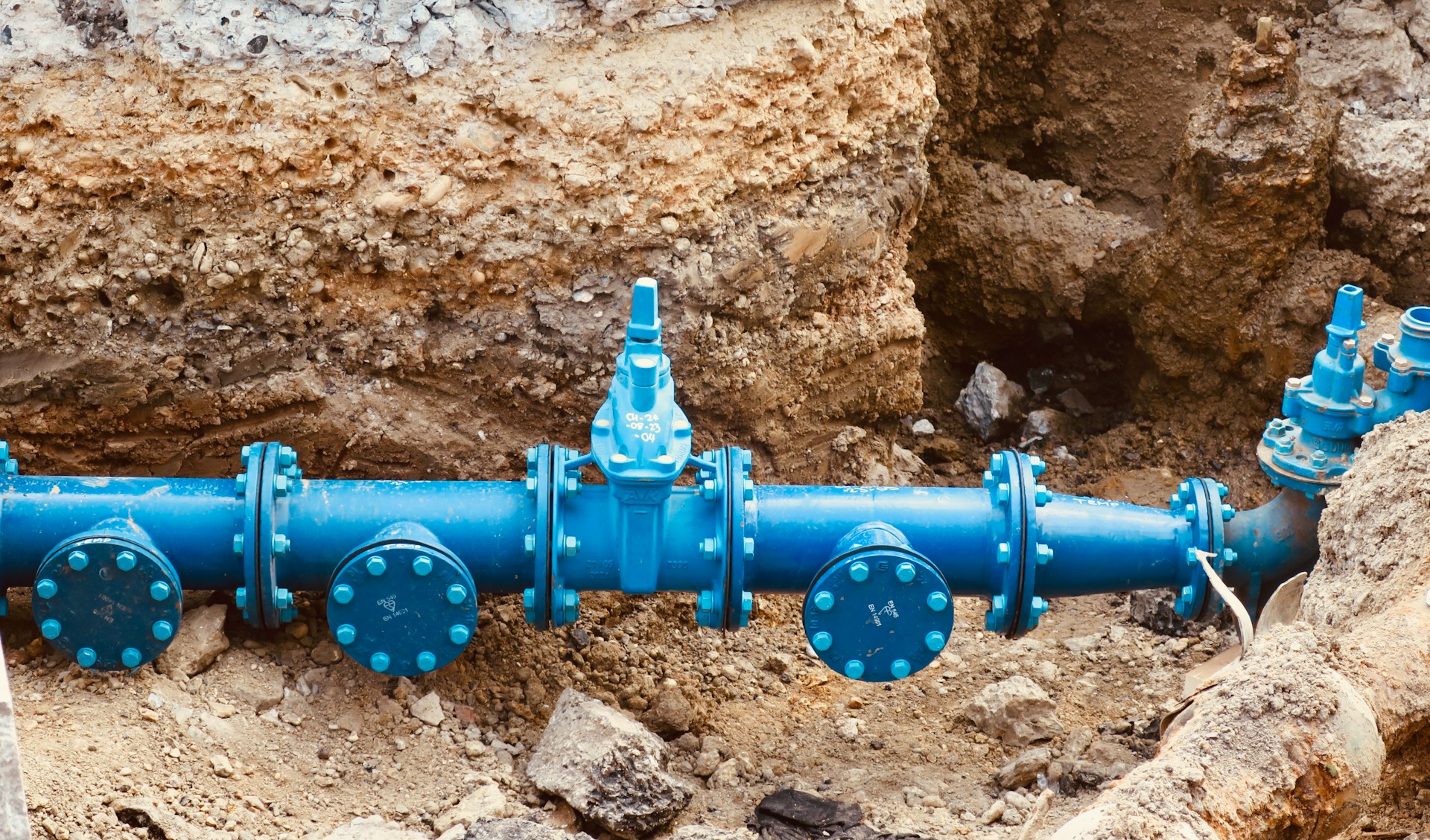
The main line, often called the service line, is the buried pipe that carries water from the meter near the street to your house. Because it runs underground and stays under pressure all day and night, even a small leak can waste a lot of water before anything shows on the surface. Here’s what to look for outside, on paper and at the meter, and who is responsible for fixing which part.
The Yard Shows It First
Desert landscaping actually makes leaks easier to spot than a lawn does, as long as you know what you're looking at.
A soggy spot in the yard that never dries. Rock and decomposed granite dry quickly in Las Vegas sun. A patch that stays dark, feels soft underfoot or squishes when you step on it, especially along the line between the meter box and the house, is a red flag.
Plants that grow where they shouldn't. A green streak of weeds, or one shrub doing far better than its neighbors, can be feeding on water from a buried pipe. It often follows the path of the line.
Settling or sinking. Water moving through soil carries it away. A depression in the gravel, a sunken paver or a new crack in the driveway or walkway above the line can all point to water washing out the ground beneath.
Water in the meter box. Lift the lid on your meter box. Standing water, wet soil or mud inside it on a dry day is worth investigating. The Southern Nevada Water Authority also suggests watching for pools of water on your property and checking valve boxes for water pooling in or around them.
Not every leak surfaces, though. Desert soil can absorb a surprising amount of water, and a leak can run deep for a long time before the ground above shows anything at all. That's why the bill and the meter matter as much as your eyes.
The Bill Shows It Next
Water bills in the Valley swing with the seasons because of irrigation, so a high bill in July doesn't prove much. A high bill in a mild month, with no change in how your household uses water, is more telling.
If you're a single-family residential customer of the Las Vegas Valley Water District, you have a better tool than the bill. The district's water usage chart in My Account shows your daily use, with data typically appearing about 48 hours later. LVVWD says daily volumes routinely exceeding 300 to 400 gallons even on non-irrigation days may point to a problem on the property. Look for a floor that never drops: a leak adds the same amount every single day, so the low days rise along with the high ones.
The district also says it watches for continuous flow through the meter and tries to notify customers when flow continues for more than three days. If you've had one of those notices, take it seriously.
The Meter Confirms It
A water meter running with no water on is the clearest evidence you can get. The test that matters for the main line is the second half: with everything inside and the irrigation off, close your home's main shutoff valve and watch the meter's flow indicator. According to the LVVWD's leak guide, if it's still moving with the house shut off, the leak is most likely underground between the shutoff valve and the meter. That stretch is the main line. If the indicator stops instead, the water is escaping somewhere inside the house.
Telling a Main Line Leak From an Irrigation Leak
Sprinklers and drip emitters are the usual impostor. Their supply often tees off the service line ahead of the house shutoff valve, which means a cracked lateral or a stuck zone valve can look exactly like a main line leak on the meter.
To separate them, leave the house shutoff closed and turn off the valve that feeds your irrigation system, usually near the backflow device or the irrigation valve box. If the flow indicator stops, the leak is in the irrigation. If it keeps moving with both the house and the irrigation shut off, the main line is the prime suspect.
Location helps too. Irrigation leaks tend to show up near emitters, valve boxes and planting beds. A main line leak tends to show up along a straight path between the meter and the point where the pipe enters the house, often near the front wall or garage.
Whose Side of the Meter It's On
This is the question that decides who pays, and the meter is the dividing line.
Under the Las Vegas Valley Water District's service rules, the service connection, including the lateral from the main, the meter, the meter box and the district's shutoff valve at the meter, is the district's property, and the district is responsible for maintaining and repairing it. Pipe and fittings on the customer's side of the meter belong to the property owner, who is responsible for maintaining them.
In practice that means:
- Water bubbling up in the street, the sidewalk area before the meter, or from the meter itself is likely the district's to fix. Call LVVWD Customer Care at 702-870-4194, the number on the district's contact page.
- A leak anywhere between the meter and your house is on your side, and repairing it is the homeowner's job.
If you live in Henderson, North Las Vegas or Boulder City, your water comes from your city's utility, which sets its own rules on where the homeowner's responsibility begins. Check with your utility if a leak is close to the meter.
What Repair Usually Involves
The first job is finding the leak precisely, because the line may run the length of the front yard under rock, landscaping and concrete. Acoustic equipment lets a technician listen along the line from the surface and mark the spot where the sound of escaping water is strongest, so excavation can be limited to one small area instead of trenching the whole yard.
From there, the repair depends on what's found. A single failed fitting or a short damaged section can often be cut out and replaced. A line that has leaked more than once, or one made of older pipe material showing wear along its length, may be better replaced as a whole, and a good plumber will explain why before recommending it.
While the line is leaking, you may also notice weaker flow at your taps. Our article on low water pressure at home covers other causes worth ruling out. Keep in mind that your house shutoff sits downstream of a main line leak, so closing it won't stop the water. The only valve upstream is the district's own valve at the meter, and the service rules reserve work on district equipment for people the district authorizes, which is why a fast leak in the yard calls for a prompt plumbing repair visit rather than a wait-and-see approach.
Getting the Leak Located
If the meter keeps moving with the house shut off, or a soggy spot in the yard won't dry out, Dr. Cool can locate the leak with professional water leak detection and explain the repair before any digging starts. Book online or call (702) 873-1800 for same-day service.
Connect With Us
Our Contact Information
Reach Us by Phone or Email
If you prefer to speak directly with one of our technicians, don’t hesitate to contact us by phone or email. We’re available to assist you during business hours
Phone: (702) 873-1800
Email: info@drcoolservices.com
Business Hours:
Mon – Fri: 7:00 am – 9:00 pm
Sat – Sun: 8:00 am – 5:00 pm