Before you head for the garage, walk to a different faucet. Turn the kitchen tap all the way to hot and give it a full minute. If it warms up, the water heater is fine and the problem is in that one shower or sink. If the kitchen runs cold too, you have no hot water anywhere, and the heater is where to look.
That one minute saves a lot of guessing. The rest of this guide follows the same idea: narrow it down by what you can see and test safely, then hand over to a technician at the point where gas lines, wiring or the inside of the heater come into it.
One Faucet Cold, the Rest Hot
When only one fixture has lost its hot water, the heater is off the hook.
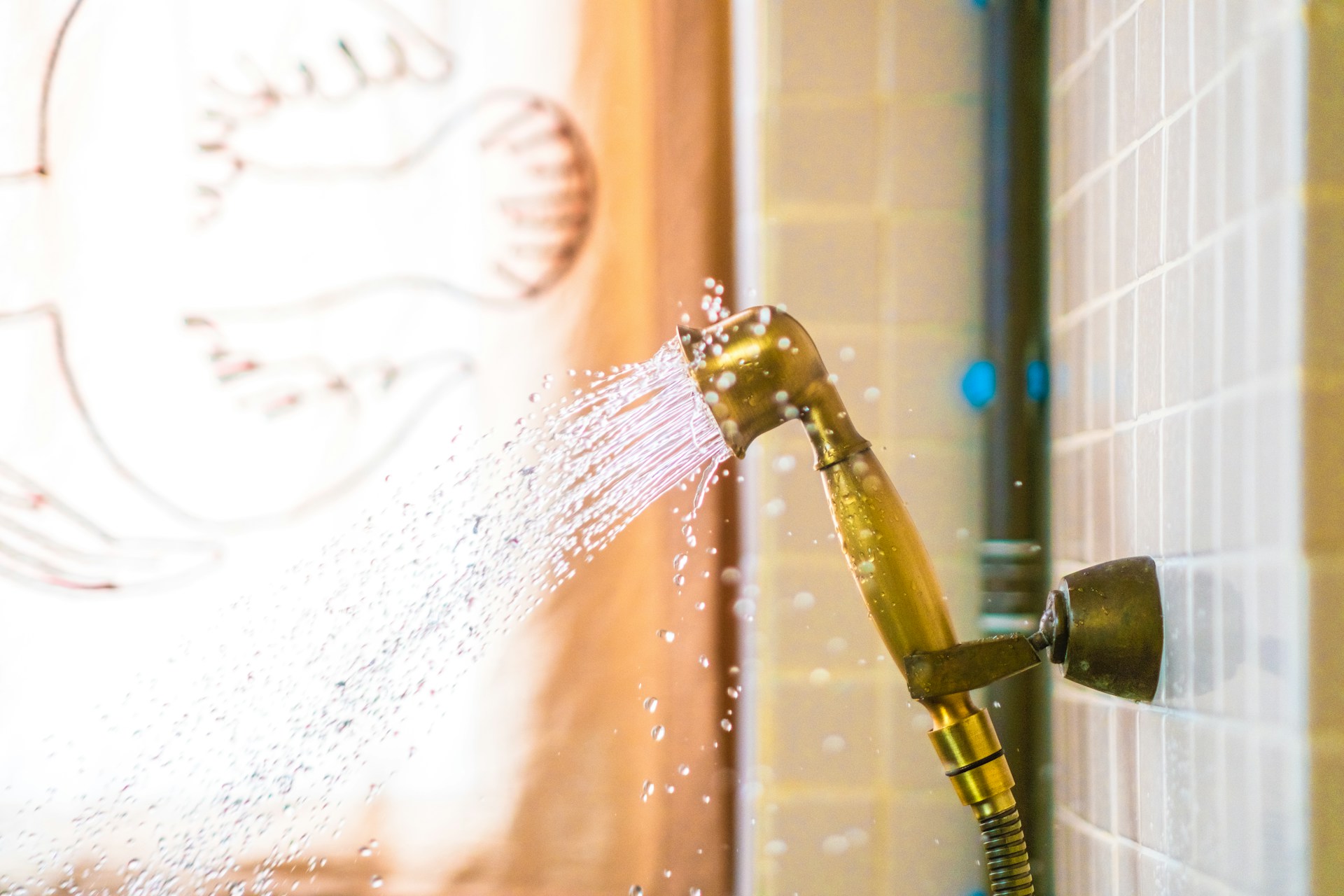
Single-handle showers use a cartridge or mixing valve that blends hot and cold. Hard water deposits can jam it, and a worn cartridge can stop letting hot water through at all. Many shower valves also have an anti-scald limit stop that caps how far the handle turns toward hot. If someone adjusted it, or it slipped, the shower may never get past lukewarm.
On a sink, check the hot shutoff valve underneath. It may have been turned off during a repair and never turned back on. A clogged aerator can also make the hot side trickle so weakly it never warms up, and scale is often the culprit in the Las Vegas Valley, where tap water is rated very hard by the local water district.
These are plumbing repair jobs rather than water heater work.
No Hot Water Anywhere: Start With What Changed
Think back over the last day or two. Was there a power outage, a storm or a tripped breaker? Did the gas company work on the meter, or did anyone shut off the gas or water? Has the heater been making new noises? Hot water not working the morning after one of those events usually points straight at the cause.
Then work out what kind of heater you have. A tank with a small window near the bottom and a metal flue pipe on top is gas. A tank with a thick electrical cable going into the top and two rectangular panels on the side is electric. A wall-mounted box about the size of a suitcase is tankless. Each fails in its own ways.
Gas Tank Heaters: Look for the Flame
Most gas tank heaters have a small sight window near the base. Look through it.
You see a small blue flame. The pilot is lit. Check that the control knob on the gas valve is set to On rather than Pilot, and that the temperature dial hasn't been turned down to Vacation or the lowest mark. If the setting is right and the main burner still won't fire, the problem is in the gas control or burner assembly.
You see nothing. The pilot has gone out. Before you do anything else, sniff the air near the heater. If you smell gas, don't try to light anything, don't flip switches, and get everyone out. Once you're well away from the house, phone Southwest Gas or 911.
With no gas smell, look at the yellow handle on the gas line feeding the heater. Parallel to the pipe means open. If other gas appliances, like the stove or furnace, are also out, the issue is the gas supply to the house rather than the heater.
If everything is open and there's no smell, you can relight the pilot by following the instructions printed on the heater's label, step by step. Many newer heaters use an igniter button and a sealed burner chamber, and the label will tell you exactly what to press and how long to hold it. If the pilot lights but won't stay lit once you release the knob, stop there. That usually means a worn thermocouple or another fault in the safety system, and repeated attempts won't fix it. Our furnace pilot light post explains how that safety system works, and a water heater uses the same idea.
Electric Tank Heaters: Power and the Reset
Electric heaters have no flame to check, so the first stop is the electrical panel. Water heaters usually have their own double-pole breaker, often labeled. If it's tripped, switch it fully off, then back on.
If the breaker trips again right away, leave it off. Something is shorting, often a failed heating element or damaged wiring, and that needs a technician.
If the breaker is fine and there's still no heat, the heater's high-temperature cutoff may have tripped. Most electric tanks have a red reset button behind the upper access panel. It cuts power when the water gets too hot, and it can trip because of a failed thermostat, a shorted element or simply a power surge. The catch is that the button sits beside live electrical terminals. Leave the panels on and let a technician reset it and, more importantly, find out why it tripped.
A tank that makes some hot water but much less than usual often has one failed element out of two. That's a common repair and rarely a reason to replace the heater.
Tankless Heaters: Read the Screen
Tankless heaters usually tell you what's wrong. Most have a display or status light that shows an error code when the unit shuts down. Write the code down before you do anything else, and check the manual or the label inside the cover door for what it means.
A few causes come up again and again:
- Power. Even gas tankless units need electricity for their controls and fan. Check the outlet or breaker.
- Gas supply. Confirm the gas valve to the unit is open.
- Flow too low. A tankless heater only fires when water flows faster than a minimum rate. A single low-flow fixture opened partway may not trigger it. Open a hot tap fully and see if it lights.
- Clogged inlet screen. Many units have a small filter screen where cold water enters. Hard water debris can clog it and starve the heater of flow.
- Scale on the heat exchanger. Mineral buildup inside the unit can trigger overheating errors and shutdowns. Very hard Las Vegas water makes this a regular concern, and descaling on a schedule prevents most of it.
Resetting by switching the unit off and on can clear a one-time glitch. A code that keeps coming back points to a real fault.
Hot for a Minute, Then Cold
If the water starts hot and turns cold quickly, the heater is working but not keeping up. That's a different problem from having no hot water, with its own causes, including a cracked dip tube, a dead lower element or a tank partly full of sediment. There's a separate walkthrough for hot water running out too fast if that sounds like your situation.
The Line Between Checks and Repairs
Faucets, breakers, gas handles, thermostat dials, error codes and following the relighting label are all reasonable for a homeowner. Gas valves, thermocouples, burners, igniters, heating elements, thermostats inside the panels and anything involving the flue or wiring are for a licensed technician.
A good diagnosis will cover the gas or power supply, the controls and safety devices, the burner or elements, and the condition of the tank or heat exchanger, so that one failed part doesn't get mistaken for a failed heater.
Getting Hot Water Back
Start at a second faucet, then follow the checks for your type of heater, and plenty of cold mornings end right there. When it's a part that needs replacing, Dr. Cool can usually get there the same day for water heater repair, with the price agreed before any work starts. Book online or call (702) 873-1800, and if there's a gas smell or water spreading across the floor, 24/7 emergency service is there for that too.
Connect With Us
Our Contact Information
Reach Us by Phone or Email
If you prefer to speak directly with one of our technicians, don’t hesitate to contact us by phone or email. We’re available to assist you during business hours
Phone: (702) 873-1800
Email: info@drcoolservices.com
Business Hours:
Mon – Fri: 7:00 am – 9:00 pm
Sat – Sun: 8:00 am – 5:00 pm