
The first one showed up as a brown ring on the garage ceiling. The plumber cut out a short piece of copper, soldered in a new one and showed you a hole in the old pipe so small you could barely fit a pin through it. Now, a year or so later, there’s a fine mist hissing from a line under the kitchen sink. Pinhole leaks in copper pipes have a habit of coming back, and understanding why they form is the best way to decide what to do about the next one.
Copper has carried drinking water in American homes for generations, and a pinhole is not the norm. When one does appear, the cause is usually something about the water or the way it moves through the pipe, and that something affects more than one spot.
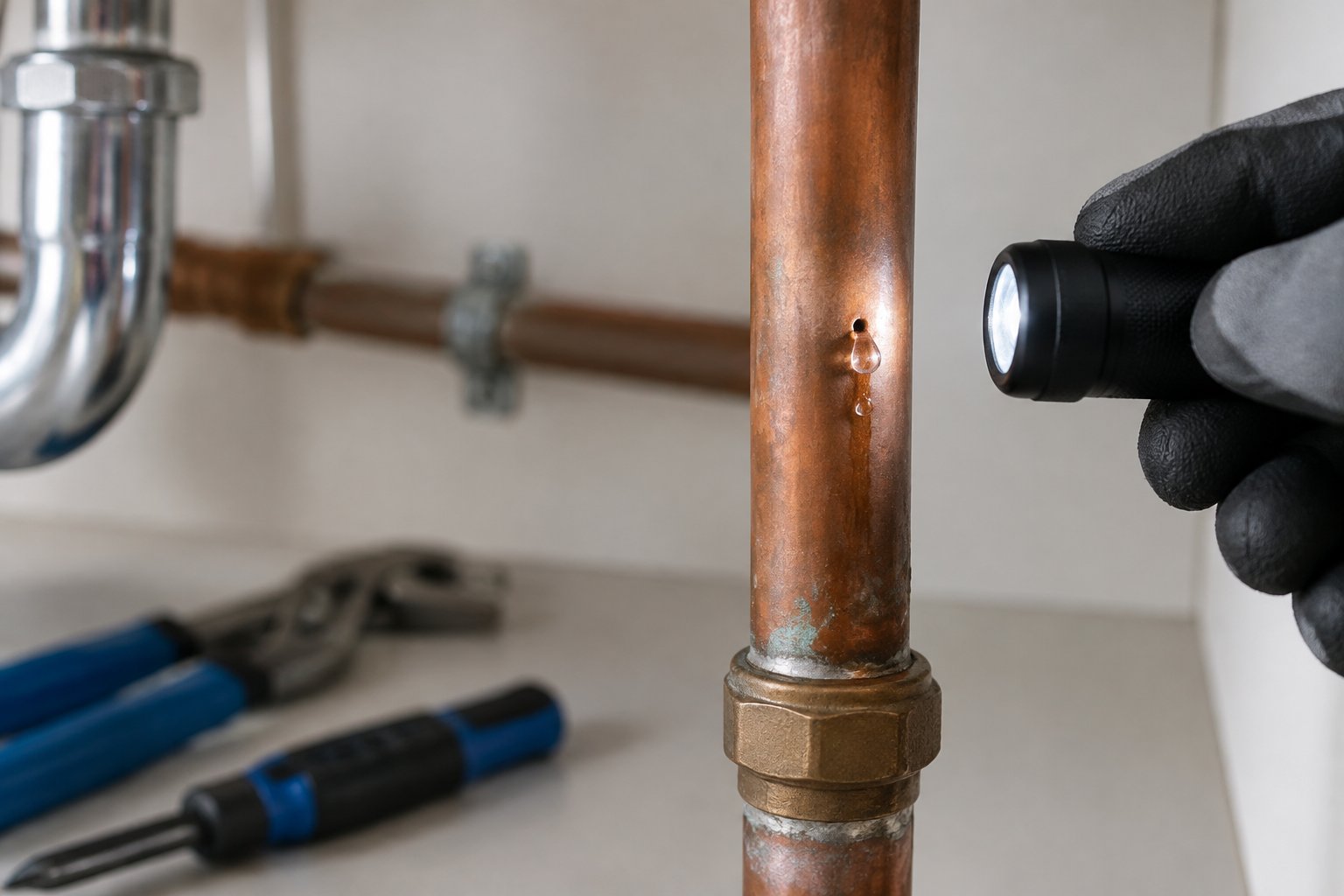
What a Pinhole Leak Looks and Sounds Like
Pinholes are easy to miss because they release so little water at a time. Watch for:
- a fine spray or mist from an exposed pipe, sometimes with a faint hiss
- a green or blue crust or stain on the outside of copper, often around a small bump
- a slow drip from a pipe that looks perfectly sound
- water stains, bubbling paint or a musty smell on a wall or ceiling with pipes behind it
- a water bill that climbs with no change in how you use water
A pinhole never takes a break, since the water behind it is pressurized around the clock. That's how a tiny hole inside a wall can soak drywall, insulation and framing before anyone notices.
Why the Hole Starts on the Inside
A pinhole in copper is the end of a process that starts on the inner wall of the pipe. Normally, copper forms a thin protective layer where it touches the water. When something disrupts that layer in one small spot, corrosion concentrates there and eats a narrow pit through the wall instead of thinning the whole pipe evenly. This is called pitting corrosion, and from the outside the pipe can look brand new right up until it leaks.
Water chemistry
A 2004 thesis at Virginia Tech linked copper pitting to combinations of water conditions, including high chlorine levels, high pH and aluminum particles in the water. The same work found pitting increased with greater water use. Chemistry varies from one water system to another and can change over time, which is why pinhole problems sometimes cluster in particular neighborhoods or eras of construction. If you want to understand your own water, a professional water test is the place to start, and for the basics of what comes out of local taps, read is Las Vegas tap water safe.
Fast-moving water
Water that moves too fast or swirls hard wears away the protective layer, especially where it changes direction. This is called erosion corrosion, and it tends to show up just past elbows and tees, on hot water lines and on lines that run constantly. Hot water recirculation lines, which keep water moving around a loop so hot water arrives faster, are a common place for it. Pipe that is undersized for the flow it carries is more vulnerable too.
High water pressure
Higher pressure pushes water faster through the same pipe and puts more strain on a wall that corrosion has already thinned. The Las Vegas Valley Water District asks homeowners to keep their own pressure reducing valve in working order and to have a licensed plumber handle adjustments. If your pressure is high, bringing it down is one of the few things that reduces strain on every pipe in the house at once.
How the pipe was installed
Small details at installation matter for decades. Pipe ends that weren't smoothed inside after cutting leave a burr that creates turbulence. Excess soldering flux left inside a joint can keep attacking the copper nearby. Neither shows from the outside, but both can lead to a leak near a fitting years later.
The First Few Minutes After You Find One
Stop the water. Close the nearest fixture shutoff if the leak is past one, or close the main shutoff for the house. Then open the lowest faucet in the house for a moment to bleed off what's left in the line.
Protect what's under it. Move belongings, put down towels and a bucket, and if water has reached a ceiling with no light fixture or wiring nearby, poke a small hole at the lowest point of the bulge to let it drain into a bucket rather than bringing the drywall down.
Keep electricity in mind. If water is dripping onto outlets or a ceiling light, cut that circuit at the breaker, standing on a dry floor.
Mark the spot. Take a photo and note where the leak is. It helps whoever makes the repair and helps you track whether leaks are clustering.
Stopgaps Versus Real Repairs
Hardware stores sell pipe repair clamps, which wrap a rubber pad around the pipe and bolt tight, and epoxy putty that hardens over a hole. Both can slow or stop a pinhole for a short time on an exposed pipe and buy you a day or two until the repair. Neither is a permanent fix. The corrosion that made the hole is still working on the pipe beneath the patch and around it.
A proper repair cuts out the damaged section and replaces it with new pipe and fittings. A good plumber will also look at the pipe on either side of the cut. If the inside of the removed section shows heavy pitting, there are likely more weak spots nearby, and that information helps you plan.
When One Leak Becomes a Pattern
A single pinhole in an older home may just be bad luck at one fitting. Two or more in a short period, especially on the same line or the same side of the house, usually points to a system-wide cause such as water chemistry, high pressure or high velocity. At that point it makes sense to:
- have your water pressure tested and the pressure reducing valve checked
- ask for the removed sections to be inspected for widespread pitting
- check for hidden leaks you haven't found yet, since pinholes behind walls and under floors may already be leaking
- talk through longer-term options for the affected lines so you aren't reacting to one leak at a time
Our water leak detection service can locate the next pinhole behind drywall or under flooring before it opens up more of the house than needed.
Taking Strain Off the Rest of Your Copper
Keeping pressure in the normal range, fixing drips as soon as they appear and watching exposed pipes for green crusting all help. The rest of the routine is in our pipe leak prevention guide.
Getting the Leak Fixed Properly
A pinhole is a small hole with a bigger story behind it, and the repair should deal with both. Dr. Cool can repair the damaged section, check your pressure and track down any other leaks hiding in the walls. Book plumbing repair online or call (702) 873-1800. Water spraying that you can't shut off is what our 24/7 emergency line is there for.
Connect With Us
Our Contact Information
Reach Us by Phone or Email
If you prefer to speak directly with one of our technicians, don’t hesitate to contact us by phone or email. We’re available to assist you during business hours
Phone: (702) 873-1800
Email: info@drcoolservices.com
Business Hours:
Mon – Fri: 7:00 am – 9:00 pm
Sat – Sun: 8:00 am – 5:00 pm