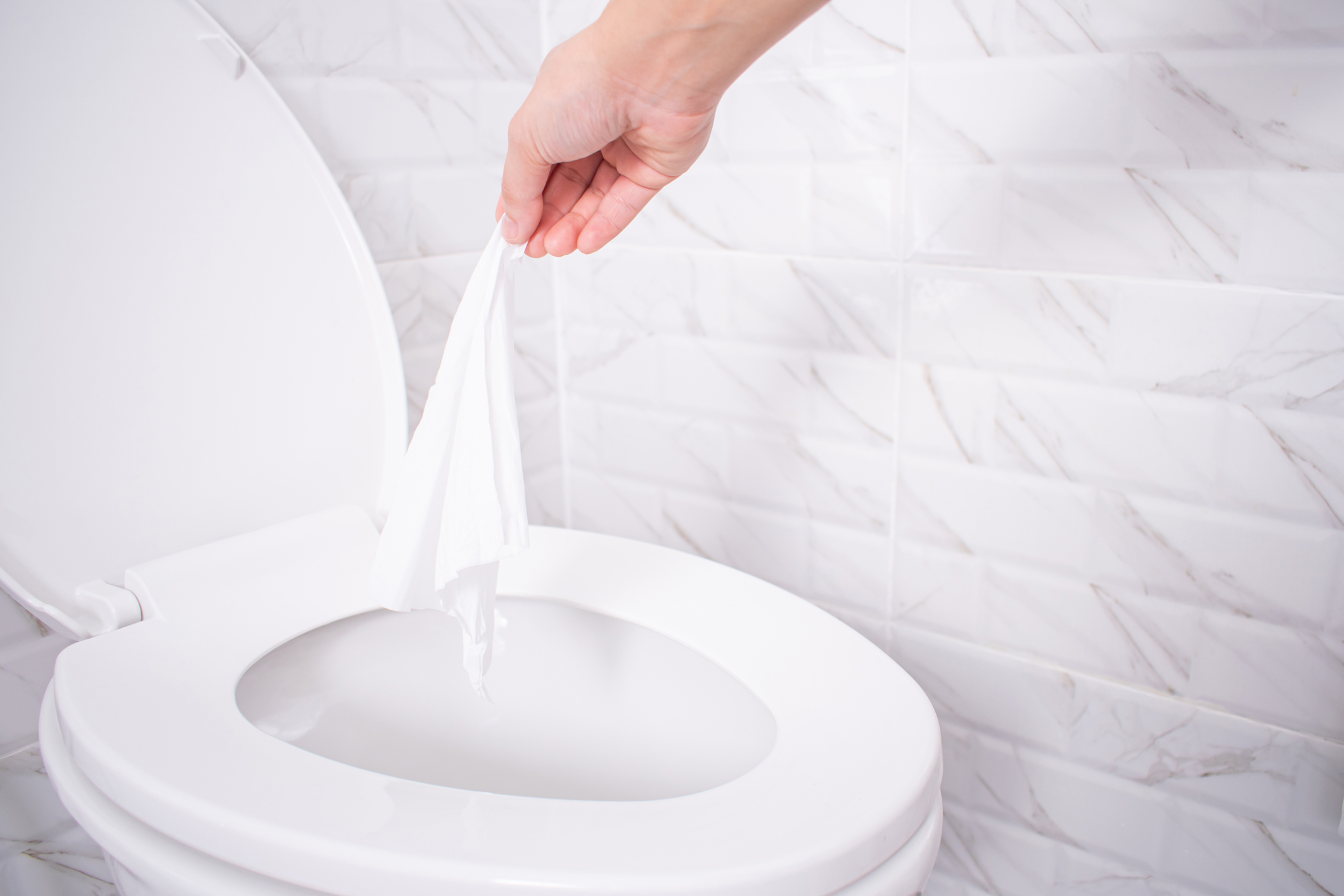
Flushable wipes may feel more comfortable than traditional toilet paper, but the word “flushable” on the packaging doesn’t always mean they’re friendly on your plumbing. So, should you use flushable wipes? You can use them, but Dr. Cool recommends putting them in the garbage rather than flushing them.
For Las Vegas homeowners, protecting your drains is especially important. Local plumbing already has to contend with hard-water mineral buildup, which can reduce the usable diameter of pipes over time. Adding wipes to the mix can make existing drainage problems worse.
Key Takeaways
- Flushable wipes do not break down like toilet paper and may contribute to plumbing clogs.
- Baby wipes, disinfecting wipes, makeup removal wipes, and cleaning wipes should never be flushed.
- If you prefer wipes, the safest option for your plumbing is to throw them in the garbage.
What Are Flushable Wipes?
A flushable wet wipe is a pre-moistened disposable wipe designed for personal hygiene after using the bathroom.
Depending on the manufacturer, wipes may be made with natural fibers, plant-based natural fibers, synthetic or blended fibers, or a combination of materials. Some newer products advertise features such as plastic-free construction, biodegradable plant-based fibers, or technology engineered to break apart after flushing.
You may also see claims such as:
- Septic safe
- Sewer- and septic-safe
- Biodegradable
- Plastic-free
- Engineered to break apart
- Meets flushability guidelines
These claims can vary substantially by product. Factors such as the ingredient list, cleansing solution, plastic content, thickness, and overall construction can affect biodegradability and how quickly a wipe breaks apart.
The safest approach for your plumbing is simple: treat wipes as trash.
Do Flushable Wipes Break Down Like Toilet Paper?
No, flushable wipes do not break down the same way as toilet paper does. Toilet paper is designed to lose its strength quickly when submerged in water. Flushable wipes are designed to remain strong while wet, and that durability is part of what makes them appealing in the first place.
A wipe might technically pass through your toilet while still remaining intact farther down the drain. That is where pipe clogging can become a problem.
How Can Flushable Wipes Affect Your Plumbing?
Wipes may catch on rough areas inside plumbing pipes, partially blocked drains, tree roots, mineral buildup, or other debris. Once one wipe gets caught, additional material can collect around it.
Over time, this can contribute to:
- Toilet clogs
- Slow drains
- Blockages in pipes
- Backed-up drains
- Sewer backups
- Emergency plumbing calls
- Costly maintenance
In Las Vegas homes, mineral buildup from hard water can already narrow pipes and contribute to drainage issues. Dr. Cool recommends staying proactive about drain maintenance because buildup from soap, grease, hair, and other debris can gradually lead to slow drainage and backups.
Wipes can add another durable material for that existing buildup to grab onto.
What About Septic Systems?
If your property uses a septic system, be even more cautious flushing flushable wipes. Septic tanks depend on bacterial balance and solid waste decomposition to process household wastewater. Materials that do not break down readily can accumulate inside the tank and potentially contribute to blockages or more frequent pumping.
A product labeled septic safe may be designed to break apart more effectively than conventional wipes, but that does not mean it will dissolve as quickly as toilet paper.
For septic systems, throwing wipes away remains the lower-risk option.
Flushable Wipes vs. Baby Wipes and Cleaning Wipes
Not all wipes are made for the same purpose, but none of the common household varieties belong in the toilet.
Flushable Wipes
These are specifically marketed for bathroom use. They may be textured or smooth, scented or fragrance-free, and some are designed for sensitive skin or marketed as hypoallergenic.
While they may have better biodegradability than conventional wipes, they can still contribute to clogs.
Baby and Toddler Wipes
Baby wipes and toddler wipes are intentionally made to stay durable when wet. They should always go in the garbage.
Disinfecting and Cleaning Wipes
Antibacterial cleaning wipes and disinfecting wipes are made for surfaces, not plumbing. Many contain synthetic fibers or plastic content that prevents them from dissolving.
Never flush them.
Makeup Removal Wipes
Makeup removal wipes are similarly designed to remain intact during use and should go directly into the garbage.
Are Flushable Wipes Bad for the Environment?
Biodegradability depends on the materials used. Products made from natural or plant-based fibers may break down more readily than wipes containing synthetic fibers, but “biodegradable” doesn't necessarily mean a product breaks apart immediately after entering a sewer line.
Wipes that stay intact can create maintenance problems not only for residential plumbing but also farther downstream. The Las Vegas Clark County Water Reclamation District notes that many different types of wipes, including those that are marketed as "flushable," can clog sewer pipes and create additional maintenance issues at wastewater treatment facilities.
When comparing products, look beyond front-of-package claims. Check the materials, disposal instructions, and flushability information.
Better Alternatives to Flushable Wipes
You don't have to give up the cleaning benefits of a wet wipe to protect your plumbing. Instead, continue using your preferred wipes but throw them away instead of flushing them.
Other alternatives include:
- Toilet paper: Still the safest disposable product for your toilet.
- Bidet attachments: Add water cleansing to an existing toilet without requiring wipes.
- Bidets: Provide thorough cleaning while reducing reliance on disposable products.
- Moistened toilet paper: Dampen ordinary toilet paper immediately before use rather than flushing a stronger cloth-like wipe.
What If Wipes Have Already Clogged Your Drain?
If you frequently flush wipes and start noticing slow drainage, bubbling toilets, recurring clogs, or sewage odors, it may be time to have a plumber inspect your lines.
Depending on the blockage, plumbing professionals may use:
- A drain snake or auger
- Video camera inspection
- Hydrojetting
- Professional drain cleaning
Unclogging your toilet as soon as possible can help prevent future issues and reduce the chance of a larger sewer backup.
When to Call a Professional Plumber
If your toilet remains clogged, or if you notice other recurring issues with your toilet, it might be time to contact a professional plumber. Dr. Cool offers plumbing services throughout Las Vegas.
Call Dr. Cool at (702) 608-6913 or schedule your professional plumbing appointment online today.
Connect With Us
Our Contact Information
Reach Us by Phone or Email
If you prefer to speak directly with one of our technicians, don’t hesitate to contact us by phone or email. We’re available to assist you during business hours
Phone: (702) 873-1800
Email: info@drcoolservices.com
Business Hours:
Mon – Fri: 7:00 am – 9:00 pm
Sat – Sun: 8:00 am – 5:00 pm