Excess moisture can make your home feel uncomfortable, create musty odors, and contribute to mold or property damage. Learning how to dehumidify your home can help you maintain a more comfortable indoor climate while protecting your walls, floors, furnishings, and HVAC system.
The right solution may be as simple as improving ventilation, or it may require a portable or whole-home dehumidifier.
Key Takeaways
- Musty odors, window condensation, mold, and a muggy indoor feeling can indicate excess humidity.
- Address leaks and other moisture sources before relying on a dehumidifier.
- Ventilation, fans, air conditioning, and professional whole-home humidity solutions can help control moisture.
Why It's Important to Dehumidify Your Home
Indoor humidity affects more than comfort. When humidity levels remain elevated, moisture can collect on walls, windows, ceilings, and other building materials. Over time, excess moisture may contribute to:
- Mold growth
- Dust mites and allergens
- Poor indoor air quality
- Moisture damage
- Peeling paint or wallpaper
- Warped wood
- Pest problems
- Structural problems
High humidity may also worsen frequent allergy or respiratory symptoms, especially for people with a mold allergy. This can be a common problem for homeowners in Las Vegas, as springtime often brings a variety of allergens, like cottonwood seeds and desert dust.
A hygrometer or indoor humidity monitor can help you track conditions inside your home. A persistent humidity level above 60% often indicates a moisture control problem. Many homeowners aim to keep indoor humidity between approximately 30% and 50%, although comfort levels may shift with the seasons.
A humidifier adds moisture to dry air, while a dehumidifier removes moisture. Make sure you choose the correct equipment based on actual humidity readings rather than how the home feels on a single day.
Signs You Might Need a Dehumidifier
If you notice any of these signs, it might be time to get a dehumidifier for your home:
You Notice a Musty Smell
Musty odors commonly develop when moisture remains trapped in areas with limited airflow. You may notice the smell in bathrooms, closets, storage areas, laundry rooms, or damp basements or crawl spaces.
The odor may indicate mold or mildew, even when visible mold growth is not present. A dehumidifier can reduce airborne moisture and improve air quality, but you should also inspect the area for leaky pipes, roof or foundation cracks, and other moisture sources.
Condensation Appears on Windows
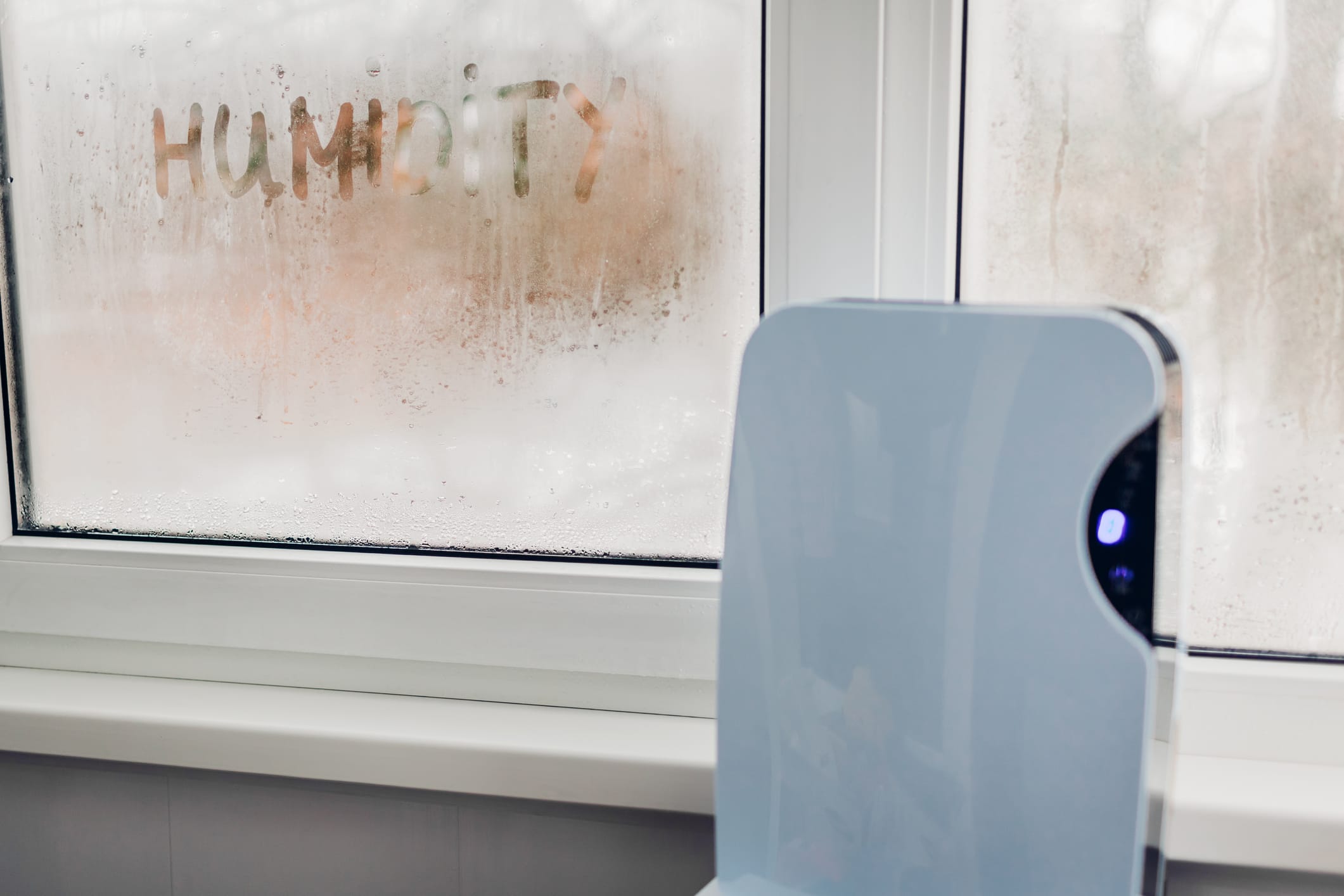
Condensation on windows forms when warm, humid indoor air touches a cooler glass surface. Occasional condensation may happen during cooking or showering, but frequent or heavy moisture can indicate high indoor humidity.
Poorly sealed windows can make the problem worse. Repeated condensation may eventually damage window frames, drywall, paint, and nearby building materials.
Using bathroom exhaust fans, improving ventilation, and running a dehumidifier may help. You should also repair damaged seals or air leaks.
Your Home Has Mold
Visible mold growth is one of the clearest signs of a moisture problem. It may appear around windows, vents, bathrooms, ceilings, walls, or areas near drain pipes.
A dehumidifier can help make conditions less favorable for mold, but it will not remove existing growth or repair the source of the moisture. Check for:
- Leaky pipes
- Roof damage
- Plumbing leaks
- Foundation cracks
- HVAC drip pan problems
- Refrigerator drip pans or worn door gaskets
Mold growth that covers a large area or returns after cleaning may require professional evaluation.
The Air Feels Humid
A damp or muggy feeling indoors may indicate that your HVAC system is not removing enough moisture. You may also notice:
- Bedding or clothing that feels damp
- Sticky floors
- Stale air
- Persistent odors
- Frequent allergy symptoms
- Rooms that feel uncomfortable despite a normal temperature
Your air conditioning system naturally removes some humidity as it cools. However, an oversized unit, dirty coil, restricted airflow, or short cooling cycles may limit humidity control.
An HVAC technician can inspect the system and determine whether seasonal HVAC maintenance, improved airflow, or a whole-home dehumidifier would help.
Surfaces Become Damaged
Excess moisture can gradually damage surfaces throughout the home. Warning signs include:
- Bubbling or peeling paint
- Warped wood floors
- Soft or stained drywall
- Sagging ceilings
- Cracked or lifting wallpaper
- Swollen cabinets or doors
- Water stains on walls
These issues may signal serious moisture damage from humidity, a hidden leak, or both. Do not use a dehumidifier as a substitute for repairing active leaks. Delaying repairs can lead to mold, structural problems, and costly repairs.
Tips to Dehumidify Your Home
Learning how to dehumidify your home begins with identifying where moisture is coming from. Start with these practical steps:
- Run bathroom exhaust fans during showers and for several minutes afterward
- Use kitchen ventilation when cooking or creating steam
- Open windows when outdoor conditions are dry and comfortable
- Use ceiling or portable fans to improve air circulation
- Repair leaky pipes, roof damage, and foundation cracks
- Clean HVAC and refrigerator drip pans
- Check door gaskets and window seals
- Keep storage areas ventilated
- Schedule regular HVAC maintenance
- Use moisture-absorbing materials in small enclosed spaces
Your HVAC system can support indoor humidity control when it's properly sized and maintained. Keep air filters clean and avoid turning the system on and off repeatedly, which may shorten cooling cycles.
Trust Dr. Cool to Dehumidify Your Home
If simple changes do not resolve persistent humidity issues, the problem may involve your HVAC system, ductwork, plumbing, ventilation, or the home itself.
Dr. Cool can inspect your air conditioning system, evaluate airflow, identify possible moisture sources, and recommend practical whole-home humidity solutions. Whether you need air conditioning services, improved ventilation, or a professionally installed dehumidifier, our team can help you create a more comfortable and healthier indoor environment.
Call Dr. Cool at (702) 608-6913 or schedule your appointment online today.
Connect With Us
Our Contact Information
Reach Us by Phone or Email
If you prefer to speak directly with one of our technicians, don’t hesitate to contact us by phone or email. We’re available to assist you during business hours
Phone: (702) 873-1800
Email: info@drcoolservices.com
Business Hours:
Mon – Fri: 7:00 am – 9:00 pm
Sat – Sun: 8:00 am – 5:00 pm
