If you’ve noticed white spots on dishes, soap that won’t lather, or crusty buildup around your faucet, you’re not alone. Las Vegas is known for having some of the hardest water in the country. The minerals found in Southern Nevada’s water supply can leave behind stubborn scale buildup that affects plumbing fixtures, water heaters, and appliances throughout your home.
So, what causes hard water in Las Vegas, and what can homeowners do about it?
Key Takeaways
- Hard water is caused by high concentrations of dissolved minerals, primarily calcium and magnesium.
- Hard water can cause limescale, soap scum, mineral buildup, and reduced appliance efficiency.
- A water softener is one of the most effective solutions for treating hard water.
What Is Hard Water?
Hard water contains elevated levels of dissolved minerals, primarily calcium and magnesium. These minerals exist as ions in water and are picked up naturally as water travels through underground rock formations.
The hardness level of water is typically measured in parts per million (ppm) or milligrams per liter (mg/L). The higher the mineral content, the harder the water.
Why Is Las Vegas Water Hard?
Much of Southern Nevada's water supply comes from the Colorado River and Lake Mead. As water travels through mineral-rich rock and soil, it naturally picks up calcium, magnesium, and other dissolved minerals.
Las Vegas also experiences extremely dry conditions. As water evaporates, minerals are left behind, contributing to the scale buildup homeowners commonly see on faucets, showerheads, and plumbing fixtures.
The result is water with a high mineral content that can create hard water problems throughout the home.
What Causes Hard Water?
The primary cause of hard water is groundwater moving through limestone, chalk, and other mineral-rich rock formations.
As rainwater falls, it absorbs small amounts of carbon dioxide from the atmosphere. This creates a weak acid that allows water to dissolve minerals from surrounding soil and rock. As the water travels through aquifers, it picks up concentrations of calcium, magnesium, calcium carbonate, bicarbonate, manganese, sulfates, chloride, and other naturally occurring minerals.
By the time the water reaches your tap water, it may contain high concentrations of these dissolved minerals, resulting in hard water.
Common Signs of Hard Water
Many homeowners don't realize they have hard water until they notice the effects around their home.
Because Las Vegas water is particularly mineral-rich, many homeowners notice these signs sooner than they would in areas with softer water:
- White calcium deposits around a faucet
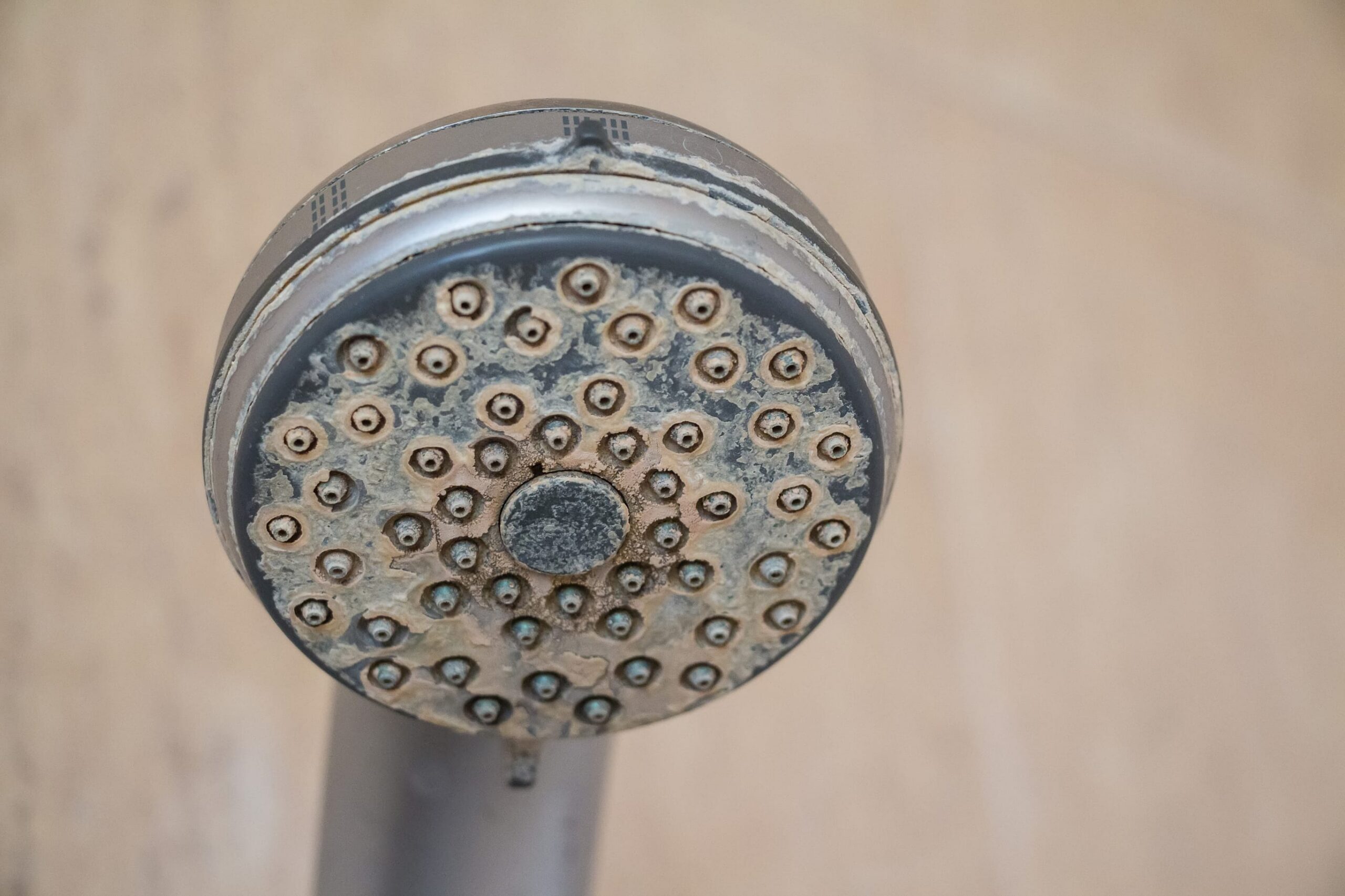
- Scale buildup on showerheads
- Soap scum in sinks, tubs, and showers
- Dishes coming out of the dishwasher with spots
- Reduced water pressure from mineral deposits inside pipes
- Mineral buildup in washing machines and water heaters
- Soap that struggles to lather
- Dry skin after bathing
- Dingy laundry
Over time, limescale and mineral deposits can clog plumbing fixtures and reduce the efficiency of water systems throughout your home.
How Hard Water Affects Your Plumbing
One of the biggest concerns with hard water is scale buildup.
When water evaporates, dissolved minerals are left behind. This creates mineral buildup on fixtures, inside pipes, and within appliances. Over time, calcium deposits and limescale can:
- Restrict water flow
- Reduce water pressure
- Increase energy costs
- Shorten the lifespan of water heaters
- Damage dishwashers and washing machines
- Create costly plumbing repairs
Even a small amount of scale buildup can make your home's plumbing system work harder than necessary.
Is Hard Water Safe?
In most cases, hard water is not considered a health risk. The calcium and magnesium found in drinking water are naturally occurring minerals that many people consume every day.
However, hard water can affect water quality, cause skin irritation for some individuals, and may aggravate conditions such as eczema or dry skin.
Hard water is different from contaminants that impact water safety. If you're concerned about contaminants in your water supply, professional water testing can help identify any issues.
How to Treat Hard Water in Las Vegas
Because Las Vegas water contains high levels of calcium and magnesium, many homeowners choose to install a water softener to protect their plumbing and appliances.
Traditional water softeners use an ion exchange process that removes calcium and magnesium ions and replaces them with sodium or potassium ions. This creates softer water and helps prevent future mineral deposits.
Other water treatment options may include:
- Reverse osmosis systems for drinking water
- Whole-home water filtration systems
- Regular water heater maintenance to remove sediment buildup
- Plumbing repair, replacement, and maintenance
For many Las Vegas homeowners, a combination of a water softener and a drinking water filtration system provides the best results.
When to Call the Pros for Help
Hard water is common in Nevada, and it can lead to scale buildup, reduced water pressure, and premature wear on your plumbing and appliances. At Dr. Cool, we can help identify hard water issues that are unique to Las Vegas homeowners and recommend the right water treatment solution for your home.
Call Dr. Cool at (702) 608-6939 or schedule your professional plumbing service online today.
Connect With Us
Our Contact Information
Reach Us by Phone or Email
If you prefer to speak directly with one of our technicians, don’t hesitate to contact us by phone or email. We’re available to assist you during business hours
Phone: (702) 873-1800
Email: info@drcoolservices.com
Business Hours:
Mon – Fri: 7:00 am – 9:00 pm
Sat – Sun: 8:00 am – 5:00 pm