
If you looked under any sink in your home, you would see a curved piece of pipe that looks like a sideways P. This simple piece of piping, called the P-trap, is one of the most critical elements of your plumbing system. While it might look like a goofy bend in the piping, the P-trap actually serves a vital function in modern plumbing.
Understanding how a sink P-trap works and how it keeps your home safe will help you tackle minor issues before calling a plumber. This guide will cover everything you need to know about this small pipe and how it protects your home.
How Does a P-Trap Work?
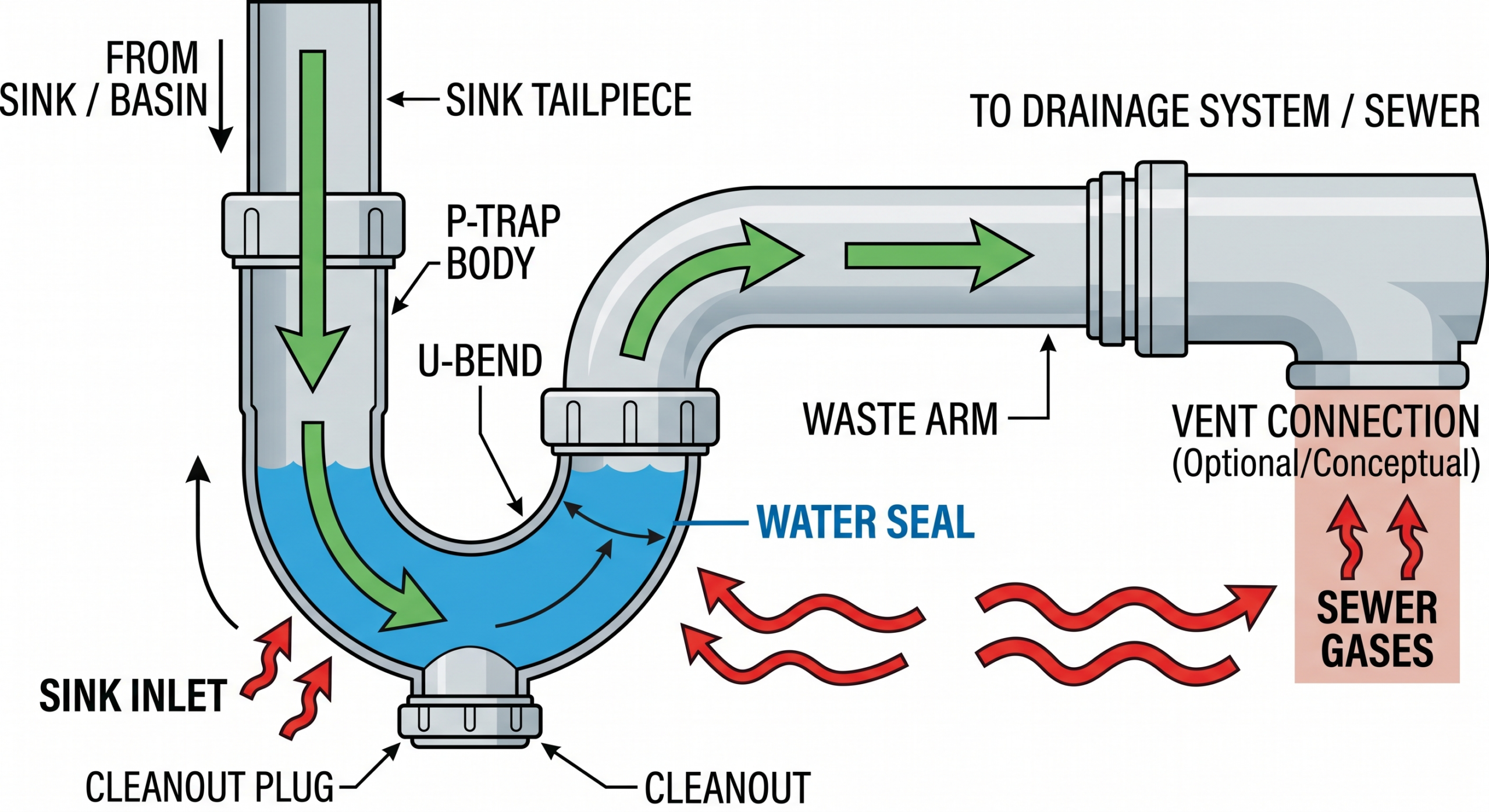
The basic design of a P-trap setup includes a U-shaped bend that is followed by a straight horizontal section that connects to the main drain line. To properly understand how the P-trap works, you need to follow how water flows through the fixture.
When you turn on your sink, gravity pulls the water through the sink’s tailpiece and into the P-trap. As the water flow stops, a small amount of water remains in the U-shaped bend of the P-trap.
This water that remains in the P-trap creates an airtight seal. This water seal acts as a barrier, preventing sewer gas from rising from your sewer system and entering your home through your sink drain. Without this simple piece of piping, dangerous gases such as methane and hydrogen sulfide would slowly seep into your home.
Common Types of P-Traps
There are a few different types of P-traps made with different materials. Here are a few common P-trap kits you might find in a home improvement store:
- PVC: Polyvinyl chloride, or PVC, is the most popular material for a modern sink p-trap. It is inexpensive, easy to adjust, and highly resistant to chemical corrosion.
- Polypropylene: This durable, black or white plastic is commonly used in standard P-trap kits. It uses a simple slip-joint connector and a rubber washer to create a watertight seal without messy pipe glue.
- Brass: Often used for exposed plumbing fixtures where aesthetics matter, such as a pedestal sink. While highly durable, brass can eventually experience internal corrosion over several decades.
Maintenance, Clogs, and Evaporation
Another feature of the P-trap is its ability to catch heavy things without sending them through your plumbing system. This feature is great when your wedding ring falls down the kitchen sink drain while you’re doing the dishes, but it also traps hair, food scraps, and soap scum, which can lead to clogs.
Most plastic P-traps feature a threaded plug at the bottom called a cleanout. If your sink is draining slowly, perform the following DIY fix:
- Step 1: Place a bucket under the P-trap.
- Step 2: Unscrew the cleanout.
- Step 3: Empty the debris that has accumulated in the P-trap.
- Step 4: Screw the cleanout back in, then turn on the water to test whether the sink drains properly.
If your P-trap doesn’t have a cleanout, you can loosen the slip-joint nuts using a cloth and pliers to remove the entire loop and clear the drain line.
The Dry Trap Problem
P-traps are part of every plumbing fixture connected to the sewer. Fixtures like bathroom sink drains, laundry connections, and basement floor drains all have P-traps. If one of these drains is rarely used, the water in the P-trap that creates the seal can eventually evaporate. If you ever notice a foul smell coming from a rarely used drain, simply run water down it to restore the water seal and keep sewer gases out of your home. In Las Vegas, our extremely dry climate accelerates evaporation, so adding water to rarely used drains once a month will help keep your pipes sealed.
Let Dr. Cool Keep Your Plumbing Healthy
At Dr. Cool, we want to be your partner for total home comfort. While most homeowners can replace a P-trap easily, older metal configurations or tight spaces require an expert. Our licensed plumbing team understands the local plumbing codes inside and out to ensure your plumbing fixtures drain safely and efficiently.
We take the stress out of plumbing repairs with honest, upfront pricing and a 100% satisfaction guarantee. When your drain backs up, or it's time for a new fixture install, we’re here to do the dirty work so you can enjoy a healthy plumbing system stress-free.
Notice your fixtures are draining slowly? Call Dr. Cool at (702) 608-6939 or schedule professional plumbing service online today.
Connect With Us
Our Contact Information
Reach Us by Phone or Email
If you prefer to speak directly with one of our technicians, don’t hesitate to contact us by phone or email. We’re available to assist you during business hours
Phone: (702) 873-1800
Email: info@drcoolservices.com
Business Hours:
Mon – Fri: 7:00 am – 9:00 pm
Sat – Sun: 8:00 am – 5:00 pm