When your air conditioner starts to have a weird smell, it is more than just a nuisance. In the Las Vegas Valley, our AC units work overtime to combat the heat, so any unusual odors are often a signal that your HVAC system needs attention.
Think of your nose as the first line of defense for your indoor air quality. Different AC smells point to different common causes, ranging from simple moisture buildup to serious electrical issues. The pros at Dr. Cool have put together this guide to help you identify the cause of the strange smells and get your cooling system back to smelling fresh and working properly. We’ve broken down each smell that could be coming from your unit, the common causes for that smell, and the remedies to get your house back to normal.
Musty Odors or the "Dirty Socks" Smell
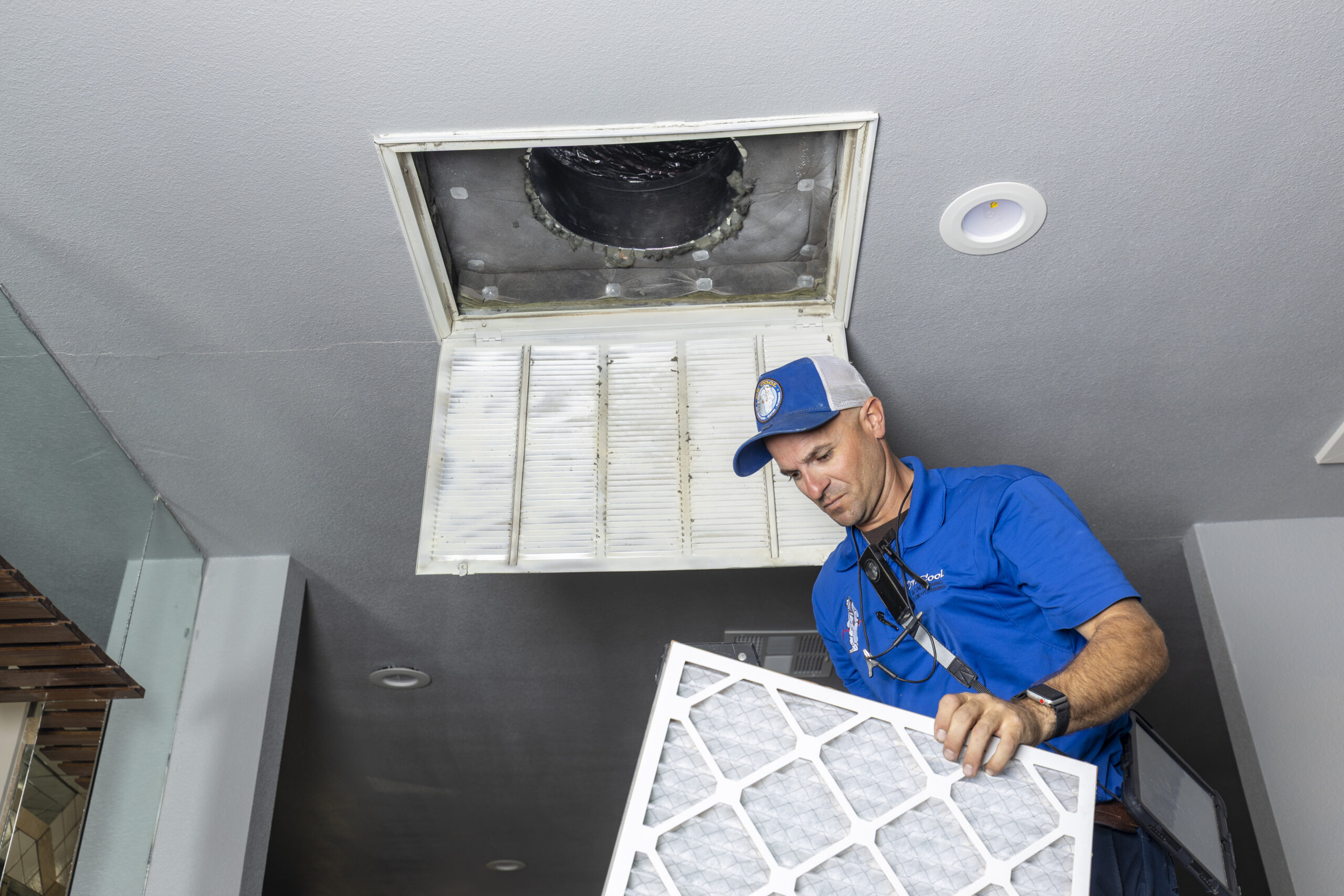
This musty smell is one of the most unpleasant odors homeowners encounter. It typically smells like damp gym clothes or a locker room. This is sometimes called 'Dirty Sock Syndrome' and is a well-known HVAC issue caused by bacterial and mold growth directly on the evaporator coil.
- The Cause: This is usually a sign of mildew growth or mold growth. When your air conditioning system runs, condensation forms on the evaporator coil. If that water does not drain properly through the condensate drain line, it creates a breeding ground for mildew.
- Where to Look: Check your drain pan for stagnant water. If the drain line is clogged, water will back up, creating that musty odor.
- The Remedy: Replace the air filter to improve airflow. If the smell persists, you may need a professional to clean the evaporator coil or clear the condensate drain line. In some extreme cases, you might need your ductwork sanitized.
Rotten Eggs or Sulfur Smells
If you notice a rotten-egg smell coming from your AC unit, vents, or ductwork, take immediate action.
- The Cause: This is often the sign of a natural gas leak. While the air conditioning unit itself does not use gas, many Las Vegas homes have integrated heating systems that do.
- Sewer Gas: Alternatively, a rotten-egg smell can indicate sewer gas backing up through a dry drain trap near the indoor AC system.
- The Remedy: If you suspect a gas leak, leave the home immediately and call your gas provider. If you suspect it is a sewer issue, try running water down nearby drains to refill the traps. If the rotten-egg smell persists, contact an HVAC technician to investigate.
Exhaust Fumes
If you notice exhaust fumes coming through your AC vents, this is a high-priority safety concern.
- The Cause: Even during the cooling season, this smell can indicate a cracked heat exchanger in your furnace or a problem with a nearby oil-burning component. A cracked heat exchanger is a serious malfunction because it can allow carbon monoxide to enter your indoor air.
- The Remedy: Shut the system off immediately and open your windows for ventilation. This is a critical safety issue that needs an HVAC technician to inspect your HVAC system before it is safe to run again.
Burning Smell or Smoky Odors
A burning smell should never be ignored, as it often indicates components in your unit are overheating.
- The Cause: This could be a failing blower motor, a shorted circuit board, or compromised wiring. If it smells like burning plastic or exhaust fumes, something is likely melting.
- The Seasonal Exception: If you are turning on your system for the first time in months, a brief burning smell that clears within 30 minutes is usually just dust burning off the heating elements or heat strips after a long break. This is a normal part of the cooling process or heating cycle after a long break.
- The Remedy: Immediately shut off the AC unit at the circuit breaker. Continuing to run the system risks further electrical damage or a fire hazard. Overheating requires immediate attention from an HVAC professional.
Chemical Odor or Sweet Smells
If the air from your AC vents has a sickly-sweet or chemical odor, it is a clear red flag.
- The Cause: This often indicates a refrigerant leak. Refrigerant is the lifeblood of the cooling process, and a leak can damage your AC system and lower your indoor air quality.
- Important Note: If your AC is blowing warm air or you notice ice on the refrigerant lines, a leak is possible even without a smell.
- The Remedy: This is not a DIY fix. Refrigerant requires specialized handling. Shut down the air conditioner and call for HVAC emergency services or a professional leak detection.
10-Minute DIY Checklist for Homeowners
Before you call for AC repair, run through these simple checks to see if you can solve the weird smell yourself.
- Replace the Air Filter: Dirty air filters are the top cause of bad smells and poor airflow.
- Check the Drain Pan: Look for excess moisture or stagnant water under the indoor unit.
- Inspect the Vents: Ensure all AC vents are open and free of buildup.
- Clear Debris: Ensure the outdoor unit is free of leaves or grass that could be causing unpleasant odors.
Let Dr. Cool Clear the Air
You should not have to choose between being cool and breathing clean air. At Dr. Cool, we are your partner for resolving AC smells and restoring your home comfort. Our team specializes in everything from tune-ups and regular maintenance to complex leak repairs.
We treat your home with respect and ensure that every air conditioning unit we service is running safely and efficiently. Whether you are dealing with moisture buildup, an electrical issue, or just need your ductwork cleaned, we get the job done right the first time.
Tired of those unusual odors? Call Dr. Cool at (702) 608-6939 or schedule your professional AC service online today.
Connect With Us
Our Contact Information
Reach Us by Phone or Email
If you prefer to speak directly with one of our technicians, don’t hesitate to contact us by phone or email. We’re available to assist you during business hours
Phone: (702) 873-1800
Email: info@drcoolservices.com
Business Hours:
Mon – Fri: 7:00 am – 9:00 pm
Sat – Sun: 8:00 am – 5:00 pm