Few appliances are more important to your daily comfort than your water heater. From hot showers and laundry to dishwashing and cleaning, a reliable supply of hot water is essential. But with so many different types of water heaters available today, choosing the right one can feel overwhelming.
The best residential water heater for your home depends on several factors, including your household needs, fuel source, budget, energy efficiency goals, and available space. Here’s what homeowners should know before investing in a new water heater.
Key Takeaways
- The right water heater depends on your home’s hot water demands, fuel type, and budget.
- Tank water heaters, tankless water heaters, and heat pump water heaters each offer unique benefits.
- Consider energy efficiency, operating costs, installation costs, and lifespan before making a decision.
Understand the Different Types of Water Heaters
The first step in choosing a new water heater is understanding your options.
Tank Water Heaters
A traditional tank water heater stores and heats water in a storage tank until it's needed. These systems remain the most common choice among homeowners.
Tank models are available as both gas water heaters and electric water heaters and come in various capacities to accommodate different household needs.
Benefits include:
- Lower upfront cost
- Familiar technology
- Reliable performance
- Easier replacement when upgrading from an existing tank model
However, because they continuously heat water in the tank, they typically have higher energy use than some newer technologies.
Tankless Water Heaters
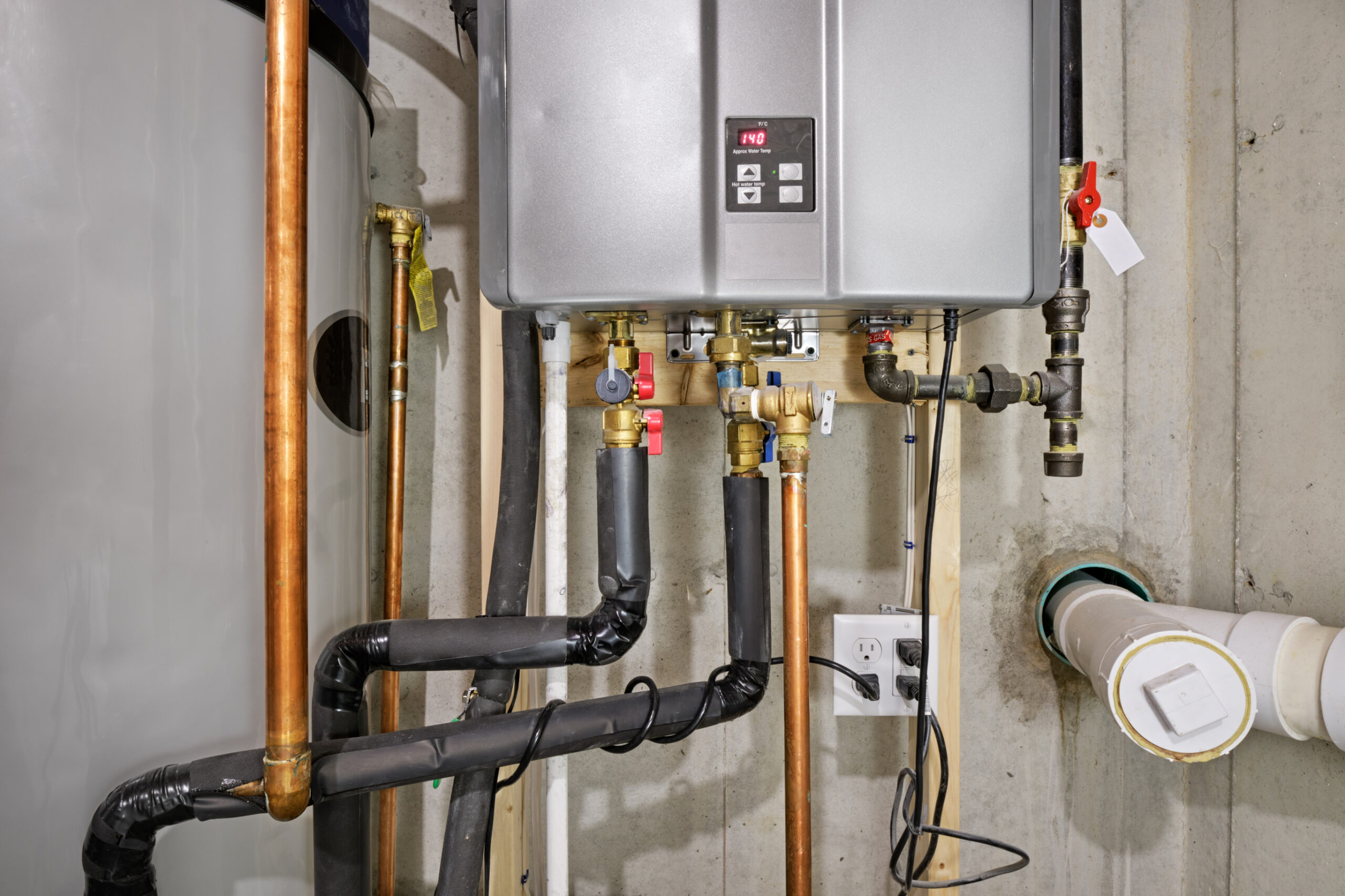
Tankless water heaters heat water on demand rather than storing it in a tank.
When a faucet or appliance calls for hot water, the tankless unit activates and heats cold water as it passes through the system.
Benefits include:
- Continuous hot water
- Improved energy efficiency
- Reduced energy costs
- Compact design
- Longer lifespan compared to many tank models
Tankless systems are typically rated by gallons per minute (GPM), which helps determine whether the unit can meet your home's water needs.
Gas tankless models often provide higher flow rates than electric models, making them a popular choice for larger households.
Heat Pump Water Heaters
Heat pump water heaters, also called electric heat pump systems, use surrounding air to heat water rather than generating heat directly.
These high-efficiency systems can significantly reduce energy bills and are often recognized by ENERGY STAR certification.
Benefits include:
- Exceptional energy savings
- Lower operating costs
- Reduced emissions
- Potential rebates and tax credits
The tradeoff is a higher upfront cost and specific installation requirements.
Solar Water Heaters
Solar water heaters use energy from the sun to heat water.
While less common than other options, they can provide substantial long-term energy savings in suitable climates. Many homeowners also qualify for rebates or tax credits that help offset installation costs.
Determine Your Fuel Source
The fuel type available in your home will help narrow your options.
Common fuel sources include:
- Natural gas
- Propane
- Electricity
- Solar energy
Gas water heaters are often preferred when natural gas is readily available because they typically heat water faster and may have lower operating costs.
Electric water heaters are widely available and often easier to install because they don't require gas lines.
When comparing systems, consider installation costs and long-term energy costs.
Determine the Right Size Water Heater
Choosing the proper size water heater is critical.
A system that's too small may leave your family without enough hot water during peak demand. An oversized unit can waste energy and increase utility bills.
Tank Water Heaters
The Department of Energy recommends evaluating the first hour rating (FHR), which measures how much hot water a tank can deliver during a busy hour.
The right storage tank size depends on factors such as:
- Number of occupants
- Bathrooms
- Appliances using hot water
- Daily water use habits
Tankless Water Heaters
Tankless systems are sized according to gallons per minute.
To determine the appropriate capacity, calculate how many fixtures may operate simultaneously. Showers, dishwashers, washing machines, and faucets all contribute to peak demand.
A plumber can help determine the proper size based on your household's water needs.
Compare Energy Efficiency Ratings
Energy efficiency has a major impact on long-term operating costs.
Modern water heaters are evaluated using a Uniform Energy Factor (UEF) rating. Higher UEF ratings generally indicate better efficiency and lower energy use.
Many high-efficiency systems also qualify for:
- Utility rebates
- Manufacturer incentives
- Federal tax credits
ENERGY STAR-certified products often provide some of the best opportunities for reducing energy bills.
Evaluate Upfront Cost vs. Long-Term Savings
When reviewing a buying guide for water heaters, it's important to look beyond the initial purchase price.
For example:
- Tank water heaters usually have the lowest upfront cost.
- Tankless water heaters typically cost more initially but may provide lower energy costs over time.
- Heat pump water heaters often deliver the greatest energy savings but require higher initial investments.
Balancing installation costs, operating costs, energy savings, and expected lifespan can help identify the best overall value.
Consider Lifespan and Maintenance
Water heater longevity varies by model and technology.
Traditional tank models generally last 8–12 years, while many tankless water heaters can operate for 20 years or more with proper maintenance.
Routine water heater maintenance may include:
- Flushing sediment buildup
- Inspecting heating elements
- Checking gas connections
- Replacing the anode rod
- Monitoring system performance
A strong warranty can also provide peace of mind and reduce unexpected repair expenses.
Popular Water Heater Brands
Several manufacturers offer reliable residential water heater options.
Popular brands include:
- Rheem
- A. O. Smith
Both companies produce a wide range of gas, electric, tankless, and high-efficiency models designed to meet various household needs.
Rather than focusing solely on brand, homeowners should prioritize proper sizing, efficiency ratings, warranty coverage, and professional installation.
Work With a Professional Plumber
Choosing between the different types of water heaters isn't always straightforward.
A licensed plumber can evaluate:
- Household size
- Fuel source availability
- Water use habits
- Existing heating systems
- Installation requirements
- Long-term efficiency goals
Professional guidance helps ensure you select the right water heater for your home's specific needs and budget.
Trust Dr. Cool for Water Heater Installation
Whether you're replacing an aging gas tank, upgrading to a tankless unit, or exploring heat pump water heaters, the experts at Dr. Cool can help you find the right solution. Our experienced plumbers can assess your home's hot water demands, explain your options, and provide professional water heater installation you can trust.
Call Dr. Cool at (702) 608-6939 or schedule your professional water heater installation online today.
Connect With Us
Our Contact Information
Reach Us by Phone or Email
If you prefer to speak directly with one of our technicians, don’t hesitate to contact us by phone or email. We’re available to assist you during business hours
Phone: (702) 873-1800
Email: info@drcoolservices.com
Business Hours:
Mon – Fri: 7:00 am – 9:00 pm
Sat – Sun: 8:00 am – 5:00 pm