
A tankless water heater may suit your home if your family runs out of hot water before everyone finishes, you want to reclaim floor space, or your current tank is nearing the end of its life and you plan to stay for several years. It may not be the best fit if your tank keeps up and you simply want a low-cost replacement.
Tankless water heater installation in Las Vegas works best when the unit matches your real peak demand and your home has the gas, venting, and drainage the model requires. Skip either step and you could end up with lukewarm showers and early scale problems, regardless of the equipment quality.
Hot water is a comfort issue here, too. Valley water is hard, and that mineral load affects how a tankless unit performs over time. The choice comes down to how much hot water your household uses at once, what your home can support, and whether you’re ready for yearly flushing. If you want a direct answer for your house, Dr. Cool’s licensed plumbers can check your gas line, panel, and venting and provide upfront pricing before work begins. Call (702) 873-1800 or book online.
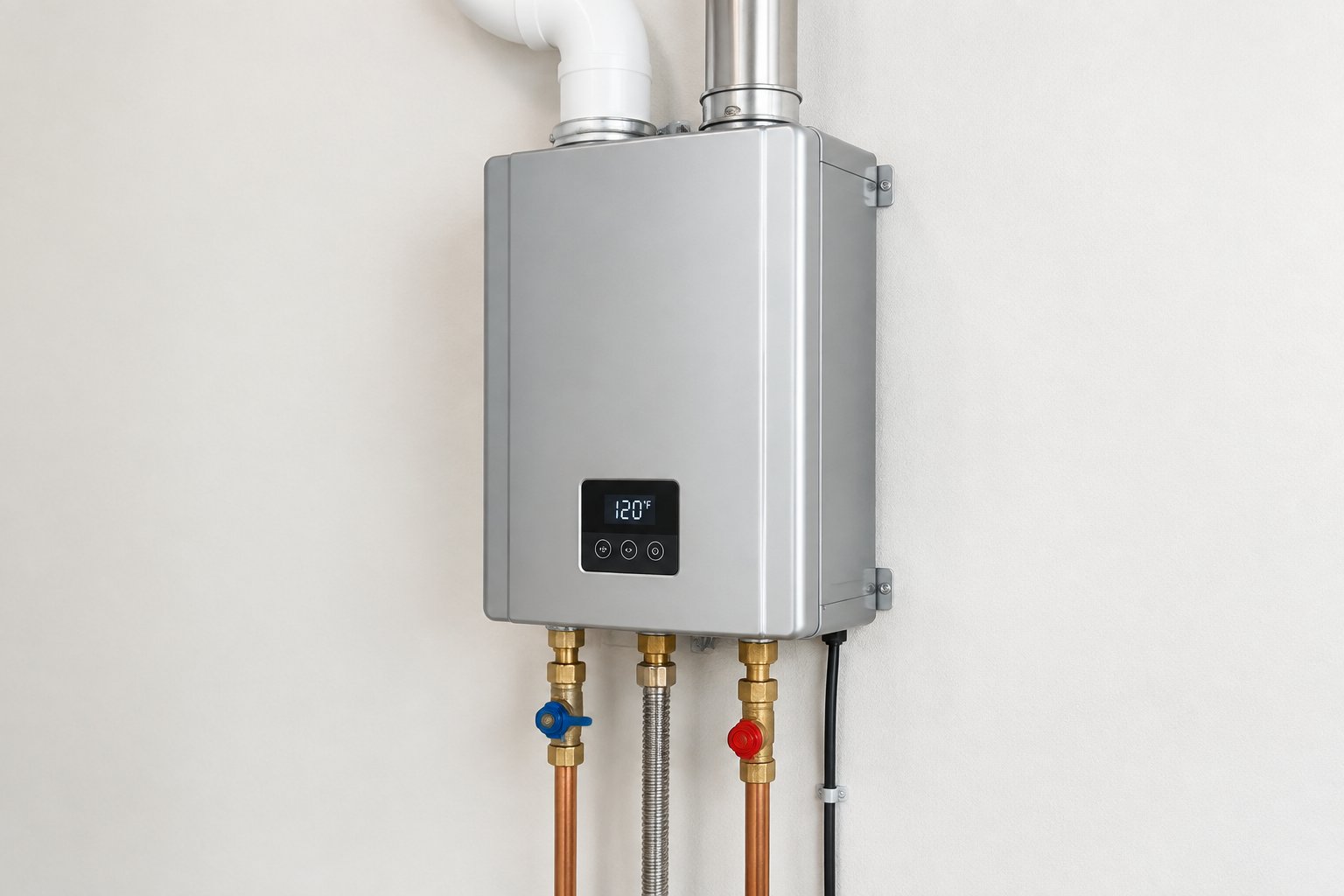
Is a Tankless System a Good Fit for Your Household?
A tankless system fits households that regularly exceed a storage tank's limits, have room in the budget for a larger upfront installation, and plan to stay in the home long enough to benefit from lower standby energy loss. Homes with modest, spread-out hot water use often do just fine with a tank.
When Endless Hot Water Solves a Real Household Problem
Tankless units heat water on demand, so the last shower of the morning can be as hot as the first. That matters in a full house where three or four people get ready within the same hour. If your tank already struggles, these common reasons hot water runs out too fast can help narrow down the cause.
It can also help if you have a soaking tub that drains a 50-gallon tank before it fills. A properly sized unit keeps delivering hot water as long as the tap stays open.
You gain floor space, too. A wall-mounted unit frees up the garage corner or closet that a tank once occupied.
When a Storage-Tank Water Heater Can Still Make Sense
A tank still makes sense when your current one keeps up and you need a straightforward replacement. Installation is simpler, and the equipment costs less.
Tanks also handle large, short bursts well. If two showers and a dishwasher run together for ten minutes, a tank draws from stored water without depending on the unit's flow rate.
Heat pump models deserve a look here. NV Energy notes that an ENERGY STAR heat pump water heater uses up to 70% less energy than a standard model, while water heating accounts for about 20% of a home's energy use.
How Space, Budget, and Long-Term Plans Affect the Choice
Tankless conversions cost more upfront because they may require gas, venting, and electrical work. The payback comes through years of lower standby loss, so a short stay in the home makes the numbers less appealing.
Tight utility closets, older gas lines, and difficult access to an exterior wall can all raise the installation price. It's worth checking those factors before you settle on a model. For a broader look at tank, tankless, and heat pump options, see this guide to choosing the right water heater.
How Much Hot Water Does Your Home Need at One Time?
Size a tankless unit around your busiest five minutes, not your daily total. List every fixture that could run at the same time, then confirm that the unit can provide the needed flow at your preferred temperature.
Count Simultaneous Showers, Laundry, and Appliances
Think through a normal weekday morning. Two showers running while the washing machine fills create a very different demand from one shower at a time.
A standard showerhead uses about 2 gallons per minute. A kitchen faucet adds roughly 1.5 gallons per minute. A clothes washer can draw 2 or more gallons per minute during its fill cycle.
Count the fixtures your family actually uses together. Guessing high raises the equipment cost, while guessing low can leave someone with cold water.
Why Flow Rate and Temperature Rise Matter
Tankless units carry ratings in gallons per minute at a specific temperature rise. Temperature rise means the difference between the incoming water temperature and your target temperature, usually around 120 degrees.
Las Vegas has warmer groundwater than much of the country, which helps. A smaller temperature rise allows a unit to deliver more gallons per minute here than the same model would in a colder state.
Winter still lowers incoming water temperatures, so sizing should account for the coldest month rather than the summer average.
How a Professional Sizing Assessment Avoids Lukewarm Water
A plumber measures incoming water temperature, counts fixtures, and checks your gas meter and line size before recommending a model. That assessment often separates a unit that performs well from one that disappoints.
Undersized units cause many tankless system complaints. The equipment may be fine, but it doesn't match the household's demand.
What Does a Tank-to-Tankless Conversion Involve?
Converting from a tank usually involves more than swapping boxes. Most gas tankless units need a larger gas supply, a different vent path, and often a condensate drain. That's why installation costs vary so much from one home to another.
Gas Capacity, Electrical Service, and Venting Requirements
A gas tank heater might use 40,000 BTU. A whole-house tankless unit can require 150,000 to 199,000 BTU. That often means upsizing the gas line from the meter.
Venting changes, too. Tankless units use sealed, direct-vent systems, so the old vertical flue rarely works without modification.
Whole-house electric tankless units are a different matter. They may require multiple dedicated 40-amp circuits and, in many homes, a panel upgrade.
Condensate Drainage, Placement, and Code Considerations
Condensing units produce acidic water that needs a drain and often a neutralizer. The drain location can determine where you install the unit.
Placement also affects wait time at the tap. A unit mounted far from the master bath means a longer wait for hot water.
Permits and inspections apply. Clark County lists residential water heater installations among the projects eligible for video and Saturday inspections, which can help keep a job moving.
What Affects the Total Installation Cost
Gas line upsizing, new venting, electrical work, drain access, and permit fees drive the total. A home with an easy exterior wall and a nearby gas meter costs much less than one that needs a long line run.
Dr. Cool provides upfront pricing and explains the recommended work before it begins. Financing with approved credit is also available.
How Las Vegas Hard Water Affects Tankless Performance
Hard water poses the biggest long-term threat to tankless performance in the Valley. Minerals bake onto the heat exchanger whenever the burner fires, and scale buildup reduces efficiency, restricts flow, and eventually triggers error codes.
Why Mineral Scale Builds Up Inside the Heat Exchanger
Tankless units heat water quickly inside narrow passages. At those temperatures, calcium and magnesium can fall out of solution and cling to the metal.
Even a thin layer of scale makes the burner run longer for the same output. Heavier buildup narrows the waterway and cuts flow.
Hard water affects more than the heater. The EPA notes that hard water reacts with soap to form a sticky film and reduce lathering. That's why many Valley homes pair a tankless unit with a water softener.
What Tankless Water Heater Maintenance Usually Includes
A yearly service visit includes flushing the heat exchanger with a descaling solution, cleaning the inlet screen filter, and checking venting and combustion.
Condensing models add another task: checking or replacing the condensate neutralizer media.
Many homeowners in hard water areas schedule a flush every 12 months. Some schedule service every six months when they don't have a softener.
Signs Your System May Need Service
Watch for water that shifts between hot and cold during one shower. That fluctuation can point to restricted flow or a fouled sensor.
Other warning signs include reduced hot water pressure, longer waits at the tap, rumbling from the unit, and display error codes. Tankless water heater repair usually costs less when you call early, since years of scale can damage the exchanger beyond what cleaning can fix.
Choosing a Water Heater That Fits Your Home
The right choice comes down to three numbers: how many fixtures your household runs at once, how much gas and venting capacity your home has, and how long you plan to stay. When simultaneous demand is high and you're staying put, tankless can pay off. When your tank keeps up and you want a clean replacement, a quality storage or heat pump model can do the job without gas line work.
Las Vegas hard water makes maintenance an important part of the decision. Whichever system you choose, plan for annual service, and seriously consider a softener if you go tankless.
If you want to run the numbers for your house, licensed plumbers can measure incoming water temperature, check your gas meter, and price both options side by side without pressuring you to replace equipment that still works. Call (702) 873-1800 or book online to schedule a visit, and ask about same-day availability if your current heater is already failing.
Connect With Us
Our Contact Information
Reach Us by Phone or Email
If you prefer to speak directly with one of our technicians, don’t hesitate to contact us by phone or email. We’re available to assist you during business hours
Phone: (702) 873-1800
Email: info@drcoolservices.com
Business Hours:
Mon – Fri: 7:00 am – 9:00 pm
Sat – Sun: 8:00 am – 5:00 pm
