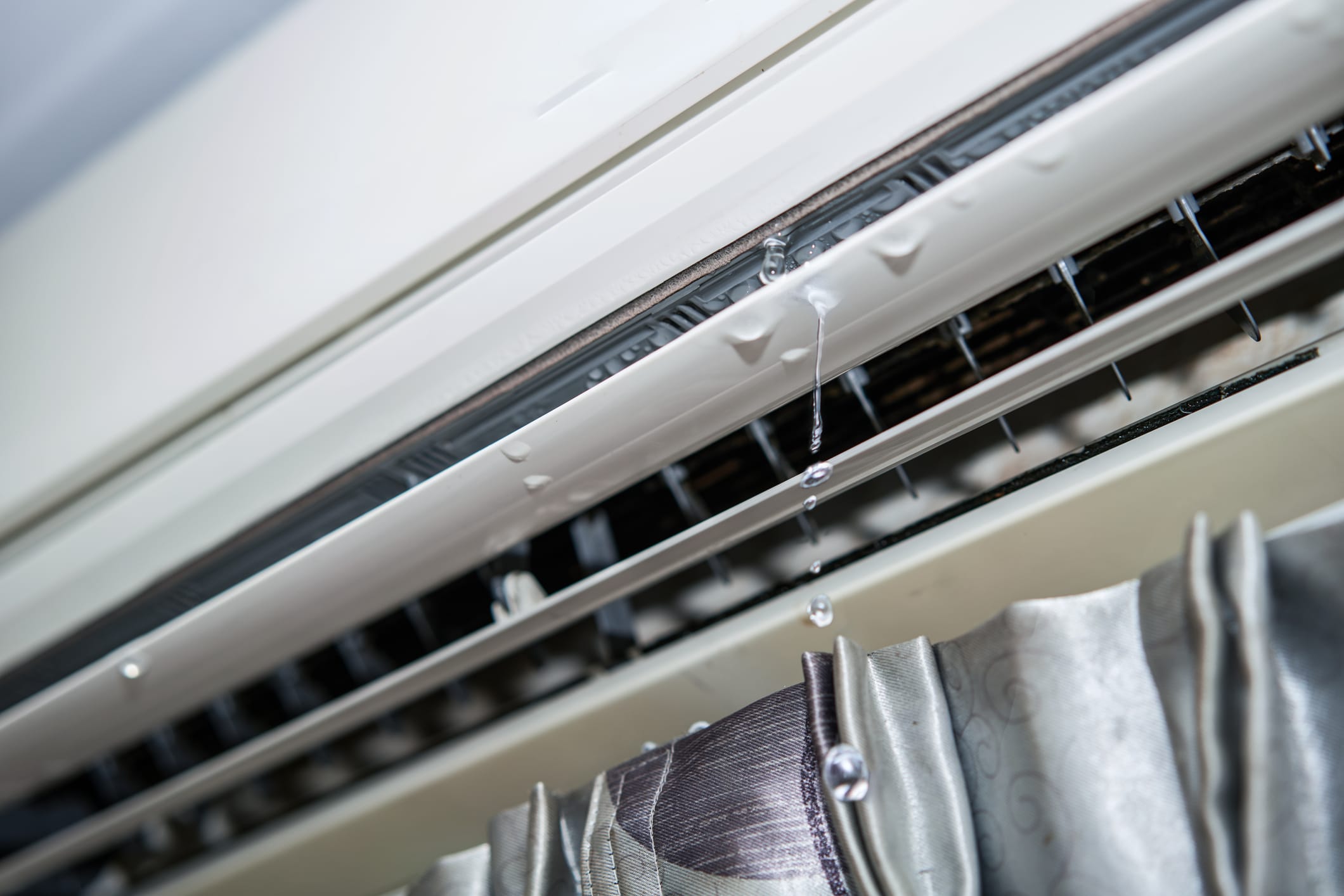
Finding water around your air conditioner can be alarming, especially during a hot Las Vegas summer. An AC unit leaking water may be caused by something simple, such as a dirty air filter, or by a more serious issue involving the evaporator coil, refrigerant system, or condensate drainage components. Acting quickly can help prevent water damage to your floors, walls, ceilings, and HVAC equipment.
Key Takeaways
- Common causes of an AC unit leak include a clogged condensate drain line, frozen evaporator coil, dirty air filter, or damaged drain pan.
- Turn off your AC if water is pooling around the unit or near electrical components.
- Annual maintenance and regular filter replacement can help prevent future leaks.
Why Is My AC Unit Leaking?
Air conditioners naturally create condensation as they remove heat and humidity from indoor air. Under normal conditions, that moisture collects in a drain pan and exits through the condensate drain line. If part of that continuous drain system becomes blocked, damaged, or overwhelmed, water can build up and leak around the unit.
Some leakage is minor and easy to correct. However, persistent water leakage may indicate a refrigerant problem, pump failure, damaged coil, improper installation, or another issue that requires an HVAC professional.
Understanding the source of the leak can help you determine whether basic troubleshooting is appropriate or whether you should schedule professional service.
Clogged Condensate Drain Line
Dust, dirt, algae, mold, or mildew can collect inside the drain hose and create blockages. Once the moisture can no longer drain properly, it backs up into the drain pan.
Some homeowners use a wet/dry vac to remove a minor blockage from the exterior drain opening. However, severe clogs may require professional drain line cleaning with compressed air, a vacuum, wire, or other specialized equipment.
Dirty Air Filter
A dirty air filter reduces airflow through the HVAC system. When too little air moves across the evaporator coil, the coil can freeze. When the frozen evaporator coil thaws, the excess water may overwhelm the drain pan and cause leakage.
Regularly changing your air filters can reduce this risk.
Frozen Evaporator Coil
If you see ice on the coil or refrigerant lines, turn off the cooling system and allow it to thaw. Avoid continuing to operate the AC, as this may lead to serious damage.
Because frozen coils can indicate a refrigerant leak or mechanical problem, contact an HVAC technician if the issue returns after replacing the filter.
Low Refrigerant Levels
Low refrigerant levels reduce pressure inside the system and can cause the evaporator coil to freeze. As the ice melts, water may pool beneath or around the indoor equipment. Signs of a refrigerant problem may include:
- Weak cooling
- Hissing sounds
- Longer cooling cycles
- Rising energy bills
- Ice on refrigerant lines
- Persistent humidity indoors
An HVAC technician can check refrigerant levels to ensure everything looks good.
Damaged or Rusted Drain Pan
Older air conditioners may develop a damaged or rusted drain pan. Cracks, holes, corrosion, or loose fittings can allow water to escape even when the condensate drain line is clear.
A damaged pan may require condensate pan replacement. The cost depends on its location, part availability, and the labor needed to access it.
Malfunctioning Condensate Pump
Some air conditioners rely on a condensate pump to move water away from the unit, especially when gravity alone cannot drain it.
If the pump fails, the reservoir can overflow. A malfunctioning condensate pump may be caused by electrical issues, a stuck float switch, debris, or complete motor failure.
Condensate pump replacement is usually best handled by an HVAC professional.
Disconnected or Damaged Drain Line
A disconnected or damaged drain line can allow condensation to spill before it reaches the exterior drain point.
An HVAC technician can inspect the line, reconnect loose sections, and correct the installation as needed.
High Humidity Levels
During periods of high humidity, an air conditioner produces more condensation than usual. If the system is improperly sized, poorly maintained, or already experiencing drainage issues, the additional water may overwhelm the drain pan.
A properly sized air conditioner, clean coil, clear drainage system, and adequate duct insulation can help the system manage humidity more effectively.
What to Do if Your AC Unit is Leaking
If your AC unit is leaking water, try these steps:
- Turn off the thermostat and shut off power to the unit.
- Clear the area of furniture, rugs, boxes, or electronics to reduce damage.
- Soak up puddles with towels.
- Inspect the drain pan for standing water, rust, or visible cracks.
- Look for ice on the evaporator coil or refrigerant lines.
- Call an HVAC technician for a proper diagnosis and repair.
Avoid opening sealed refrigerant components or attempting repairs that involve electrical wiring. DIY vs. professional service depends on the cause, but electrical problems, refrigerant leaks, damaged coils, and pump failure should be handled by a trained technician.
Signs It's Time to Call a Professional
While many homeowners may prefer to try to fix a leaking AC on their own, there are signs that indicate it's time to call a professional. Call a professional HVAC technician if:
- You notice a distinct smell. Refrigerant leaks usually set off a noticeable chemical or sweet odor and require immediate repair.
- The liquid isn't clear. Refrigerant has an oily, iridescent appearance, while water leaks appear clear.
- Your AC unit is making hissing or bubbling sounds. This typically indicates an issue with refrigerant escaping the unit or the evaporate coils cracking and releasing gas.
- Ice is building up. If ice or frost appear on the evaporator coils or copper lines, this usually indicates a refrigerant leak or blocked airflow.
- There is an electrical risk. If the leak is close to electrical panels, outlets, or other electronics, this poses a serious safety risk.
If you notice any of these signs, call an HVAC professional immediately.
How Professionals Fix a Leaking AC
The correct repair depends on the cause of the leak. An HVAC technician may perform:
- Drain line cleaning
- Evaporator coil cleaning
- Air filter replacement
- Condensate pan or pump replacement
- Refrigerant leak repair or recharge
- Drain hose reconnection
- Float switch replacement
- Duct insulation repair
- Installation corrections
A full inspection may also reveal a damaged condenser, compressor problem, or another condition affecting long-term comfort.
Trust Dr. Cool to Fix Your AC Unit
An AC water leak should not be ignored. Even a small amount of water can lead to mold growth, damaged drywall, ruined flooring, electrical hazards, or a more serious HVAC failure.
Dr. Cool can provide a variety of air conditioning services and air conditioning repairs, including emergency services if and when you need them. Whether the problem is a clogged condensate drain line, dirty air filter, frozen evaporator coil, malfunctioning condensate pump, or refrigerant leak, our team is ready to help restore dependable cooling.
Call Dr. Cool at (702) 608-6913 or schedule your professional HVAC appointment online today.
Connect With Us
Our Contact Information
Reach Us by Phone or Email
If you prefer to speak directly with one of our technicians, don’t hesitate to contact us by phone or email. We’re available to assist you during business hours
Phone: (702) 873-1800
Email: info@drcoolservices.com
Business Hours:
Mon – Fri: 7:00 am – 9:00 pm
Sat – Sun: 8:00 am – 5:00 pm
